





electric pressure cooker versus stove top
Pressure cookers have been one of the most famous kitchen appliances used in the homes these days for cooking. Pressure cooking can cut cooking time by as much as 30% while retaining flavour and nutrients, and can be used to cook rice faster, tenderise meat in minutes or prepare healthful meals in a few moments.
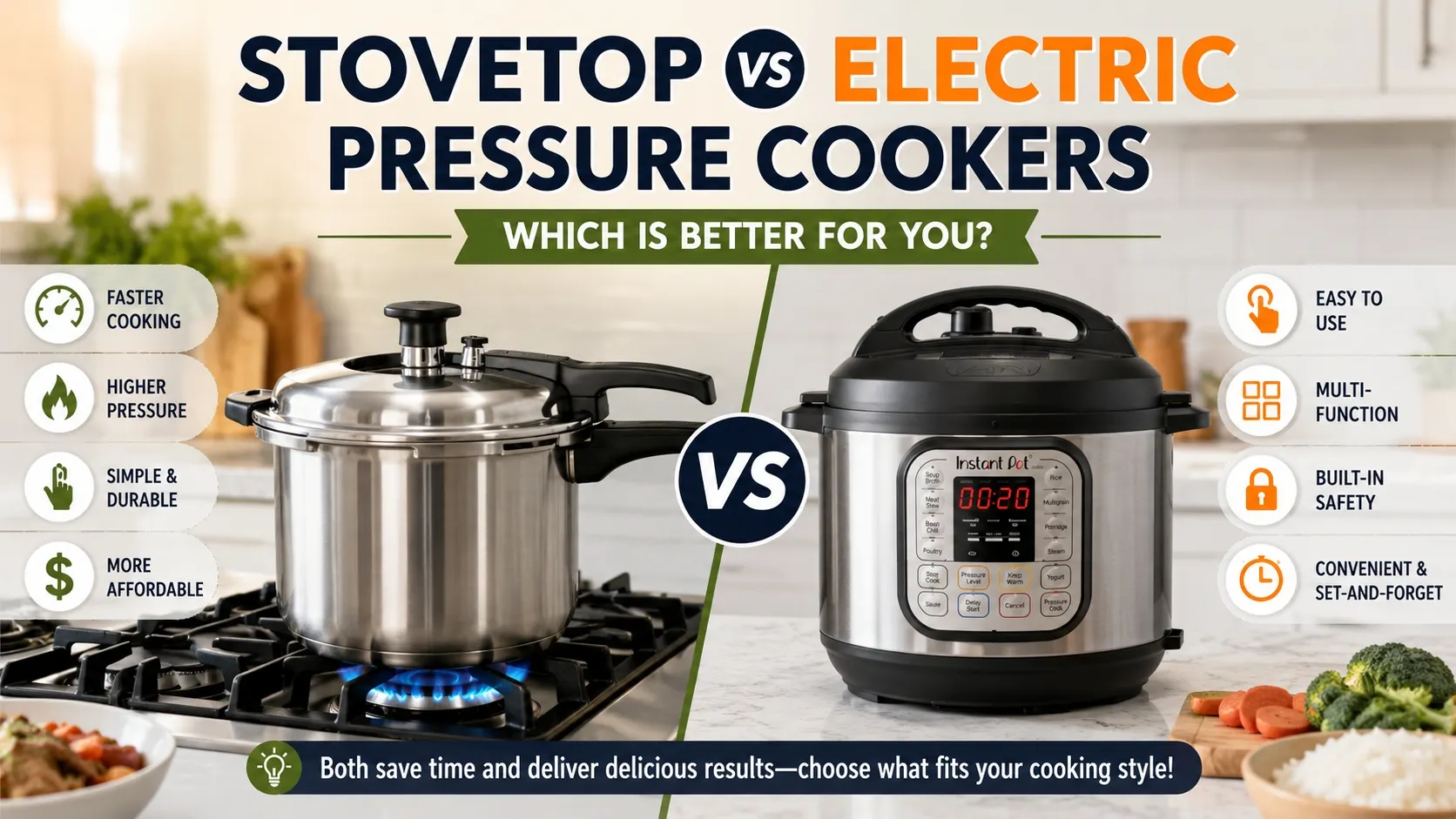
However, there's one question that keeps many consumers wondering — is it better to get a stovetop or electric pressure cooker, such as the Instant Pot?
In this guide, you'll learn about the main distinctions between the two, their pros and cons, and which one is suitable for your cooking method.
What Is a Stovetop Pressure Cooker?
The traditional method of pressure cooking is with a stovetop pressure cooker. Constructed of stainless steel or aluminum and sits directly on a gas, electric or induction stove.
After being heated, the steam inside the sealed pot raises the pressure, which cooks the food at a higher temperature than boiling.
Key characteristics:
- Manual heat control
- Higher pressure (typically up to 15 PSI)
- Faster cooking times
- Simple design with fewer parts
The stovetop models are popular in professional kitchens and among experienced home cooks who like to have complete control over the cooking process.
What Is an Electric Pressure Cooker (Instant Pot)?
The electric pressure cooker, aka Instant Pot, is a multi-purpose, countertop cooking appliance that brings together a set of kitchen appliances.
It not only pressure cooks but also:
- Slow cooker
- Rice cooker
- Steamer
- Yogurt maker
- Sauté pan
The machine automatically controls heat and pressure rather than the user having to adjust them manually, you just have to choose a preset program.
Key characteristics:
- Fully automated cooking programs
- Lower pressure range (around 9–12 PSI)
- Multiple cooking functions
- Set-and-forget convenience
This makes electric pressure cookers especially attractive for beginners and busy households.
Key Differences Between Stovetop and Electric Pressure Cookers
While both devices cook food quickly by using steam pressure, there are key differences in how they cook, as well as in how they are used.
1. Cooking Speed and Pressure Levels
The cooking speeds and pressures are indicated.The cooking speeds and pressures are noted.
The major difference is in terms of the pressure.
Most stovetop pressure cookers are limited to about 15 PSI while most electric models operate between 9–12 PSI.
This will make stovetop cookers heat up and cook quicker and at higher levels.
In practical terms:
- Stovetop = faster cooking, stronger heat penetration
- Electric = slightly longer cooking time, more controlled environment
Electric cookers generally take around 25% longer to cook than stovetop models when switching over to a recipe.
2. Ease of Use
Electric pressure cookers are designed for convenience. You simply:
- Add ingredients
- Select a cooking mode
- Walk away
They automatically adjust temperature, pressure, and timing.
Stovetop cookers, on the other hand, require attention:
- You must manually control heat
- You need to monitor pressure levels
- You may need to adjust flame during cooking
For beginners, electric models feel much easier. For experienced cooks, stovetop control offers more precision.
3. Versatility and Functions
Electric pressure cookers are multi-functional appliances. A single device can replace several kitchen tools.
Typical functions include:
- Pressure cooking
- Slow cooking
- Sautéing
- Steaming
- Yogurt making
- Keeping food warm
Pressure cookers that fit over the stove are less versatile. They are primarily used for pressure cooking, but also for steaming and simple boiling.
Electric cookers are definitely the winners where space and versatility are concerned.
4. Flavor and Cooking Results
Cooking with stovetop pressure cookers is slightly better with regards to texture and flavor, many cooking enthusiasts say.
Why?
- Higher pressure cooks food more intensely
- Better for tough meats and legumes
- More effective browning and reduction techniques
Electric pressure cookers still produce great results, but sometimes:
- Beans may be slightly firmer
- Meat may require longer cooking time
For everyday meals, the difference is small—but for advanced cooking, stovetop performance can be superior.
5. Safety Features
Today's pressure cookers are very safe as opposed to older cookers.
These are the electric pressure cookers:
- Automatic shut-off systems
- Temperature sensors
- Locking lids
- Built-in safety programs
Stovetop cookers rely more on:
- Mechanical safety valves
- Manual pressure regulation
While both are safe when used correctly, electric models feel less intimidating for beginners due to automation.
6. Convenience and Lifestyle Fit
This is where electric pressure cookers are at their finest.
Are ideal for:
- Busy professionals
- Beginner cooks
- Meal preppers
- Families with tight schedules
You can start a meal and leave the kitchen without worry.
Stovetop pressure cookers require more involvement, but reward you with faster cooking and greater control.
Pros and Cons Summary
Stovetop Pressure Cooker
Pros:
- Faster cooking times
- Higher pressure (better performance)
- Simple and durable
- Usually cheaper
Cons:
- Requires monitoring
- Less beginner-friendly
- Limited functions
Electric Pressure Cooker (Instant Pot)
Pros:
- Very easy to use
- Multiple cooking functions
- Safer for beginners
- Set-and-forget convenience
Cons:
- Slower than stovetop
- Lower pressure
- More expensive
- More complex interface
Which One Should You Buy?
The best choice depends on your cooking style and lifestyle.
Choose a stovetop pressure cooker if:
- You want faster cooking results
- You enjoy hands-on cooking
- You already have kitchen experience
- You prefer simple tools
Choose an electric pressure cooker (Instant Pot) if:
- You want convenience and automation
- You cook frequently but have limited time
- You like multi-function appliances
- You are a beginner in pressure cooking
Final Verdict: Which Is Better?
There is no universal winner.
- Stovetop pressure cookers are better for speed, performance, and traditional cooking control.
- Electric pressure cookers are better for convenience, versatility, and ease of use.
The Instant Pot electric vessel is an ideal vessel for most modern households, in terms of the balance of function and simplicity. But for those serious home cooks, stovetop models have a place in their raw cooking category.
Conclusion
Stovetop and electric pressure cookers are capable of changing the way you cook. They save time, retain nutrients and make home healthy cooking easier.
For quick and easy, stick to stovetop.
If you are looking for convenience and flexibility, consider electric.
Whatever you're doing, pressure cooking is one of the most effective ways to cook these days, and an awesome addition to your kitchen.
Share:


