





Best Commercial Pressure Cooker for Restaurants
The speed, uniformity and safety are essential in a hectic commercial kitchen. A good pressure cooker can save so much time, enhance the texture, flavor and efficiency of your cooking. From restaurants and catering companies, cloud kitchens to hotels and institutional cafeterias, a suitable pressure cooker could boost productivity and cut down on costs.
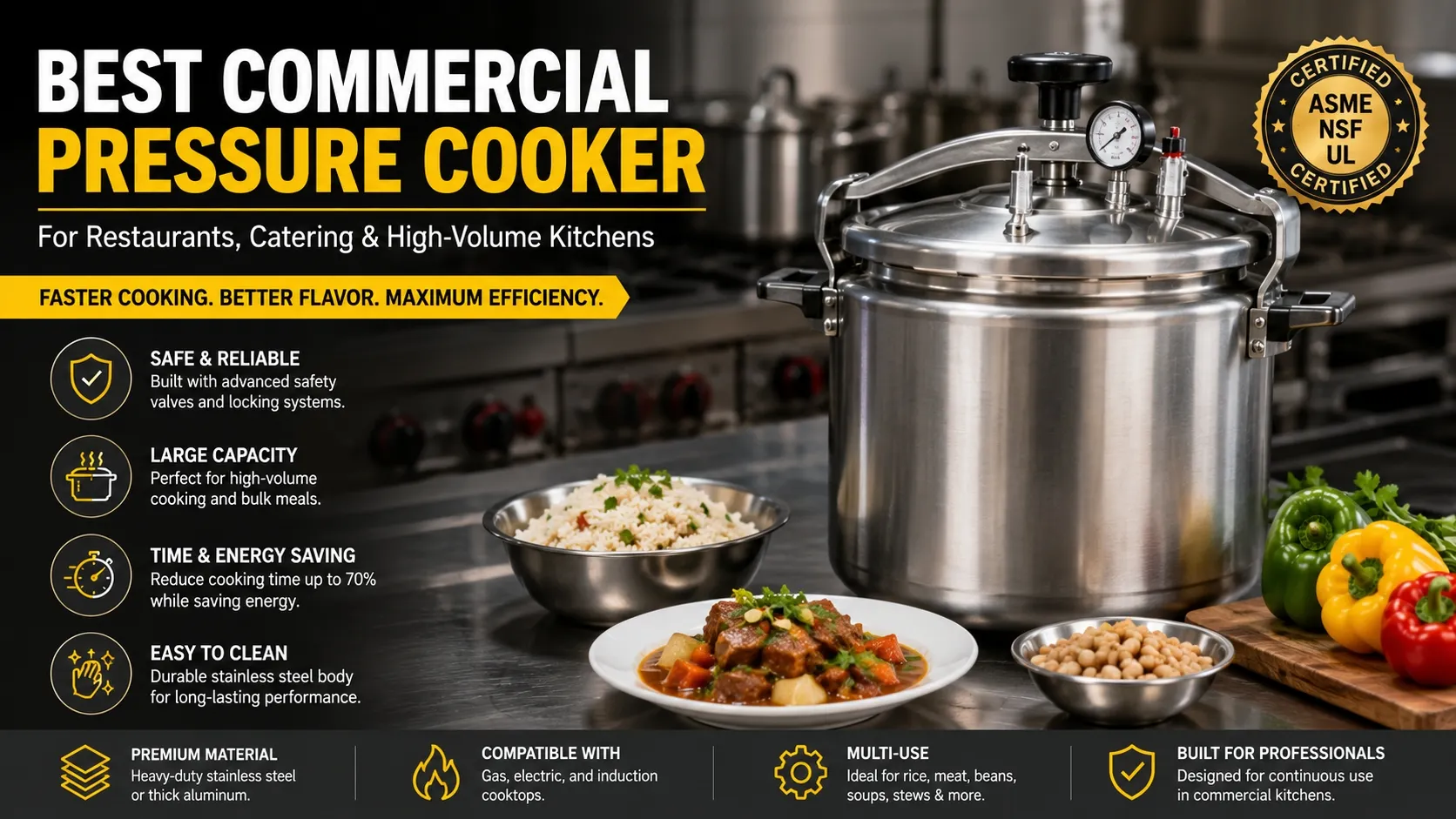
Commercial pressure cookers are built to be used for larger batches and more intensive use than home pressure cookers. They can cook soups, stocks, rice, beans, meat stews, curries and braised dishes much faster than the traditional cookware. Industry buying guides state that commercial models are constructed of more durable materials, have greater pressure resistance and have certified safety features for use in restaurant settings.
Why Commercial Kitchens Use Pressure Cookers
Cooking in a pressure cooker is based on the principle of having steam buildup within a closed vessel where it forces the food to cook at higher temperatures than would occur in boiling water. This one is a good way to cook food much faster, keeping nutrients and moisture intact.
Pressure Cookers are commonly used in restaurants and catering for the following reasons:
- Bulk rice and grain preparation
- Tenderizing tough meat cuts
- Cooking beans and legumes faster
- Soup and stock production
- Curry and stew preparation
- High-volume meal prep
- Energy-efficient cooking
Pressure cooking is a favorite option for many cooks because it enhances the efficiency of their cooking process, especially during busy periods. Time savings are directly connected to labor efficiency and speed of customer service in professional kitchens.
Key Features to Look for in a Commercial Pressure Cooker
The ideal commercial pressure cooker is determined by the size of the kitchen, the amount you like to cook at a time and your menu needs. Here are the crucial factors to take into account prior to purchase.
1. Capacity
One of the primary aspects people look at when purchasing is capacity. Commercial pressure cookers come in various sizes, ranging from 6 quarts to more than 50 quarts.
- Small cafés and food trucks may prefer 6–10 quart models
- Mid-sized restaurants often use 20–30 quart units
- Large catering companies and institutional kitchens may require 40–60 quart cookers
Choosing several medium-sized cookers instead of one large one can offer more flexibility in workflow in some cases, according to industry experts.
2. Material: Stainless Steel vs Aluminum
The two most common materials are stainless steel and aluminum.
Stainless Steel
Stainless steel commercial pressure cookers come in high quality, corrosion resistant and long-lasting material for professional use. They are also convenient to clean and will combine with acidic food products such as tomato-based sauces.
Advantages:
- Long lifespan
- Professional appearance
- Easy cleaning
- Resistant to rust and staining
Aluminum
Aluminum pressure cookers heat quicker, tend to be lighter and can be cheaper. They can be found in high-volume kitchens where quick heat transfer is essential.
Advantages:
- Faster heat conductivity
- Lightweight construction
- Lower purchase cost
For heavy commercial usage, many chefs prefer thick-gauge aluminum or reinforced stainless steel models.
3. Safety Certifications
Safety is essential when using high-pressure cooking equipment. Reliable commercial pressure cookers should include:
- Multiple pressure release valves
- Lid locking systems
- Pressure regulators
- Thermal protection
- Reinforced sealing gaskets
Commercial-grade equipment is also recommended to be purchased that has an ASME, NSF or UL certification from industry experts.
These certifications are a sign that the cooker fulfills professional safety and sanitation requirements demanded in many foodservice activities.
4. Electric vs Stovetop Commercial Pressure Cookers
Electric Commercial Pressure Cookers
Electric models are programmable, have timers and multi-function cooking options. They are perfect for kitchens that are looking for convenience and automation.
Benefits include:
- Easy operation
- Consistent cooking results
- Built-in safety systems
- Multi-cooking functionality
Today's electric pressure cookers can have slow cooking, steaming, yogurt making and sauté options. Trends in the products are also towards quicker heating methods, and quieter steam release systems.
Stovetop Commercial Pressure Cookers
Stovetop models remain popular in professional kitchens because they:
- Reach pressure faster
- Achieve higher cooking temperatures
- Handle heavy-duty continuous use
- Offer greater cooking control
Professional chefs often prefer stovetop units for large-batch cooking and restaurant production environments.
Best Uses for Commercial Pressure Cookers
Commercial pressure cookers are extremely versatile. Popular applications include:
Restaurant Kitchens
Pressure cookers are used by restaurants for soups, stews and sauces, for braised meats and to make quick stocks. Pressure cooking shortens hours of simmering to less than an hour.
Catering Businesses
Large-capacity pressure cookers are beneficial to caterers as they can cook in bulk without compromising on the taste.
Institutional Kitchens
Pressure cookers are used in schools, hospitals and cafeteria in mass production of meals for efficiency and to reduce energy costs.
Ethnic and Specialty Cuisine
Pressure cooking is often used in Indian, Mexican, Middle Eastern and Asian restaurants to cook beans, lentils, curries, and slow-cooked meat dishes.
Commercial Pressure Cooker Maintenance Tips
Proper maintenance extends equipment lifespan and improves safety.
Best practices include:
- Clean the gasket after every use
- Inspect pressure valves regularly
- Replace worn sealing rings
- Avoid overfilling the cooker
- Use manufacturer-approved spare parts
- Deep clean stainless steel surfaces weekly
Routine maintenance reduces downtime and improves cooking consistency in commercial kitchens.
Common Mistakes to Avoid
Many restaurant owners opt to buy a domestic pressure cooker rather than a proper commercial grade pressure cooker. Home-use models are not intended for use in restaurants continuously, and may not be certified, according to industry reports.
Some frequently made errors are:
- Choosing the wrong capacity
- Ignoring safety certifications
- Buying low-quality gaskets
- Overlooking burner compatibility
- Using incompatible cookware materials
Investing in certified commercial equipment helps reduce repair costs and improves kitchen safety.
Future Trends in Commercial Pressure Cooking
The commercial kitchen equipment market is evolving with smarter and more energy efficient pressure cooking technology.
Popular trends include:
- Smart programmable controls
- Wi-Fi connectivity
- Faster pressure-release systems
- Energy-saving heating elements
- Multi-function cooking systems
- Quiet steam release technology
Modern kitchens increasingly seek equipment that combines speed, automation, and operational safety.
Final Thoughts
One of the most useful tools for large quantities of food preparation is a commercial pressure cooker. The right model can mean cooking times reduced, throughput increased, energy saved and produce consistently good meals in your kitchen.
When buying a commercial pressure cooker, consider:
- Capacity requirements
- Material durability
- Safety certifications
- Ease of cleaning
- Cooking versatility
- Long-term reliability
Professional pressure cooking equipment can offer restaurants, catering businesses, and institutional kitchens long-term operational advantages and enhanced overall kitchen productivity.
Share:


