





Global Electric Pressure Cooker Market Analysis
The global electric pressure cooker market continues to expand steadily, driven by changing consumer lifestyles and increasing demand for efficient kitchen solutions.
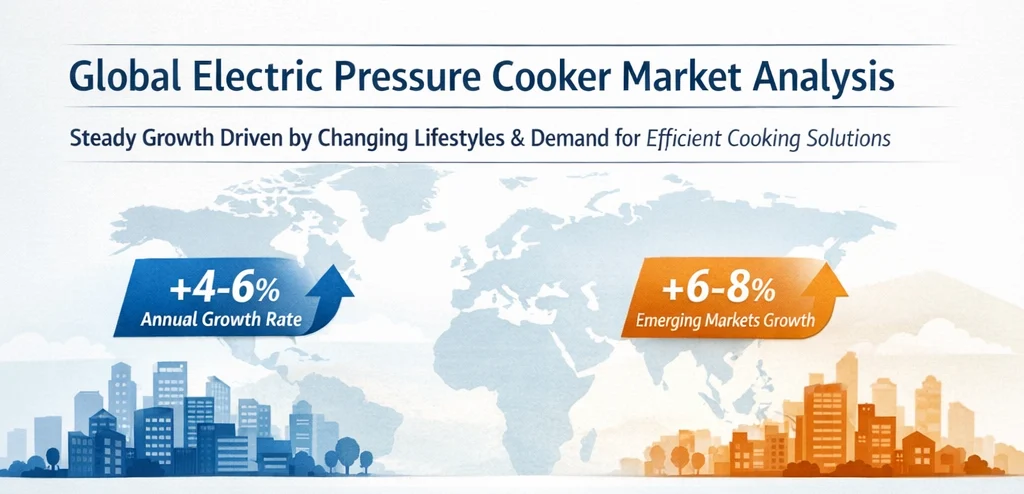
Over the past decade, the small kitchen appliance sector has maintained an average annual growth rate of approximately 4%–6%, with electric pressure cookers outperforming traditional cookware categories due to multifunctionality and safety improvements.
Industry analysts estimate that demand for electric pressure cookers in emerging markets is growing at a faster rate, reaching 6%–8% annual growth in certain regions, fueled by urbanization and rising disposable income.Industry analysts estimate that demand for electric pressure cookers in emerging markets is growing at a faster rate, reaching 6%–8% annual growth in certain regions, fueled by urbanization and rising disposable income.
Market Size & Growth Drivers
Urbanization & Time Efficiency
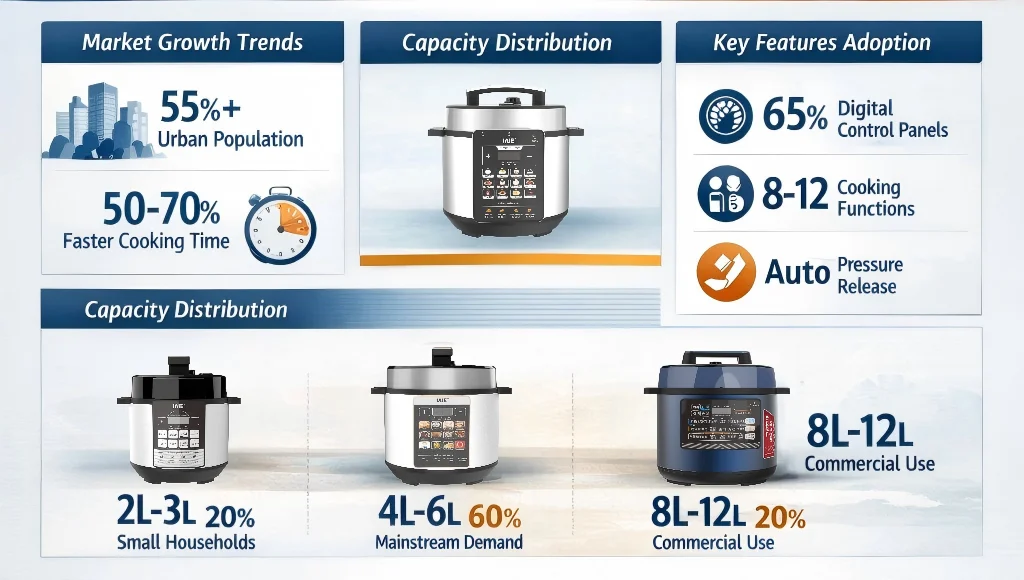
Over 55% of the global population now lives in urban areas.
Working households prioritize time-saving appliances.
Cooking time can be reduced by up to 50–70% compared to traditional stovetop cooking.
Electric pressure cookers address these needs by integrating rapid heating and programmable cooking functions.
Energy Efficiency & Sustainability
Energy efficiency has become a major purchasing factor.
Compared to conventional gas-based cooking systems:
- Electric pressure cookers can reduce energy consumption by 30%–50%.
- Sealed pressure environments improve thermal retention.
- Shorter cooking cycles lower overall electricity use.
Sustainability trends are accelerating replacement of traditional cookware in many regions.
Capacity Distribution Analysis
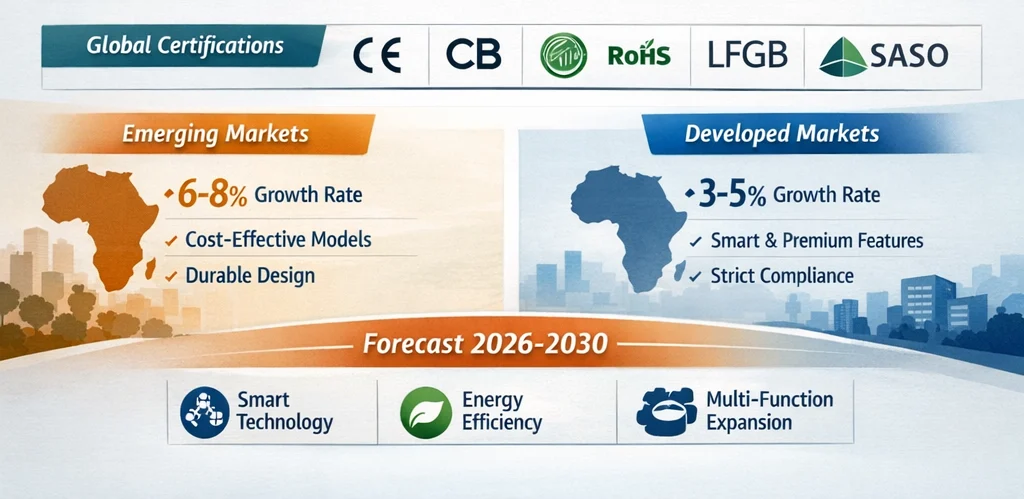
Global demand structure typically follows this ratio:
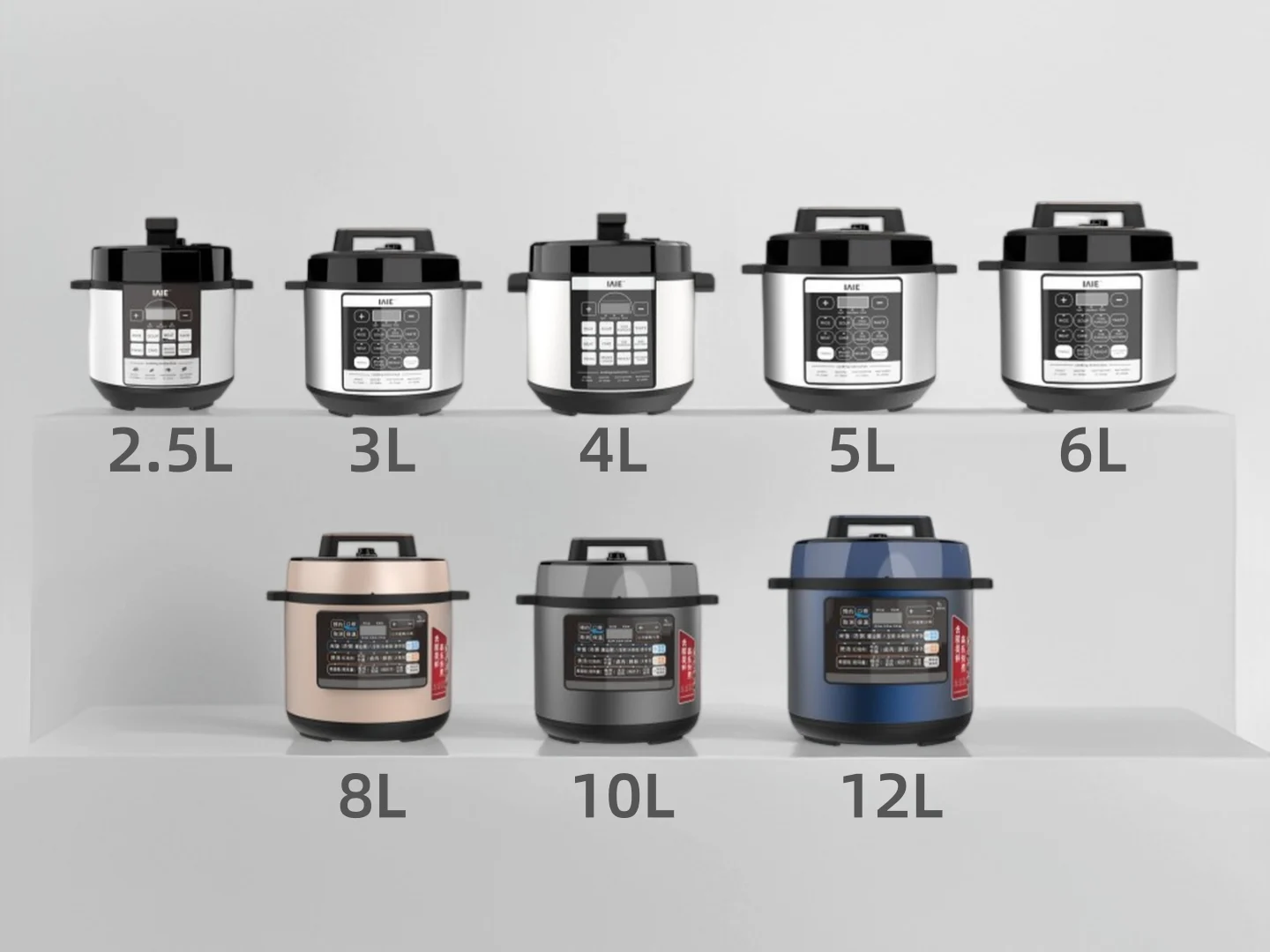
- 2L–3L: ~20% (single users / compact living)
- 4L–6L: ~60% (mainstream household demand)
- 8L–12L: ~20% (commercial / large family / catering use)
5L and 6L remain the most competitive and fastest-moving SKUs in most export markets.
Feature Penetration Trends
Market penetration of advanced features continues to increase:
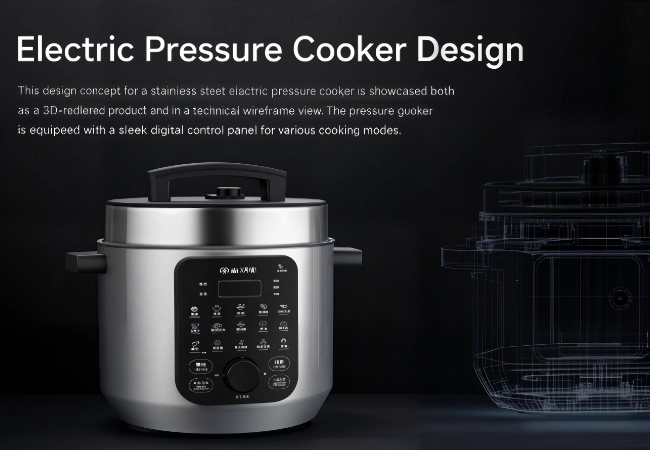
- Digital control panels now account for over 65% of new models.
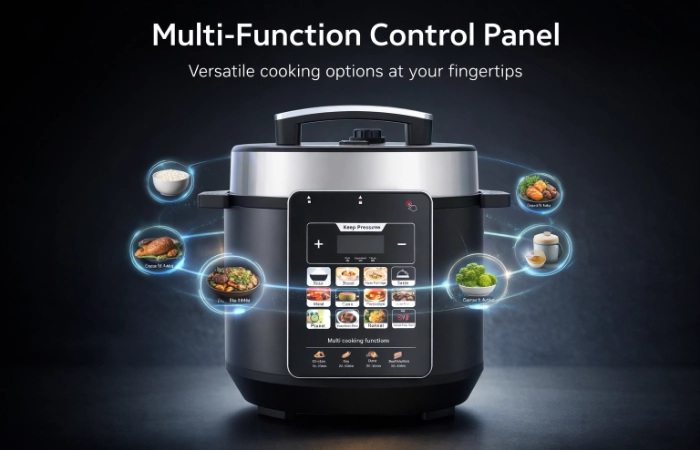
- Multi-menu presets (8–12 functions) have become standard configuration.
- Automatic pressure release systems are increasingly expected in mid-to-high-end models.
Basic mechanical models still maintain strong demand in price-sensitive regions, particularly in emerging markets.
Technology Evolution
1.Heating Technology
3D heating systems are gradually replacing single bottom-heating structures.
Higher wattage (900W–1200W for household models) improves cooking speed and efficiency.
Thermal distribution uniformity has become a key R&D focus.
2.Safety System Standardization
Premium electric pressure cookers integrate 8–12 safety mechanisms, including:
●Lid lock protection
●Pressure limiting valve
●Anti-block shield
●Overheat protection
●Automatic pressure release
International safety compliance continues to strengthen industry entry barriers.
Global Compliance & Certification Requirements
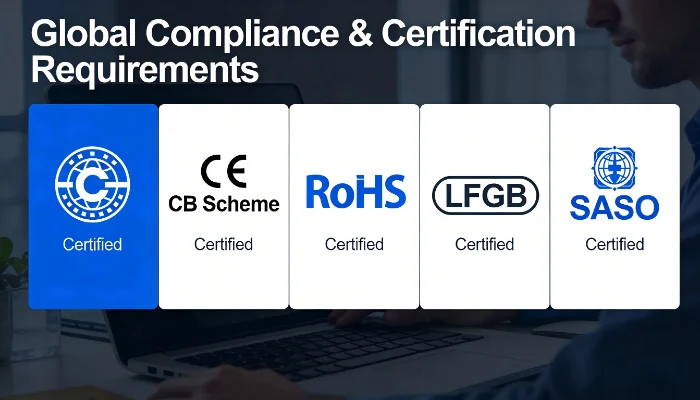
Export markets require strict regulatory approvals. Major certifications include:
- CE – Mandatory for European Union markets
- CB Scheme – International testing recognition
- RoHS – Environmental compliance
- LFGB – Food-grade material regulation
- SASO – Saudi Arabia compliance requirement
Certification readiness significantly reduces export lead time and improves distributor confidence.
Regional Growth Comparison
1.Emerging Markets
Growth rate: 6%–8% annually
Key characteristics:
- Strong price sensitivity
- Preference for durable mechanical models
- High demand for voltage adaptability (220V–240V stability)
- Bulk order patterns for distributors
Africa and parts of Southeast Asia represent long-term volume-driven opportunities.
2.Developed Markets
Growth rate: 3%–5% annually
Key characteristics:
- Focus on smart features and digital UI
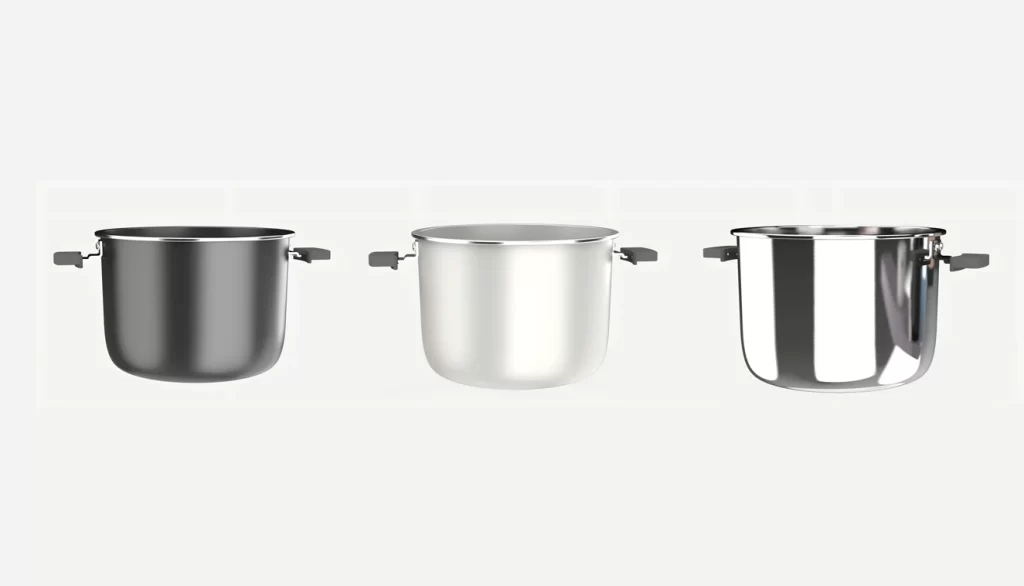
- Higher demand for stainless steel inner pots
- Strong certification compliance awareness
- Brand differentiation through design and quality
Replacement purchases and premium upgrades drive sales in these regions.
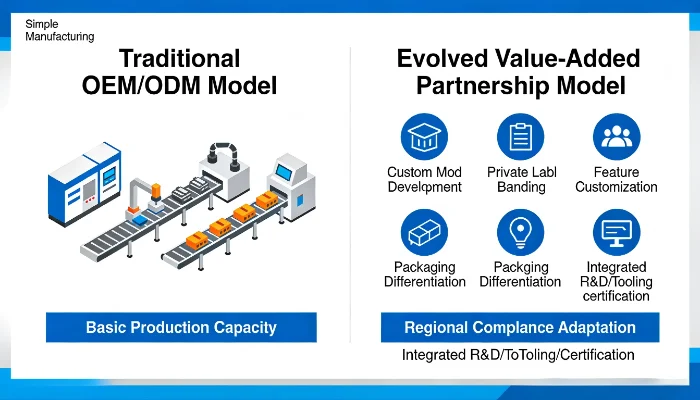
OEM / ODM Industry Shift
The industry is shifting from simple manufacturing to value-added partnership models:
- Custom mold development
- Private label branding
- Feature customization
- Packaging differentiation
- Regional compliance adaptation
Manufacturers with integrated R&D, tooling, and certification capabilities gain stronger long-term competitiveness.
Future Outlook (2026–2030)
Industry forecasts indicate:
- Continued CAGR of 4%–6% globally
- Expansion of smart control integration
- Increased material safety requirements
- Growth in multi-functional kitchen appliance consolidation
- Rising demand for energy-efficient certified appliances
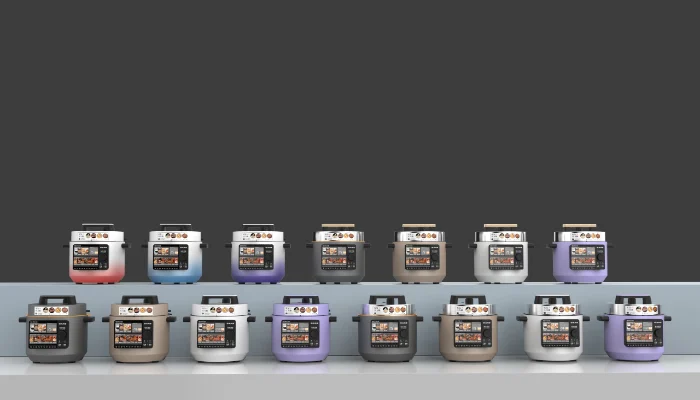
The electric pressure cooker industry is evolving from basic cooking equipment to integrated smart kitchen solutions.

Our Industry Perspective
With over 10 years of manufacturing experience, we align product development with real market data, regulatory standards, and regional demand structures.
Our focus is not only production capacity, but long-term market adaptability, certification readiness, and OEM/ODM customization efficiency — ensuring sustainable competitiveness in global markets.
