





cooking with pressure cookers
With the increasing popularity of home cooking, pressure cookers are one of the most valuable appliances in the kitchen for home cooks who are looking for a quick, flavorful and nutritious meal. With either type of cooker, whether a traditional stovetop pressure cooker or a modern electric cooker, knowing how to cook with a pressure cooker can reduce the time spent in cooking, energy used and make meal preparation easier.
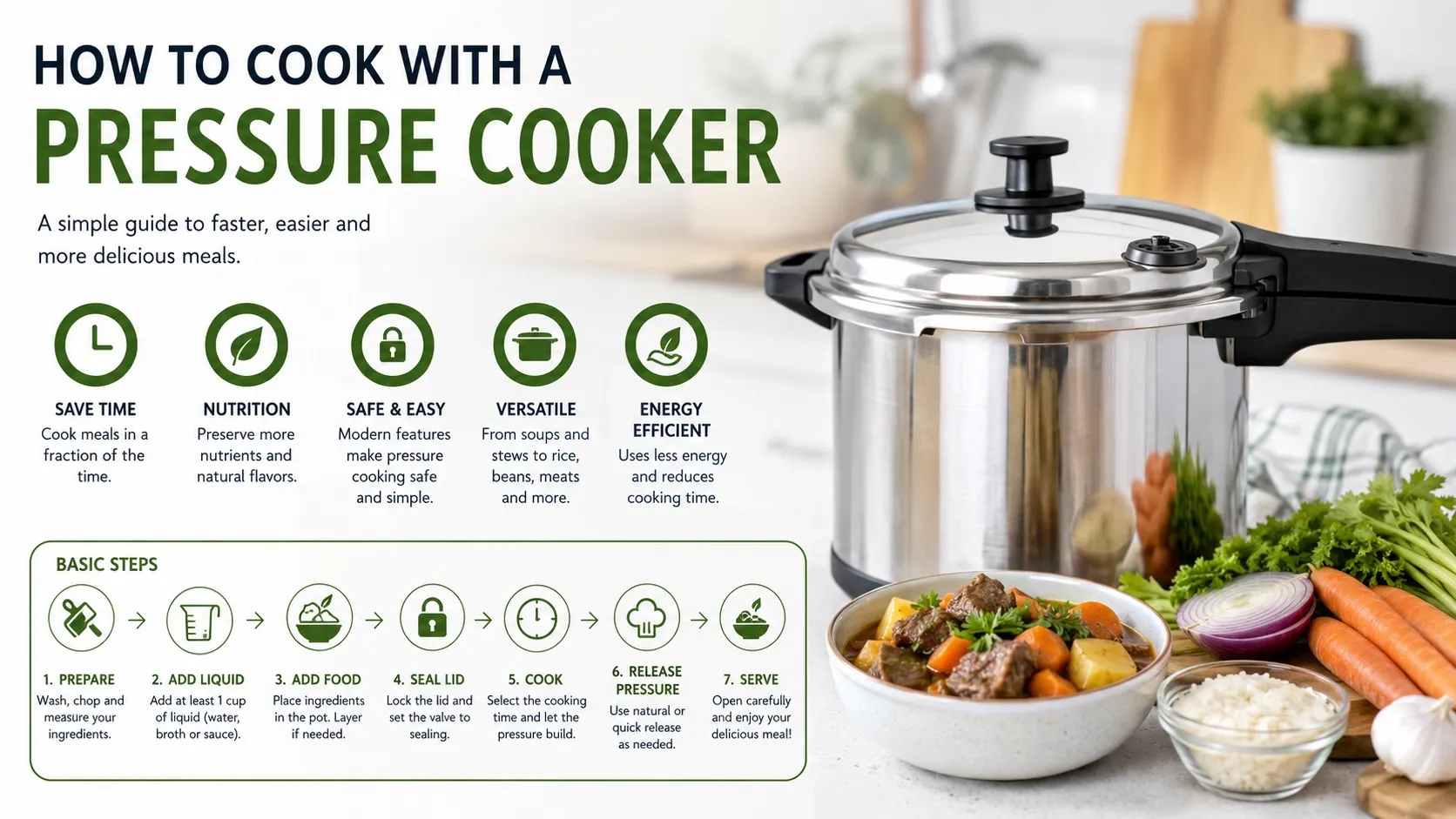
This cookbook is designed to help you learn about the operation, advantages, tricks, precautions and ideal foods for cooking with a pressure cooker.
What Is a Pressure Cooker?
Pressure cookers are cooking vessels with a lid that increase the temperature at which food cooks by building up steam pressure within the pot. The more liquid in the cooker heats up, the more steam is created, and the more pressure is risen, the faster it will cook.
A pressure cooker will cook foods like beans, grains, meats, soups, and stews much quicker than using traditional pots and pans. Today's models of electric pressure cookers may have several features, such as slow cooking, steaming, sautéing and making yogurt.
Benefits of Cooking with a Pressure Cooker
1. Faster Cooking Times
The main benefit of a pressure cooker is that it cooks so fast. Traditionally, these foods take a long time to cook and can be prepared in a fraction of that time.
Examples include:
- Dried beans in 25–40 minutes
- Beef stew in under 45 minutes
- Whole chicken in approximately 30 minutes
- Rice in less than 10 minutes
This makes pressure cookers ideal for busy families and professionals.
2. Improved Flavor Retention
The cooking space is closed and keeps flavors in the pot. Seasonings are more absorbed by ingredients, producing better flavors and richness in the foods.
3. Better Nutrient Preservation
Vitamins that are soluble in water can be extracted into the cooking water by the traditional boiling method. Pressure cooking requires less water and less time to cook which will help to retain the nutrients in the vegetables and other foods.
4. Energy Efficiency
Pressure cookers are a great way to save energy because they use less electricity or gas than traditional cookers when preparing meals.
5. Versatility
A pressure cooker can be used for a variety of recipes such as:
- Soups
- Stews
- Chili
- Rice dishes
- Beans and legumes
- Meat recipes
- Vegetables
- Desserts
A large number of users use a multifunction pressure cooker to replace a number of kitchen appliances.
Understanding How Pressure Cookers Work
The principles of pressure cooking are very basic.
Steam that is being formed is prevented from escaping from a closed container when it is boiling. The steam is trapped inside the cooker, creating pressure. The boiling temperature of water increases when the pressure increases, above 212°F (100°C).
Food will cook faster with high temperatures and keep its moisture and tenderness.
There are two types of most modern pressure cookers that work at either of the following:
- Low pressure (approximately 5–7 PSI)
- High pressure (approximately 10–15 PSI)
Higher pressure generally means faster cooking.
Essential Pressure Cooker Safety Tips
While multiple safety features are used in modern pressure cookers, it is important to follow proper procedures.
Do Not Overfill
Most manufacturers recommend to fill the cooker up to 2/3 of its capacity.
Fill only half the container for items that swell during cooking, like rice, beans or grains.
Check the Sealing Ring
Regularly check the silicone gasket for any cracks, wear or damage. Bad sealing ring can cause lack of pressure build-up.
Use Enough Liquid
Steam needs to be produced in pressure cookers and this can only happen because there is liquid. A minimum of one cup of liquid is recommended for most recipes.
The cooker might not come to pressure if it doesn't have enough liquid.
Release Pressure Correctly
In general, there are 2 ways:
Natural Release
- Pressure decreases gradually on its own.
- Best for meats, soups, and beans.
Quick Release
- Steam is released manually through the valve.
- Ideal for vegetables and delicate foods.
Always keep hands and face away from escaping steam.
Getting Started: Basic Pressure Cooking Steps
If you're new to pressure cooking, follow these simple steps.
Step 1: Prepare Ingredients
Wash, chop, and measure ingredients before starting. Pressure cooking moves quickly once the lid is sealed.
Step 2: Add Liquid
Pour the required liquid into the cooking pot. This may include:
- Water
- Broth
- Stock
- Sauce
Step 3: Add Ingredients
Place food into the cooker according to your recipe.
For layered recipes, place denser ingredients near the bottom.
Step 4: Secure the Lid
Ensure the lid is properly locked and the pressure valve is set to the sealing position.
Step 5: Select Cooking Time
Set the cooking time based on the recipe and food type.
Step 6: Release Pressure
Once cooking is complete, use either natural release or quick release as instructed.
Step 7: Serve and Enjoy
Open the lid carefully and enjoy your meal.
Best Foods to Cook in a Pressure Cooker
Beans and Legumes
Pressure cookers excel at preparing dried beans without overnight soaking.
Popular choices include:
- Black beans
- Pinto beans
- Chickpeas
- Kidney beans
Tough Cuts of Meat
Cuts that normally require long braising times become tender much faster.
Examples include:
- Beef chuck roast
- Pork shoulder
- Short ribs
- Brisket
Soups and Stews
Pressure cooking helps ingredients blend together while creating deep, rich flavors.
Popular recipes include:
- Chicken soup
- Vegetable soup
- Beef stew
- Lentil soup
Rice and Grains
Pressure cookers provide consistent results for:
- White rice
- Brown rice
- Quinoa
- Barley
- Farro
Vegetables
Vegetables cook rapidly while maintaining texture and nutrients.
Popular options include:
- Potatoes
- Carrots
- Broccoli
- Sweet potatoes
Common Pressure Cooking Mistakes to Avoid
Using Too Much Liquid
Unlike traditional cooking methods, pressure cookers lose very little moisture. Excess liquid can dilute flavors.
Opening the Lid Too Soon
Never attempt to force open the lid while pressure remains inside the cooker.
Ignoring Cooking Times
Small differences in cooking time can significantly affect results.
Always follow recommended guidelines when learning a new recipe.
Overcrowding the Pot
Leaving sufficient space allows steam to circulate properly and helps maintain even cooking.
Pressure Cooker vs. Slow Cooker
Many people compare pressure cookers and slow cookers, but each serves different purposes.
| Feature | Pressure Cooker | Slow Cooker |
|---|---|---|
| Cooking Speed | Very Fast | Slow |
| Energy Usage | Lower | Moderate |
| Flavor Development | Quick | Gradual |
| Meal Planning | Last-Minute Meals | All-Day Cooking |
| Texture | Tender and Moist | Tender and Rich |
For busy households, a pressure cooker often provides greater flexibility and convenience.
Final Thoughts
Cooking is a new way to do things with a pressure cooker. Pressure cookers are beneficial and recommended not just for cooks, but also for beginners, as they can help save the time that would otherwise be spent while cooking, retain nutrients and improve flavors.
From making hearty stews, tender meats, fluffy rice, or satisfying meals of healthy vegetables, a pressure cooker can help you to make it all happen with less effort and more efficiency. With the fundamentals of pressure cooking and safety tips mastered, you'll soon be confident and inspired to use the pressure cooker in your kitchen as it becomes your new BFF.
Share:


