





Eco-Friendly Materials Matter: What to Look for in a Sustainable Pressure Cooker
Introduction
Sustainability and Energy use are often seen as "sister" concepts when designing and using a pressure cooker. While there are a number of elements to sustainability, including the environmental cost of manufacture, waste, and the cooker's full life cycle, the sustainability of a pressure cooker should be viewed far more holistically.
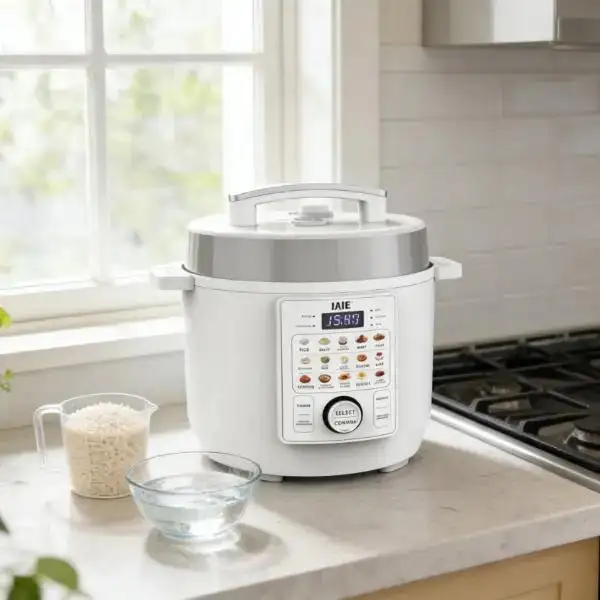
A truly sustainable pressure cooker should consider all the variables and elements that contribute to the environmental impact of a pressure cooker.
These include:
•The materials from which it is made,
•The sourcing of those materials (and their potential processing),
•The cooker's useful life (durable),
•Its end-of-life recyclability
Material selection has become one of the most pivotal aspects of sustainability in appliance design. This paper will discuss material selection for pressure cookers and the extent to which different manufacturers are "engineering" pressure cookers with a greater sense of corporate environmental responsibility.
1. The Material Footprint of a Pressure Cooker
An electric pressure cooker has a number of components which will each have their own environmental costs. These include:
•Inner cooking pot
•Outer body
•Sealing system (typically a silicone ring)
•Control panel (and electronic modules) and
•Safety and heating components.
Each of the aforementioned materials has a cost in manufacture and a consideration for durability and repair, as well as end of life recyclability.
Key Industry Insight
Life cycle studies on the manufacture of cookware have shown that the manufacture of primary materials (particularly metals) can have a considerable impact on the environment, especially when compared to the end use of the product.
Metal components (primarily stainless steel and aluminum) as well as plastic components can have an environmental impact that can be studied as a life cycle.
There has been a significant market shift towards designing for durability and end-of-life recyclability as opposed to a focus on the costs and impact of single-phase production.
2. Inner Pot Materials: The Core Performance Component
The inner pot is the most critical functional component of a pressure cooker, directly influencing cooking performance, safety, and longevity.
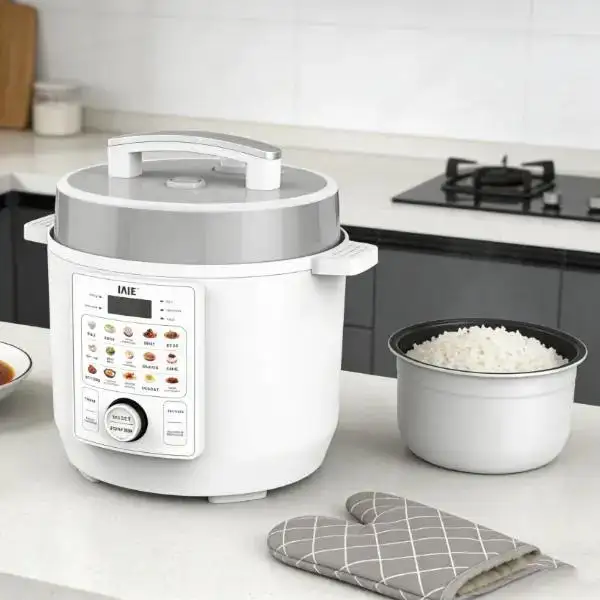
2.1 Stainless Steel Inner Pots
Food-grade stainless steel (commonly 304 / 18-8 or 18-10 grades) is widely used in premium cookware due to its stability and durability.
Advantages of Sustainability:
• Longevity in the range of decades decreases the need for replacements.
• Recyclable.
• No requirement for synthetic, chemical, non-stick coatings.
• Durable at elevated temperatures and pressures.
It's possible that some manufacturers use stainless steel with some recycled content, and depending on the way the content is sourced and processed, it has the potential to greatly minimize the impacts of upstream sourcing and processing of materials.
�� Note: Recycled content levels vary by supplier and production system; high recycled ratios are increasingly commonin industrial stainless steel supply chains
2.2 Enameled Inner Pots
Enameled cookware involves a metal (typically steel or cast iron) substrate covered by a glass-based coating, fused by heat.
Sustainability Characteristics:
• Durable, non-reactive surface for food contact
• Good corrosion resistance and serve users for a long time
• Decrease use of chemical non-stick coatings
• Surface is smooth and easy to clean, therefore minimizing use of water and detergent
Limitations:
• Enamel coatings chip when subjected to impact or mechanical stress
• Damaged enameled surfaces are difficult to repair, which can compromise the efficiency of the lifecycle
2.3 Inner Pot Comparison Overview
| Feature | Stainless Steel | Enameled Pot |
| Durability | Very high, impact resistant | High, but easily chipable |
| Coatings required | None | Single glass enamel layer |
| Recyclability | Excellent | Good (requires separation) |
| Maintenance | Easy, dishwasher safe | Easy, but requires care |
| Lifecycle stability | Very strong | Strong, but dependent on condition |
3. Outer Housing Materials: Structural Sustainability
The design of an electric pressure cooker's outer housing impacts its environmental and economic sustainability
Key Points
• Structural Failures: Products with strong outer housing structures have a lower failures rates and longer lifespans
• Materials: A majority of electric pressure cookers are constructed from engineering plastics. However, some manufacturers use higher-quality, fully recyclable polymers.
• Able to promote separation at end-of-life via modular outer housings.
Various designs of modular outer housings for electric pressure cookers are focusing on separating materials in order to enhance recyclability.
4. Sealing System: Silicone Performance and Safety
The inclusion of a sealing ring is imperative to meet the safety standards and the operational requirements of the system.
Features:
•Safe Silicone Rubber:
•BPA Free
•High Temperature Resistant
Sustainability Concerns:
•The seals are designed with an end of life.
•Extended life of the system is achieved with the provision of seal replacement.
•High-quality silicone will increase the lifespan of the product and reduce waste.
5. Electronic Components: The Invisible Sustainability Dilemma
The electronic components used in modern pressure cookers to a large extent implement:
•Control boards with embedded microprocessors
•Displays
•Safety circuits and sensors
Sustainability Dilemma:
•The electronic components used in modern pressure cookers have a significantly poorer recyclability than metals.
•The lifespan of electronics is shorter than the lifespan of most mechanical components.
•The recovery of materials is done through specialized methods.
Industry Direction:
•The use of modular electronics encourages repair and replacement.
•Incorporating more efficient cooking algorithms reduces the operational energy demand.
•Better design and balance of components to enable recycling.
6. Health and Safety Considerations for Sustainability
We must also consider sustainability from the standpoint of safety and health of the user.
Recommended Material Standards:
•Cooking surfaces that are PFAS-free (avoid traditional non-stick coatings where possible)
•Lead and Cadmium-free enamels
•Food-grade stainless steel and silicone
Common Safe Materials Include:
•Stainless steel
•Enamel-coated metal
•Cast iron / porcelain enamel cast iron
•Some advanced ceramic-based surfaces
7. Manufacturer Perspective: IAIE's Material Strategy
IAIE strives for the right balance of the user's product performance and the manufacturer's sustainable material strategy, through the best possible design and manufacturing processes.
Key Strategies Include:
1) Various inner pot configurations:
•Choices of thicker stainless steel
•Inner pots coated with enamel
•Use of aluminum for specific performance needs
2) Designs focused on structural integrity:
•Reinforced housing to achieve the goal of a longer service life
•Two-color system for the lids and a focus on the ergonomics of the handles
3) Design focused on easy service:
•A detachable power connection to facilitate service
•Modular design to focus on repair
4) Safety systems that are designed to be integrated:
•Overheat protection
•Dry burn protection
•Pressure release with safety lock and safety lid mechanisms
These design strategies show a shift in the entire industry toward an engineering focus on the complete lifecycle of the appliance to include a focus on the durability of the design and the ease of maintenance.
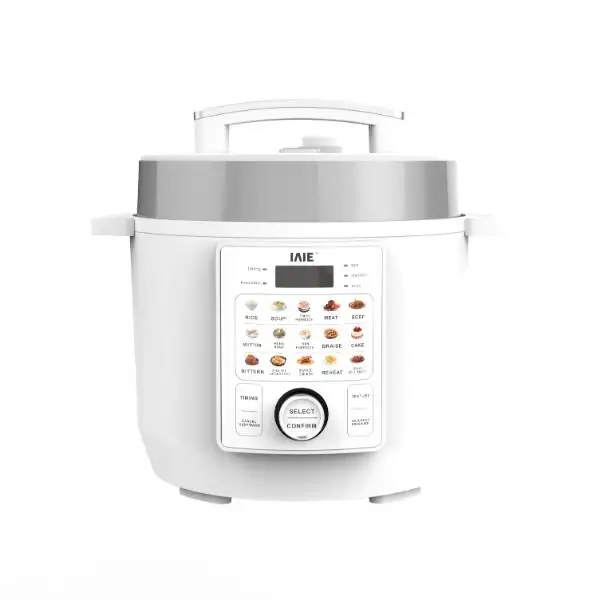
8. Practical Guide to Using Sustainable Pressure Cookers
Products should be evaluated based on the following considerations:
1. Sustainability should be reflected in the design
More sustainable design typically includes focus on how long a product will last.
2. Consider the Quality of Materials
More sustainable design includes a focus on high-quality durable materials.
3. Repairability
The design of the product should focus on the use of modular components to enhance the ability to replace and repair the product.
4. Safety
Design should reinforce the safety of the product.
5. User Safety
The product should be designed using materials that are safe for the user.
Conclusion: Materials Define Sustainability Performance
The sustainability of a pressure cooker cannot be based solely on its energy efficiency. The materials used in construction and their impact on the environment, including durability and the extent to which they can be recovered and reused, have to be considered.
Currently, the most balanced options in the market are systems based on stainless steel and enamel. They provide good durability, safety, and recyclability. Also, IAIE is implementing modular design and a full life-cycle approach to product development.
IAIE offers customizable pressure cooker systems that integrate a long service life and safe materials to modular scalable manufacturing. IAIE provides these systems as solutions to OEMs, distributors, or partners in kitchen equipment.
FAQs
Q1: Are components of pressure cookers customizeable for OEM orders?
A: Yes, for materials and structures, IAIE provides support for OEM and ODM customization.
Q2: Are enameled inner pots safe for food?
A: Yes, food-safe enamel is a safe material and is frequently utilized in the manufacture of cooking utensils.
Q3: How significant is the selection of materials in relation to a product's lifecycle cost?
A: Quite significant; the costs associated with underperformance and warranties are substantially impacted by the selection of durable materials.
Q4: Are housings made of plastic in pressure cookers recyclable?
A: The plastic housings are potentially recyclable provided the appropriate engineering plastics are employed.
Q5: Is modular product design supported by IAIE?
A: Yes, modular designs are aligned with IAIE's sustainable product development approach.


