





Electric Pressure Cooker Business in Nigeria: Market Insights and Sourcing Strategies
1. Market Overview
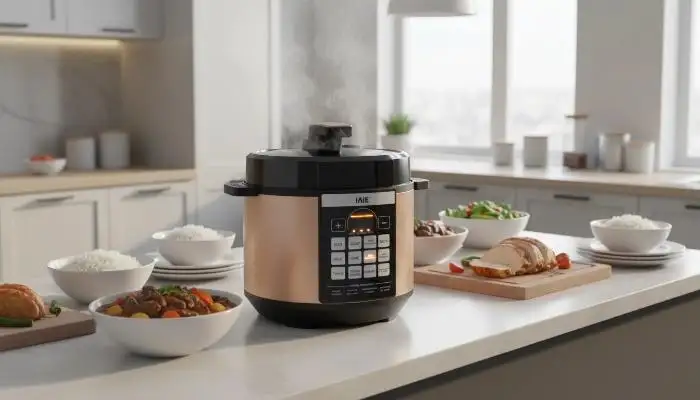
Electric pressure cookers have come to stay in Nigerian households. The market has everything from importers to the latest kitchen gadget brand. They offer modern cooking methods that aid the rapid urbanization of the Nigerian populace and the increasing need for efficient, fast, time-saving approaches to cooking compared to traditional methods.

Rather than establishing a fresh market, Nigeria is a slowly developing market with digital channels and retail outlets beginning to sell products and thus, create awareness.
New companies will find success by:
• Recognizing the traditional methods of cooking and the expectations of customers
• Creating a solid, low-cost supply system that adheres to the law
2. Demand Drivers in the Nigerian Market
Electric pressure cookers help speed up the process of cooking widely consumed Nigerian meals including beans, various stews and soups, and rice that are traditionally lengthy.
The major forces behind the demand of electric pressure cookers are:
• Urbanization and Changes in Lifestyle
With the growing number of working families in the large cities in Nigeria like Lagos and Abuja, cooking appliances that can perform multiple tasks are now needed in the small kitchens.
• Improved Efficiency of Energy Use
Although there are concerns about the reliability of electric supply, families are increasingly focused on the cost of cooking. Compared to cooking on the stove for long periods, cooking on an electric pressure cooker may even be more efficient.
• Improved Retail and E-commerce Systems
The availability of new online shopping platforms and traditional retail outlets have improved the availability of products in the Nigerian market. Imported small appliances have become commonplace in both structured and unstructured retail markets.
• Understanding Pressure Cooking
Traditional stovetop pressure cookers are common in most Nigerian kitchens. Switching to electric pressure cookers should not disrupt cooking patterns. Users would appreciate the automation, added safety, and programmable features.
3. Important Operational Considerations
When creating a sustainable business surrounding the distribution of electric pressure cookers in Nigeria, brand owners, and distributors intend to consider the following factors:
3.1 The Electrical Environment and Product Safety
In some areas there are still challenges with voltage fluctuations. Creating a product that can handle varying voltages and includes surge protection and/or a stabilizer will decrease the overall product failure rate and increase consumer satisfaction.
3.2 Price Segmentation
Due to the sensitivity of the pricing in the market, the product line is most successful when it includes:
• Basic models for the mass market.
• Mid-level models that are more versatile and multifunctional.
• High-end models with advanced features and smart controls.
3.3 After- Sales Service
The ability to service the product locally is an important factor. The availability of replacement parts and service providers or the training of basic service technicians improves service perception.
3.4 Localization of Cooking Functions
The adoption of products that include programmable functions for the cooking of commonly prepared Nigerian meals (rice, beans, stews, and porridge) is strongly recommended. Programmable functions and cooking logic can be localized to minimize product complexity even further.
3.5 Standards Compliance
Imported devices must comply with the Standards Organization of Nigeria (SON) and must also have at least one international standard. Compliance with the SON is not guaranteed, but there is an increased likelihood of approval and customs clearance and an increase in consumer confidence.
4. Sourcing Strategy: the Role of IAIE in the Supply Chain
For importers and private-label brands choosing the right OEM/ODM is critical.
IAIE is a manufacturer in China of electric pressure cookers and smart rice cookers that provides global OEM/ODM manufacturing.
Manufacturing Capability and Production Strength
According to IAIE, we possess:
• 50+ injection molding machines
• 500+ sets of appliance molds
This manufacturing base enables:
• High capacity mass production of standard units
• Development of custom housing designs
• Rapid modification of molds for different brands
This offers Nigerian distributors greater flexibility for molding and adapting the products to suit the needs of the local market.
OEM/ODM Customization Options
| Customization Area | Options | Nigerian Market Adaptation |
| Capacity Range | 3L / 5L / 6L / 8L | 6L-8L ideal for family units; 3L for beginner consumer |
| Inner Pot Material | SS / Ceramic / Non-stick coating | Buying decision is influenced by durability and ease of cleaning |
| Control Interface | LED / LCD / Touch panel | A simple UI is better for large market adoption |
| Branding Options | Logo printing / packaging customization | Allowing for private label positioning |
| Cooking Programs | 10 – 20+ | Local dish programmable to help usability |
Product Line Flexibility
IAIE's product offering includes:
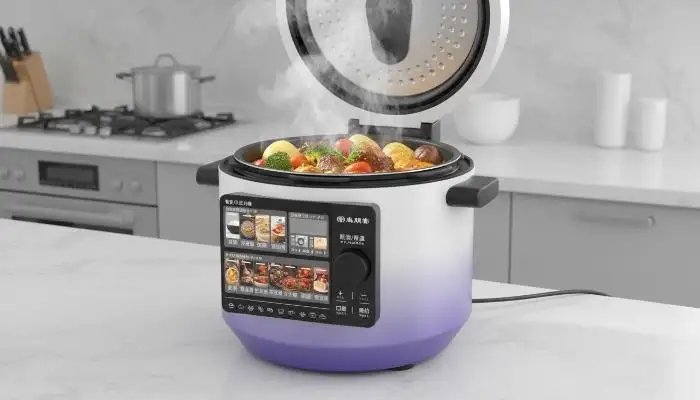
• Dual-control electric pressure cookers (digital and manual)
• Multi-function 12-in-1 pressure cookers
• Quick-cook entry-level pressure cookers
Having a breadth of product choices allows the distributors to introduce varied feature and price level products to the Nigerian market.
Packaging, Logistics, and Lead Times
IAIE provides customizable standard OEM packaging for market retail support.
Lead times for standard OEM orders range from 25 to 30 days, depending on order complexity and level of customization.
For markets, like Nigeria, where demand is irregular and only grows during peak shopping periods (holidays, promotions), established cycle times guess and stabilize unpredictable supply.
Quality Assurance and Safety Standards
Electric pressure cookers use a pressurized cooking environment and require a high level of safety control.
IAIE employs a multi-level quality assurance system that includes the following:
Inspection During Process
• Evaluation of Structural Components
• Testing of PCBs and Electronic Controls
• Validation of Assembly Accuracy
Testing at the End of the Production Line
• Evaluation of Performance under Heat and Pressure
• Testing of Seals and Safety Valves
• Verification of Complete Functional Operation
Compliance with Certification Criteria
IAIE products conform to international standards, including:
• CE
• CB
• RoHS
• UL
• ETL
These certifications facilitate acceptance of the products in international markets and provide confidence to prospective buyers, subject to the local Standards of Nigeria compliance.
6. Market Entry Strategy for Nigeria
Successful entry strategies target complementary elements of product, market and education.
Multi-Channel Distribution
• E-commerce (Jumia, Konga)
• Physical appliance markets (Alaba International, Idumota)
• Regional distributors and wholesalers
Consumer Education
• Short cooking demonstrations
• Recipe guides
• In-store cooking demonstrations
Value-Added Bundles
• Additional sealing rings, protection devices and accessories
Warranty Strategy
The availability of warranty services and clearly specified terms create confidence and reduce the barrier to purchase.
7. R&D and Localization Support
IAIE's research and development provides the opportunity for adjustment to local market preference such as:
• Cooking with local ingredients, i.e. beans and grains
• Regional adjustment of pressure for cooking
• Better control of the keep warm function for longer
Such partnerships allow companies to go beyond generic imports and design market-specific appliances.
Corporate Positioning
IAIE focuses its strategies on the following positioning areas:
• Innovation
• Quality
• Design
• Sustainability
• Collaborative partnerships
For importers, this means a manufacturing strategy with a focus on developing the brand and providing ongoing support.
Final Words
There is a favorable environment for selling electric pressure cookers in Nigeria. These electric devices would serve the needs of modern kitchens in a Nigerian cooking culture that is urbanizing and adapting to convenience.
To satisfy demand in the Nigerian market, we suggest:
• Customized / localized versions
• After-sales service
• Price flexibility
• Partnerships with manufacturers
IAIE is equipped to support brands aiming to tap into the Nigerian market for domestic appliances with their supply chain and production services in the OEM/ODM sector.
Given Nigeria's new emerging market, coupled with understanding their consumers, we believe electric pressure cookers will likely be the dominant cooking appliances in the market.
FAQs
Q1. Can we customize branding and packaging?
Yes, complete OEM branding including logo, color, and packaging design is available.
Q2. What capacity is most suitable for the Nigerian market?
Models of 5L or 6L are most requested for use in the household.
Q3. Do the products support local cooking menus?
Yes, the preset programs can be adjusted for local dishes.
Q4. What certifications are available for export?
Common certifications available for export are CE, CB, RoHS, UL, and ETL.
Q5. Do you support voltage customization for Africa?
Yes, we can adjust the specs for the country's voltage.


