





Electric Pressure Cooker for Businesses: Why 2026 Commercial Kitchens Are Switching to Unibody Design
Electric Pressure Cooker for Businesses has been significantly reengineered for the first time in a decade. Labor and energy shortages combined with price increases and growing regulatory energy demands, lead to higher operating costs, and even more changes in the kitchen.
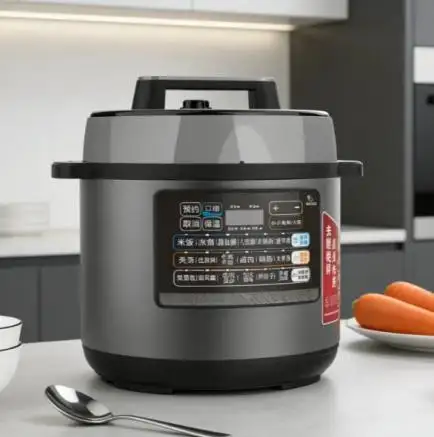
In 2026, evaluative engineering choices will likely determine the industry 's future. Pressure cookers designed from a single seamless piece, rather than multiple pieces, is greater structural integrity. For the commercial food service, unibody pressure cookers represent the highest point of structural integrity.
What Makes Traditional Welded Cookers Insufficient for High Volume Kitchens
For decades, the commercial kitchen cookers were based on multiple welded units. One piece welded units are inferior to designed units based on multiple welded units.
•Structural Seflections: Welds ultimately fail structurally under a sub-cyclic heating and cooling, followed by vacuum depressurization, wilt during operating cycles.
•Sanitation: Welds unit will provide increased service time over a multiple welded unit, followed by depressurization wilt.
•Reliability: Under sub-cyclic heating and vacuum depressurization, the units will function.
Commercial kitchen equipment is expected to be 37 billion in 2026. Its structural integrity and service life are expected to be maintained. However, the practice of relying on multiple welded units to collectively fulfill the functional requirements of the component throughout its entire service life is no longer considered acceptable; only the complete replacement of the unit as a whole meets the applicable requirements.
Unibody Construction: What It Can Do for Your Kitchen
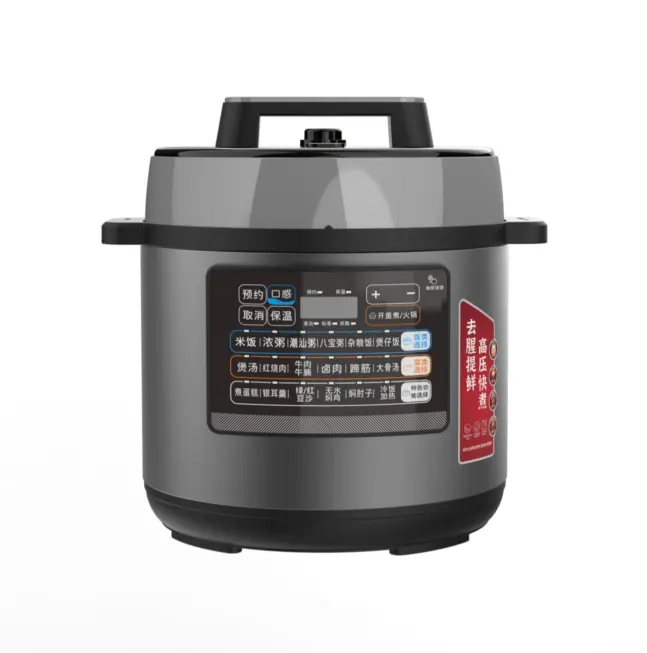
The construction of the current model eliminates any potentially weak seams that can form during welding. The IAIE Electric Pressure Cooker for Businesses is designed with one singular piece of molded stainless steel, forming a completely continuous unibody construction.
The key benefits of this in a high paced kitchen include:
•Resistant to seam corrosion: The welding joints of a typical product are the weakest point of products with a multiple piece stainless steel construction. As such, they can be corroded as food and moisture can seep in.
•Excellent conduction of heat: The multiple piece construction typically leads to uneven conduction around the stove thus leaving hot and cold spot while cooking. This leads to the parts of the food at the center typically bowing while the parts on the outer side remain undercooked.
•Easier to clean: The multiple piece construction leads to a rough edge which can harbor food. This can lead to the product failing safety inspection while aggravating frequent cleaning and maintenance.
•Durability: Users are able to report the products having a longer lifetime in worksites with a this construction.
This construction leads to increased durability which in a ordered kitchen leads to lower operating costs due to very little downtimes.
The 2026 Commercial Kitchen Context: The Importance of Durability
The following points display the current and future effects of Unibody construction.
1. Lasting effects of labor shortages. As many countries around the globe are currently experiencing a lack in skilled labor force, the remaining staff are typically overburdened. Units that are designed for less frequent maintenance keep the remaining workforce operating.
2. Absolute spikes in costs of items. Due to the tariffs which will be in place next year, the cost of numerous imports will be in increases. As such, buying higher maintenance and lower durability items will lead to increased operating cost over 3-5 years.
3. Sustainibility obligations. An balance the needs to meet regulations and Manufacturers are faced with growing pressure to satisfy customers. The production of more long lasting and energy saving items that are less frequent keep failures. This offsets the production of new systems.
4. Expectations concerning the speed of service have increased. Not only ghost kitchens, but delivery-only models and high-volume quick service restaurants (QSRs) are not in a position to handle unexpected equipment failures occurring at the most inopportune times, such as peak service hours.
Industry Context: IAIE's Position Against the Competition
The Global Pressure Cooker Market has a number of prominent competitors. Based upon the 2026 data, the leading companies, by market share, include:
| Tier | Brands |
| Global Leaders | SEB, WMF, Fissler, Kuhn Rikon, Zwilling |
| Asia- Pacific Leaders | Midea, Supor, Jiuyang, IAIE, Galanz, Panasonic |
| India Specialists | Hawkins, TTK Prestige |
| North America | Instant Pot, Philips |
| Emerging B2B Specialists | IAIE, Double Happiness, Povos |
Source: QYResearch 2026 Pressure Cooker Industry Report
IAIE has valuable distinctiveness in the competitive landscape due to having a focusing commitment to affordability and commercial-grade durability. Although some premium European brands have a similar focus on durability, there are some trade-offs such as long lead times or pricing that range from thousands to millions. IAIE is able to help B2B clients with:
•Direct pricing from the factory
•Custom options for color and branding (i.e. Stainless steel, Gold, Black, or Blue)
•New packaging methods that optimize logistics
•OEM for kitchen standardization across the entire chain
2026: Beyond Durability
While a unibody chassis is a key component of a pressure cooker, other features are desired by commercial users. IAIE's 8L, 10L, and 12L, are having features patterned on kitchen trends for 2026.
•Safety upgrading
•Microcomputer touch control for us
•Fewer paired fail
•No paired smartphone and no software updates, just provide manual and basic controls.
One Touch Quick Release
IAIE's pressure cooking technology with patented signature release technology, release pressure quickly and without the staff being at risk of having scalding steam.
•Functional versatility: From rice and soup to braising and steaming, one unit can replace multiple appliances, saving space in small kitchens.
•Ceramic crystal inner pot + Dual non-stick steam tray: This provides flexibility, catering to varying menu items and differing needs in cleaning.
Realistic Evaluation of Total Cost of Ownership
An electric pressure cooker built for commercial needs has costs beyond the purchase price. Here is a 5-year comparison of ownership costs below.
| Factor | Welded Cooker | IAIE Unibody Cooker |
| Expected life | 2-3 years | 5-7 years |
| Seal replacement | 2-3 times | 1-2 times |
| Cleaning time per shift | longer (crevices) | shorter (smooth) |
| Risk of seam failure | moderate to high | very low |
| 5 Year total cost | higher (replacement cycle) | lower |
Total cost of ownership may reach 30-40% and higher for canteens with 200-300 persons over a 5-year period.
Picking a Reliable Vendor: The Main Points
When assessing commercial pressure cookers, consider the following:
•Material quality: stainless steel and presence of welds.
•Safety Testing: Products sold with CE, BV and ISO are certified to have passed reliability testing.
•Support Service: replacement seals, control boards, and technical documents are availabile.
•Changes: options for design, packing, and branding.
•Transparent production: Suppliers sharing their reports of factory audits and testing results.
For multi-site operators, IAIE provides practical support through documented quality control and bulk order consistent lead time.
The Bottom Line for 2026 Buyers
The commercial kitchen is becoming smarter, tighter on space, and more cost-conscious. An Electric Pressure Cooker for Businesses built on unibody construction addresses all three pressures: it lasts longer, cleans faster, and fails less often.
For operators evaluating their next equipment purchase — whether outfitting a new location or replacing aging units — unibody design is no longer a premium differentiator. It is setting the standard for long-lasting, reliable, high-quality cookware for restaurants and other food establishments.
IAIE construction standards are paired with a range of functions and features, competitive B2B pricing, and worldwide shipping services. In industries where every minute of shutdown means a direct loss of revenue, investing in the right equipment with guaranteed durability will undoubtedly be one of the most profitable decisions you will make.
FAQ
Q: How long can I expect a unibody Electric Pressure Cooker for Businesses to last compared to a welded model?
A: In commercial settings where the cooker is utilized for daily batch cooking, welded models will typically form, seam cracks in 2 to 3 years. Unibody models like IAIE can last for about 5 to 7 years when the seals are well maintained.
Q: Does unibody mean more complex and expensive repairs down the line?
A: Repairs will be infrequent, and unibody systems are often easier to service in the absence of the joints/areas that will require re-inspection and possible re-welding. Parts that typically fail the fastest like seals, control boards, and heaters remain easily replaceable.
Q: What is the range of alternatives that IAIE has for commercial kitchen appliances?
A: IAIE has 8L, 10L and 12L. 10L and 12L are more common for cafes, canteens and small to medium restaurant systems that provide about 50 to 200 meals in one service.
Q: Does IAIE provide bulk customizations?
A: Yes. IAIE allows personalized orders and custom designs with complimentary standard colors (Stainless steel, Gold, Blue, Black) available for all bulk orders.
Q: Does IAIE manufacture internationally, and are the products safe?
A: IAIE products are manufactured in ISO certified factories and safe for commercial cooking appliances since they meets CE, CB, and BV standards.


