





electric pressure cooker parts
Today, home cooks are utilizing modern pressure cookers because they can cook food in a shorter time, with less effort and the use of less energy. If you already have an electric multicooker, or are looking to buy one for the kitchen, it is important to know about the various parts of a pressure cooker so that it can be operated and maintained safely and used to cook foods more effectively.
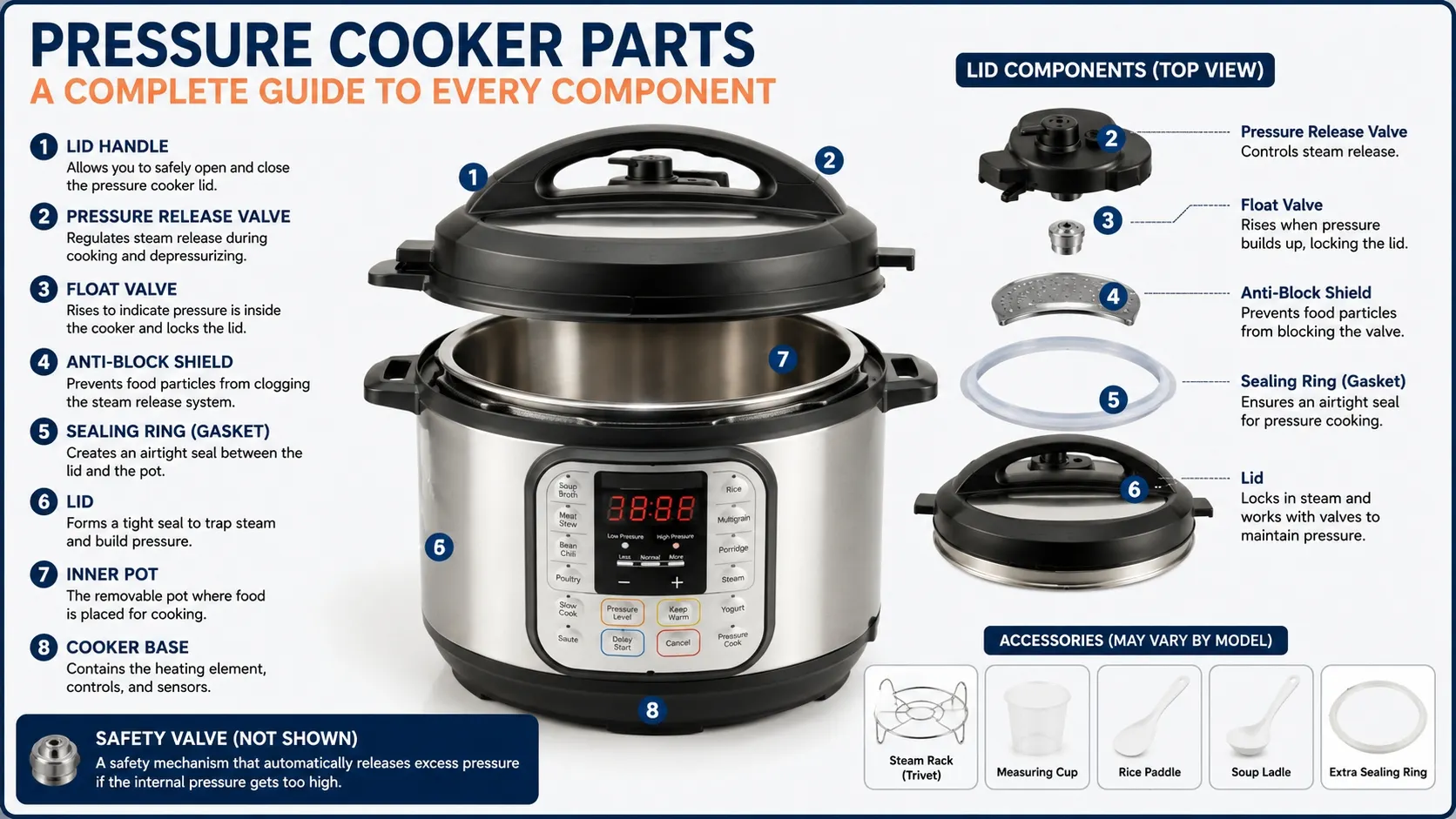
People who are new to the industry are daunted by the technical jargon such as sealing ring, float valve, pressure regulator and anti-block shield. Fortunately, the parts of most pressure cookers are basically the same, although they are different brands. Understanding the operation of each component can mean no more cooking disasters, better safety and longer appliance life.
Why Understanding Pressure Cooker Parts Matters
The principle on which pressure cookers work involves the retention of steam in a closed container. This helps the water to have a higher boiling point, which means food cooks much quicker than it would in regular cookers. All the parts within the cooker serve a function in regulating pressure, safely letting out steam and keeping the cooker airtight.
Understanding the parts of your cooker can assist you in:
- Troubleshoot pressure issues
- Replace worn parts before they fail
- Clean the appliance properly
- Avoid safety risks
- Improve cooking consistency
Model specific replacement parts are strongly recommended by manufacturer, as pressure systems are designed specifically for each pressure cooker. Community discussions also advise against swapping non-compatible components between brands.
Main Parts of a Pressure Cooker
1. Outer Housing or Cooker Base
The housing is the exterior body of the pressure cooker. In electric models, it contains:
- Heating elements
- Control panel
- Sensors
- Internal electronics
Base for cooking pot and to supply power to the cooking appliance. Never put ingredients into the housing directly as this can damage the electronic and heating components.
It is recommended by most manufactures to remove dust from the exterior using a soft damp cloth and not submerging it under water.
2. Inner Pot or Cooking Pot
The inner pot is where food and liquids are placed for cooking. Depending on the brand, it may be made from:
- Stainless steel
- Ceramic-coated material
- Nonstick aluminum
Stainless steel is particularly popular because of its resistance to scratches, its ability to withstand high temperatures and its durability. Although nonstick surfaces can be easier to clean, they tend to become less durable over the years.
These high-quality pressure cookers come with dishwasher-safe inner pots which make it easier to clean up.
3. Pressure Cooker Lid
One of the most crucial safety features is the lid. It can be firmly attached to the cooker and is able to provide the airtight seal required for pressure cooking.
Most lids include:
- Steam release mechanisms
- Float valves
- Silicone sealing rings
- Safety locks
Today's pressure cookers come with lids that won't open as long as the pressure is on.
Correctly cleaning the lid is important as food particles may get stuck in the steam vents which can cause problems in releasing the steam pressure correctly.
4. Sealing Ring or Gasket
The food grade silicone or rubber sealing ring is commonly used. It is inserted inside the lid to form the airtight seal necessary for pressure build up.
If the gasket is not in proper working order, the cooker will not achieve any pressure and the steam will leak out. One of the most frequently replaced pressure cooker components.
Signs Your Sealing Ring Needs Replacement
- Cracks or tears
- Persistent odors
- Loose fit
- Steam leaking from the lid
- Difficulty reaching pressure
Experts recommend replacing sealing rings regularly depending on usage frequency.
5. Pressure Release Valve
The pressure release valve controls steam release during and after cooking. Different brands may call this component:
- Pressure regulator
- Steam release handle
- Pressure valve
- Vent knob
When set to “Sealing,” pressure builds inside the cooker. When turned to “Venting,” steam escapes safely.
Some electric pressure cookers now use push-button release systems instead of rotating knobs.
6. Float Valve
The float valve is a small metal pin that will pop up when pressure increases in the cooker. When sufficient pressure is reached, the lid is securely locked by the valve.
This part is an important safety device because it will stop the cooker from opening if an accident is likely to occur while the cooker is under pressure.
It is important to clean floats periodically, as food particles or debris may interfere with the float valves.
7. Anti-Block Shield
There is an anti-block shield designed under the lid for some electric pressure cookers. This tiny metal cover blocks food particles from blocking the steam release system.
Sometimes during cooking, food will rise up during starchy foods, soups, or foamy foods. Anti-block shield reduces risks of blocking and enhances safety.
8. Safety Valve or Overpressure Plug
If the cooker's pressure rises too high, the safety valve provides a safety mechanism.
This is the same part and can be found in stovetop pressure cookers as:
- Overpressure plug
- Safety plug
- Emergency release valve
In the event of failure of the primary pressure controls, the safety valve will automatically release excess steam, preventing dangerous pressure buildup.
Safety valves are never to be repaired and must be replaced as soon as they are broken.
Additional Pressure Cooker Accessories
Many pressure cookers also include optional accessories that improve versatility.
Steamer Rack or Trivet
Used to elevate food above liquids for steaming vegetables, eggs, seafood, and desserts.
Glass Lid
Allows the cooker to function like a standard pot or slow cooker.
Extra Sealing Rings
Many users keep separate sealing rings for savory and sweet dishes because silicone can absorb food odors.
Steam Basket
Useful for steaming dumplings, vegetables, and delicate foods.
Community discussions often highlight confusion around accessory identification, especially when purchasing used pressure cookers.
Common Pressure Cooker Problems and Their Causes
Cooker Won’t Reach Pressure
Possible causes include:
- Damaged sealing ring
- Improperly seated lid
- Steam release valve left open
- Dirty float valve
Steam Leaking Around Lid
This usually indicates:
- Worn gasket
- Misaligned sealing ring
- Food debris on the rim
Lid Won’t Open
The float valve may still detect pressure inside the cooker. Never force the lid open. Wait until pressure drops completely.
Tips for Pressure Cooker Maintenance
Proper maintenance extends the life of your cooker and improves safety.
Best Maintenance Practices
- Clean valves after every use
- Inspect the gasket regularly
- Replace damaged components immediately
- Avoid overfilling the cooker
- Use manufacturer-approved replacement parts only
Online repair experts and experienced users strongly discourage using incompatible replacement parts because pressure systems vary between models and brands.
Electric vs Stovetop Pressure Cooker Parts
Both styles use similar pressure principles, but their designs differ slightly.
| Feature | Electric Pressure Cooker | Stovetop Pressure Cooker |
|---|---|---|
| Heating Source | Built-in electric base | External stove |
| Pressure Control | Automatic sensors | Manual regulator |
| Safety Features | Multiple electronic systems | Mechanical safety valves |
| User Control | Preset cooking programs | Manual heat adjustment |
| Common Materials | Stainless steel & plastic | Mostly metal |
Cookers on stovetops are more mechanical with less electronic protective features, while electric models tend to have more sensors and electronic safeguards.
How to Find Replacement Pressure Cooker Parts
When buying replacement parts, always check:
- Brand name
- Model number
- Capacity size
- Manufacturer recommendations
For compatible parts, usually, it's best to go to official manufacturer websites and authorized parts suppliers.
Try to avoid using non-specific replacement parts unless there is an explicit match.
Final Thoughts
Knowing the parts of a pressure cooker can help enhance your cooking experience and ensure safety for years to come. Every part plays a crucial function in maintaining pressure and avoiding accidents, from the sealing ring to the float valve, pressure regulator to safety plug.
An electric multicooker or a traditional electric pressure cooker that is cleaned, inspected and parts are replaced regularly can last for years and will keep running efficiently. This will help you to gain more confidence in the kitchen, to prevent common issues, and to achieve better results each time in the kitchen.


