





electric pressure cooker vs stovetop
Pressure cookers are now a necessity in every household and are used by foodies for preparing their meals in a quick span of time. From saving time to retaining nutrients to cooking tender meals in less time, pressure cookers do it all. But between a stovetop pressure cooker and an electric pressure cooker such as the popular Instant Pot, it can be confusing to make your choice. This guide discusses the difference, advantages and factors to consider when choosing a suitable pressure cooker for your household.
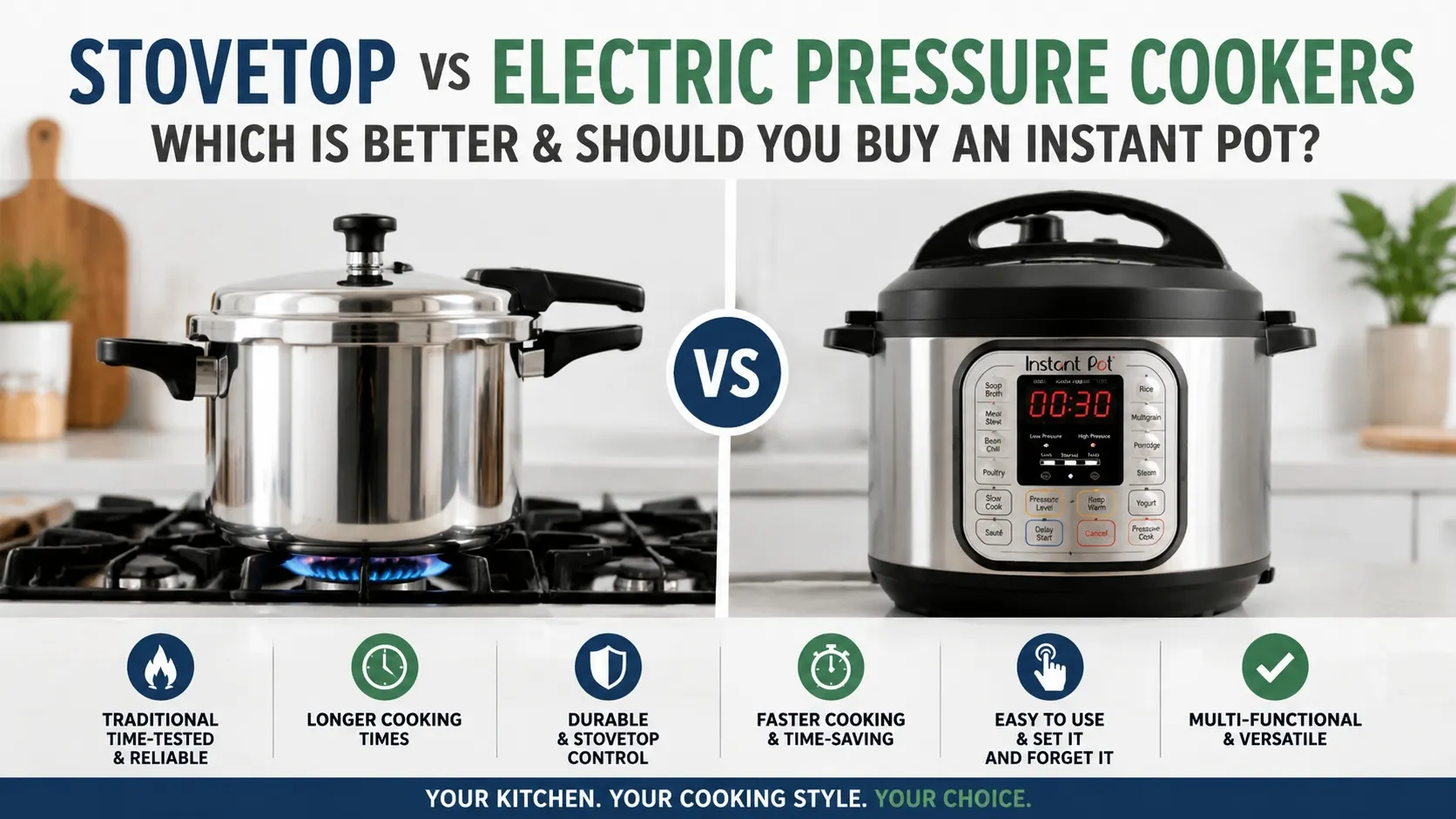
Understanding Pressure Cookers
Pressure cookers are used to cook food at high pressure and steam, which keeps the flavors and nutrients contained. The pressure is raised in the cooker, thus the boiling point of water is raised and food can be cooked much sooner than by the normal method. Pressure cookers are particularly helpful with beans, stews, soups, meats and even rice in a much shorter amount of time.
There are two types of stovetop pressure cookers and electric pressure cookers. Every one comes with its own characteristics, strengths and weaknesses.
Stovetop Pressure Cookers
Traditionally, people have been using stovetop pressure cookers in their kitchens for many years. They are usually stainless steel or aluminum, and are intended to be heated directly on a stove.
Pros of Stovetop Pressure Cookers:
- Faster Cooking Times
The stovetop models typically have higher pressures than electric models, and they will cook quicker. This is a great way to have them for meals that need a lot of heat or less time cooking. - Durability
Made from heavy-duty stainless steel or aluminum, stovetop cookers can last a lifetime with proper care. They are less likely to suffer from electronic failures as they have no dependence on electricity. - Versatility
Others stovetop cookers can be used to brown and/or sauté food before pressure cooking, providing greater control over recipes and flavors.
Cons of Stovetop Pressure Cookers:
- Manual Operation
They need careful handling such as heat adjustment and management of pressure release. This can be daunting for novices and time constraints for quick cooks. - Safety Concerns
Older stovetop models are far less safe than modern models, but can cause steam burns or accidents if used incorrectly. - No Automatic Programs
Unlike electric pressure cookers, stovetop pressure cookers don't have preprogrammed settings. Cooking must be done by hand and cooking times must be adjusted.
Electric Pressure Cookers
The electric pressure cookers, like Instant Pot, are multiplying in popularity because of the convenience and versatility they offer. They are self-contained with an integrated heating element and electronic controls.
Pros of Electric Pressure Cookers:
- Ease of Use
The pre-programmed electric settings make them easy to use for beginners and cater for various foods. Cook rice, beans, soups, yogurt, and even cakes on a single press of the button. - Safety Features
Today, electric pressure cookers feature several safety features, including auto pressure release, lid locking and overheat protection. - Multi-functionality
Many electric pressure cookers can also be used as a slow cooker, rice cooker, sauté pan and even a yogurt maker, saving on the space and money required to have several appliances. - Consistent Results
Electronic controls keep the temperature and pressure steady, reducing the risk of over cooking.
Cons of Electric Pressure Cookers:
- Longer Cooking Times
Electric cookers generally require more cooking time to build pressure than do stovetop models, increasing cooking time slightly. - Limited Browning
Some models can sauté, but thostop cookers might provide more control when browning and searing. - Electronic Dependence
Electric pressure cookers use electricity and electronics, and can be used only when the electricity is on or if it doesn't have any problems.
Choosing the Right Pressure Cooker for You
The pressure cooker that is best for you depends on your cooking style, schedule and kitchen. Consider these factors:
- Cooking Speed
A stovetop pressure cooker might be a better option for speed since it has a greater working pressure. - Convenience
An electric pressure cooker is for those with a busy lifestyle or beginners; it has hands off cooking and preset programs. - Kitchen Space
Stovetop electric cookers can be stored easily and electric cookers take up counter space. - Budget
Often inexpensive to purchase, stovetop pressure cookers can be used for multiple purposes, whereas electric cookers can be more expensive but can save energy. - Safety
Electric cookers offer reassurance to families with children and those less adept at cooking.
Popular Use Cases
- Beans and Legumes: Both types excel at cooking beans quickly, but stovetop models may do it slightly faster.
- Meats and Stews: Electric cookers are excellent for slow-cooked flavors without constant monitoring.
- Rice and Grains: Electric models simplify rice cooking with preset programs.
- Yogurt and Desserts: Only electric models offer these options easily.
Tips for Safe Pressure Cooking
- Read the Manual: Each model has specific instructions. Always follow manufacturer guidelines.
- Do Not Overfill: Avoid filling above the recommended capacity to prevent clogging the pressure valve.
- Release Pressure Properly: Use natural or quick-release methods as directed to prevent accidents.
- Maintain Your Cooker: Regularly check seals, valves, and gaskets to ensure proper function.
Conclusion
There are pros and cons to using both a stovetop and electric pressure cooker. Stovetop models are fast, durable and allow for precise control and electric models are convenient, safe, and versatile. Your decision is based on your lifestyle, experience and cooking habits.
A stovetop pressure cooker might be a perfect choice for families looking for fast meals and traditional cooks who appreciate control when cooking. For busy professionals, it is likely a better fit to use an electric pressure cooker like the Instant Pot, while most beginners or anyone who appreciates an easy-to-use cooker will find it more useful.
In the end, the ideal pressure cooker is the one that suits your kitchen, cooking method and time, so that you can enjoy delicious dishes without a fuss each time.
Share:


