





how does a pressure cooker work
Modern homes have become an essential kitchen gadget with the use of pressure cooker in cooking food much faster than usual duration with retaining the flavor and nutrients. However, there's a behind-the-scenes mystery of physics, steam dynamics and ingenious engineering involved.
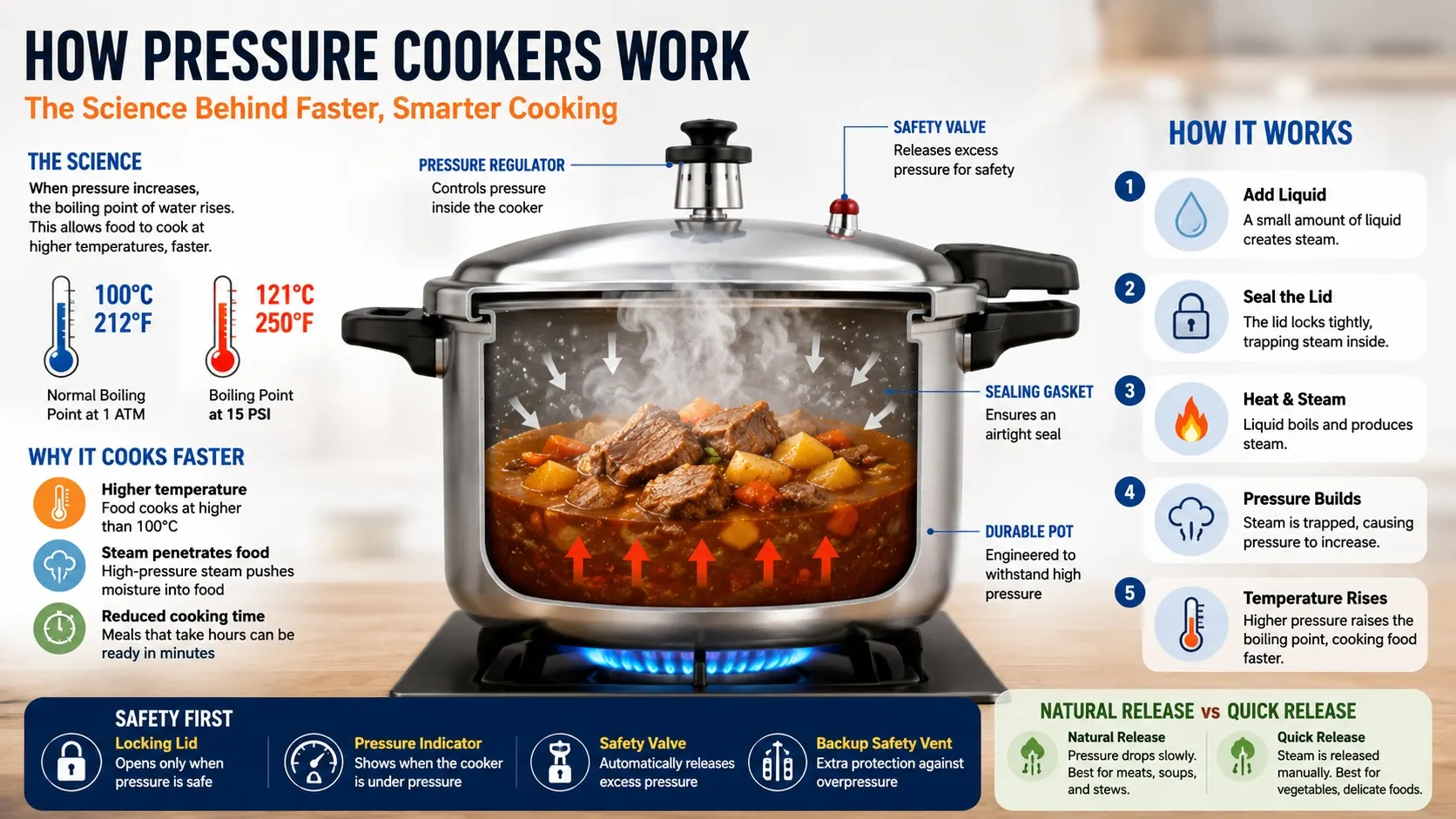
In this guide we will take a look at how exactly pressure cookers work, how they manage to cook food so fast, and the efficiency and safety they provide in everyday use!
What Is a Pressure Cooker?
A pressure cooker is a pot that is tightly covered and in which food is cooked at a higher temperature than the boiling point of water because of the pressure of the steam.
A pressure cooker is a tightly sealed container in which steam is not allowed to escape, unlike the case of conventional cooking. This pressure of steam is what brings about further increase of internal pressure and a radically different thermal behavior within the pot.
The result? Food cooks faster, is more tender and retains more nutrients than conventional boiling or simmer.
The Science of Pressure Cooking
The basic science behind pressure cooking is very simple:
The boiling point of water will rise with rise in pressure.
The boiling point of water is 100°C (212°F) at a sea level pressure. At this temperature it will convert to steam and will not be able to be cooled further without condensing.
But in a closed pressure cooker, steam can't escape. The more heat is added:
- Water turns into steam
- Steam gets trapped inside the pot
- Pressure builds up rapidly
- The boiling point rises above 100°C
In most contemporary pressure cookers, water boiling pressure is around 15 PSI, and water boils at the temperature of about 121°C (250°F).
This higher temperature is what makes it possible for food to cook much faster than normal.
Why Higher Pressure Means Faster Cooking
Pressure cooking speeds up food preparation in two key ways:
1. Higher Temperature Inside the Cooker
Since water can exceed its normal boiling point, the cooking environment becomes much hotter. This means:
- Tough meats break down faster
- Beans and grains soften quickly
- Vegetables cook in a fraction of the time
Essentially, higher pressure allows water-based cooking to exceed the normal temperature limit of 100°C.
2. Steam Forces Moisture Into Food
High-pressure steam does more than just heat food—it actively pushes moisture into it.
This process:
- Softens tough fibers in meat
- Helps sauces and flavors penetrate deeply
- Keeps food moist instead of drying it out
The combination of heat and pressure creates a unique cooking environment that enhances both speed and texture.
How a Pressure Cooker Builds Pressure
A pressure cooker works through a tightly sealed system consisting of:
- A locking lid
- A rubber sealing ring (gasket)
- A pressure valve or regulator
- A metal cooking pot
Here’s how the process unfolds step by step:
Step 1: Adding Liquid
A small amount of water, broth, or other liquid is added. This is essential because steam is what generates pressure.
Step 2: Sealing the Pot
The lid locks tightly, preventing steam from escaping freely.
Step 3: Heating Begins
As heat increases, the liquid inside begins to boil and produce steam.
Step 4: Pressure Builds Up
Since the steam is trapped, it accumulates inside the pot, increasing internal pressure.
Step 5: Temperature Rises
As pressure increases, the boiling point of water increases, allowing the temperature inside the pot to go beyond 100°C.
Safety Features in Modern Pressure Cookers
Early pressure cookers had a reputation for being dangerous, but modern designs are extremely safe thanks to multiple built-in safety systems.
Most pressure cookers include:
- Pressure release valves to control excess steam
- Locking lids that prevent opening under pressure
- Pressure indicators to show when the cooker is pressurized
- Backup safety vents to prevent overpressure
These features ensure that pressure is released in a controlled manner, preventing accidents and making modern pressure cookers safe for home use.
Why Pressure Cookers Are More Efficient
Pressure cookers are not just faster—they are also more energy-efficient.
Because heat is trapped inside the sealed environment:
- Less energy is needed to maintain temperature
- Cooking times are significantly reduced
- Less water evaporates during cooking
This makes pressure cookers both eco-friendly and cost-efficient compared to ovens or stovetop boiling.
Natural Release vs Quick Release
Pressure must be released prior to opening the lid when cooking is complete. There are two typical ways:
Natural Release
The cooker is slow to cool and the pressure slowly decreases. This is the most suitable way to prepare soups, meat and foods which are suited for further cooking.
Quick Release
The valve is used to manually release the steam. The method used for vegetables or foods that might overcook.
It is important to select the appropriate release method for texture and flavor control purposes.
Common Mistakes to Avoid
To get the best results and ensure safety, avoid these common mistakes:
- Overfilling the cooker (never exceed 2/3 full)
- Not adding enough liquid
- Using overly large food pieces
- Opening the lid before pressure is fully released
- Blocking or neglecting the pressure valve
When used correctly, it will improve cooking times and extend the lifetime of the appliance.
Conclusion
The pressure cooker operates on the principle of heat, steam and pressure to alter the cooking process of food. They raise the boiling point of water, thus enabling food to cook at higher temperatures than with normal cooking methods, which means quicker cooking times and better texture.
A pressure cooker is a powerful tool that combines speed, efficiency and great flavor into tendering a variety of foods from tenderizing meats to beans, soups and stews.
Knowing a bit of the science behind it will help you make the best use of the appliance as well as cooking safely.
Share:


