





How does an electric pressure cooker work?
What Is Electric Pressure Cooker?
An electric pressure cooker is a closed cooking device that cooks food by using high pressure and steam as compared to the conventional method. Multi-purpose devices (such as Instant Pot-style models) are popular and can be used to pressure cook, slow cook, steam, sauté, and so on.
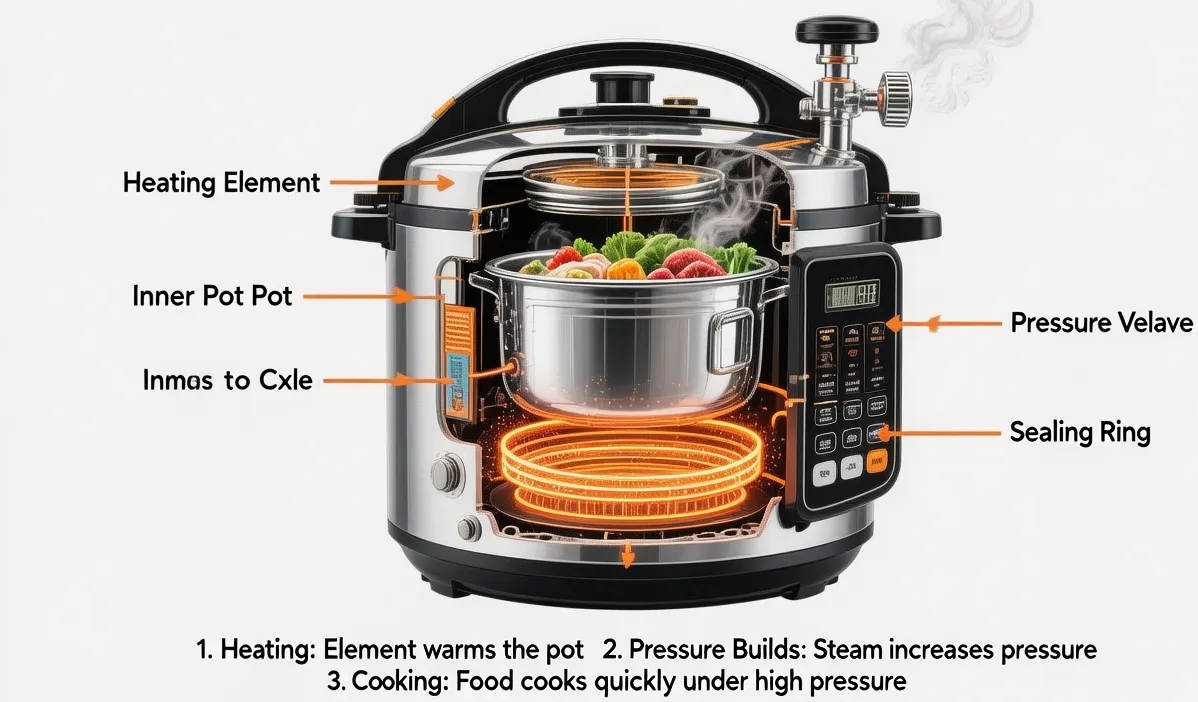
Electric stovetop pressure cookers are automated as opposed to stovetop pressure cookers. You just program it and the machine takes care of temperature, pressure and time of cooking.
The point: The greater the pressure the greater the boiling point and the faster the cooking.
The Physics of Pressure Cooking.
The principle we should know to know how it work is one:
In pressure, water boils at a higher temperature.
In the absence of any disturbances, water boils at 100 C (212 F). However, the higher the pressure in a closed container, the higher the boiling point.
In an electric pressure cooker:
· The pressure increases to between 10 and 12 PSI (pounds per square inch).
· Water can reach 115–120°C (239–248°F) without boiling over
· Due to increased heat, food cooks much quicker.
It is the fundamental scientific concept that makes pressure cooking effective.
Primary parts of an Electric Pressure Cooker.
The electric pressure cooker consists of a number of significant components that collaborate:
1. Inner Pot
This is the removable cooking container, typically of stainless steel or of non-stick substance.
2. Heating Element
It is positioned at the base and heats the pot and transforms the liquid into steam.
3. Lid with Locking System.
The lid is closed in such a way that it traps the pressure and steam. The pressurized cannot be opened.
4. Pressure Sensor
Measures internal pressure and feeds back to the control system.
5. Control Panel (Microprocessor)
Is the brain of the cooker, which automatically regulates the temperature, time and pressure.
6. Pressure Release Valve
Allows forced discharge of steam following cooking (natural or fast).
7. Sealing Ring (Gasket)
A rubber ring to provide an airtight seal to retain pressure.
How an Electric Pressure Cooker Works Step-by-Step.
We will go through the entire cooking process.
Step 1: Heating Begins
When you turn on the cooker, the heating coil heats the liquid in the pot. Food water or broth or moisture starts heating up.
Step 2: Steam Formation
Liquid evaporates to produce steam. The lid is closed, so the steam is not able to escape.
Step 3: Pressure Gathers.
Internal pressure is boosted by trapped steam. When it has been filled up to a predetermined level, the cooker goes into pressurizing mode.
Step 4: Temperature Stabilization
The system works automatically to minimize or correct heating to keep pressure and temperature constant.
At this point, foods cook fast and well.
Step 5: Timer to cook.
The countdown will only begin when maximum pressure is achieved on the control panel. This guarantees correct cooking time.
Step 6: Pressure Release
Once the cooking is over, there should be a release of pressure:
· Natural release: Pressure decreases gradually.
· Quick Release: Steam is either released manually or automatically via the valve.
The lid opens without damaging the pressure as soon as it returns to its normal level.
Why Electric Pressure Cookers Cook quicker.
The velocity is a result of a composite of factors:
1. Higher Temperature
Food is cooked in temperatures that are higher than boiling.
2. Steam Penetration
Food can be penetrated by pressurized steam more easily than by dry heat.
3. Moist Heat Environment
Moisture prevents drying and speeds up heat transfer.
4. Sealed Environment
There is no loss of energy to evaporation.
For example:
· Beef stew: 2–3 hours → 40–60 minutes
· Rice: 30–40 minutes → 10–15 minutes
· Beans: 1–2 hours → 20–30 minutes
Electric Pressure Cookers Safety Mechanisms.
The new generation of electric pressure cookers is very safe with several inbuilt safety measures:
✔ Lid Lock Safety
Stops opening when the pressure is high.
✔ Pressure Release Valve
Automatically controls overpressure.
✔ Temperature Sensors
Prevent overheating.
✔ Backup Safety Valve
Discharges pressure in case of primary system failure.
✔ Automatic Shutoff
Switches off heating in case of abnormal conditions.
These characteristics contribute to the fact that electric pressure cookers are much safer than the traditional models with the stovetop.
Advantages of an Electric Pressure Cooker.
1. Time-Saving Cooking
Hours-long meals can be prepared in minutes.
2. Energy Efficient
Consumes less power than ovens or stovetops.
3. Nutrient Retention
The reduced time of cooking aids in preserving of vitamins and minerals.
4. One-Pot Convenience
Minimizes food preparation and makes it easier.
5. Versatility
Can pressure cook, steam, sauté, slow cook, and can even make yogurt.
Common Misconceptions
“It’s dangerous”
Current electric models are built in more than one safety layering.
“Food loses flavor”
Actually, sealed cooking tends to add flavor as juices are not lost.
“It’s complicated to use”
Majority of devices are preset or one-touch programs.


