





how to use instant pot pressure cooker
The Instant Pot and other electric pressure cookers have revolutionised home cooking. They can tenderize tough meat, cook beans in less than an hour and make full meals with little effort. Despite this, there are still people who are new to the field who are hesitant to give it a try due to one of their biggest concerns: “Is it safe?”
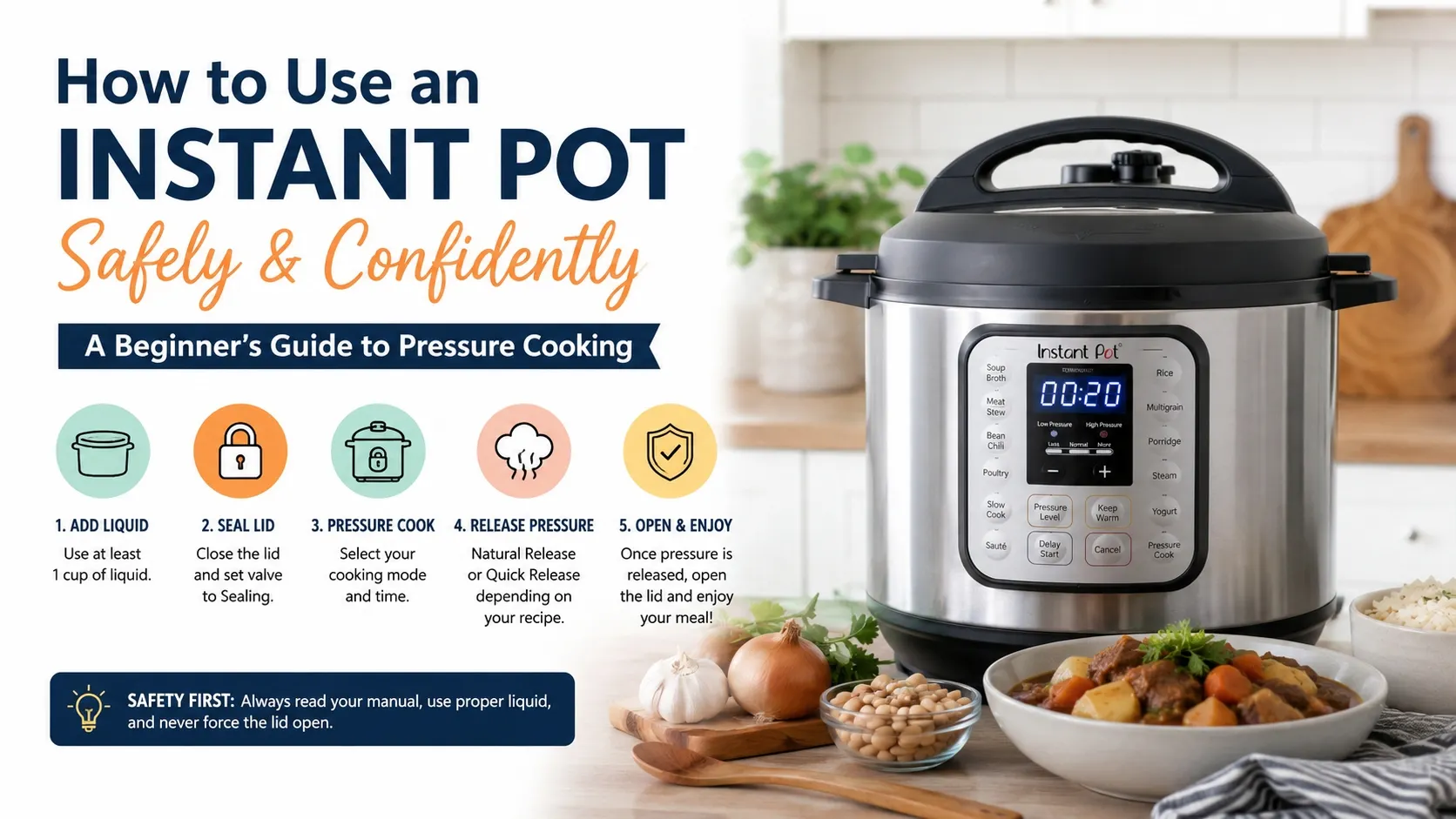
The answer is straightforward – if it's used correctly, an Instant Pot is one of the safest kitchen appliances on the market these days. Today, there are several safety systems inbuilt in modern devices to avoid overpressure, overheating, and user–caused errors. With knowledge of how it functions, fear soon goes and confidence replaces it.
This is a complete Instant Pot recipe book that will give you all the knowledge you need to use an Instant Pot or electric pressure cooker safely and confidently.
What Is an Instant Pot and How Does It Work?
Instant Pot is an electric pressure cooker with some extra functions. It cooks food faster than the conventional stovetop pressure cooking and applies sealed steam pressure to cook the food.
It's the basic science:
If you heat liquid inside a closed container, steam will form and the pressure will increase. This increases the boiling point of water above 100°C (212°F) and food cooks at a higher temperature and much faster than at normal boiling.
The pressure inside the pot is usually about 10-12 PSI, a pressure high enough to substantially reduce the cooking time without compromising flavor and nutrients.
Although it sounds strenuous, this process is carefully monitored. The device automatically changes the heat and pressure, so it is perfectly safe to operate at all times.
Are Instant Pots Really Safe?
Yes – modern electric pressure cookers are very safe when cooked correctly.
The Instant Pot has several safety features as opposed to the old stovetop options that were operated by a weight valve, including:
- Lid locking mechanisms that prevent opening under pressure
- Automatic temperature control sensors
- Pressure release valves to regulate steam
- Overheat protection fuses
- Sensors that detect incorrect lid placement
These systems collaborate in order to prevent the cooker from reaching unsafe operating conditions.
In reality, the greatest hazard is not explosion but steam burns caused by improper handling – which should be avoided with simple precautions.
Step 1: Understand the Key Parts Before You Start
Before using your Instant Pot, familiarize yourself with the main components:
- Inner Pot: Stainless steel cooking bowl
- Lid: Locks tightly during pressure cooking
- Sealing Ring: Silicone gasket that traps steam
- Steam Release Valve: Controls pressure release
- Control Panel: Lets you select cooking programs
Before each use ensure the valve and sealing ring are clean and installed correctly. These mini checks are crucial to safe operation.
Step 2: Always Use the Right Amount of Liquid
Liquid is necessary to pressure cook. It is necessary for the cooker to build up pressure if not then steam cannot be generated.
As a general rule:
- Use at least 1 cup of liquid for most recipes
- Do not exceed the maximum fill line (usually 2/3 full)
- For beans, grains, and foamy foods, stay below half full
If the steam valve is overfilled it can cause the cooking to be uneven. Maintaining adequate liquid levels will allow for a gradual increase in pressure and safe operation.
Step 3: Seal the Lid Correctly
Properly locked lid is one of the most vital safety measures.
Before cooking:
- Place the lid securely and rotate until it locks
- Set the steam valve to “Sealing”
- Check that the silicone ring is properly seated
The cooker will not come to pressure and may show an error if the seal is not properly made.
Never force the lid when cooking. The appliance can only be unlocked when pressure is completely released from the appliance.
Step 4: Choose the Right Cooking Mode
Instant Pots have several functions: pressure cooking, slow cooking, sauteing, and steaming.
For beginners, use the Pressure Cook mode with preprogrammed recipes.
Some useful guidelines:
- High pressure: best for meats, beans, soups
- Low pressure: gentle cooking for delicate foods
- Sauté mode: browning ingredients before pressure cooking
Using the correct mode ensures better texture and prevents overcooking.
Step 5: Understand Pressure Release Methods
There are two main ways to release pressure after cooking:
Natural Release (NR)
Pressure decreases gradually on its own. Best for:
- Soups
- Stews
- Rice
- Large cuts of meat
Quick Release (QR)
You manually release steam using the valve. Best for:
- Vegetables
- Seafood
- Foods that cook quickly
Always keep hands and face away from the steam vent. The escaping steam is extremely hot and can cause burns.
Step 6: Avoid Common Beginner Mistakes
Most Instant Pot problems come from simple user errors. Avoid these:
1. Overfilling the pot
Too much food can block steam and prevent proper pressure.
2. Not enough liquid
Without liquid, the cooker cannot build steam pressure.
3. Incorrect sealing
A misaligned lid or valve will stop the cooking process.
4. Ignoring the burn warning
This usually means food is stuck at the bottom or liquid is insufficient.
5. Releasing pressure too quickly when not appropriate
Some recipes need natural release for best results.
Avoiding these mistakes ensures consistent, safe cooking results.
Why People Fear Pressure Cookers (And Why They Don’t Need To)
There's a lot of fear associated with pressure cookers - probably due to outdated cookers on stoves or misconceptions about the mechanics of pressure.
But today's electric pressure cookers are different:
- They cannot exceed safe pressure limits
- They automatically shut off if something is wrong
- They require multiple safety conditions to operate
The system is actually set to fail safely instead of dangerously.
The most frequently reported problem with food users have is that it is undercooked, not anything for safety reasons.
Beginner Safety Tips for Confidence
To build confidence when using your Instant Pot:
- Always read your specific model’s manual
- Stay nearby during the first few uses
- Keep the steam vent clear
- Use oven mitts when releasing pressure
- Clean the sealing ring regularly
- Never force the lid open
With these habits, the appliance becomes predictable and easy to use.
Final Thoughts
Don't be intimidated by an Instant Pot or electric pressure cooker; it's a kitchen powerhouse that's safe to use. With the knowledge of how pressure, sealing and steam release operate, the whole operation is easy and stress-free.
Use simple recipes, safety precautions, and gradually gain experience. Within a short time, you'll find that it's one of the most useful appliances in your kitchen!
Cooking at pressure is not dangerous when done properly; it is only smart cooking that is quicker.
Share:


