





are pressure cookers safe to use
Pressure cookers are one of the most popular appliances among all cooking appliances in the home, and they are also favored tools of any professional chef's table. They can significantly decrease cook times, retain nutrients and contribute to developing flavorful dishes without much work. Although pressure cookers have become fashionable, many wonder are pressure cookers safe?
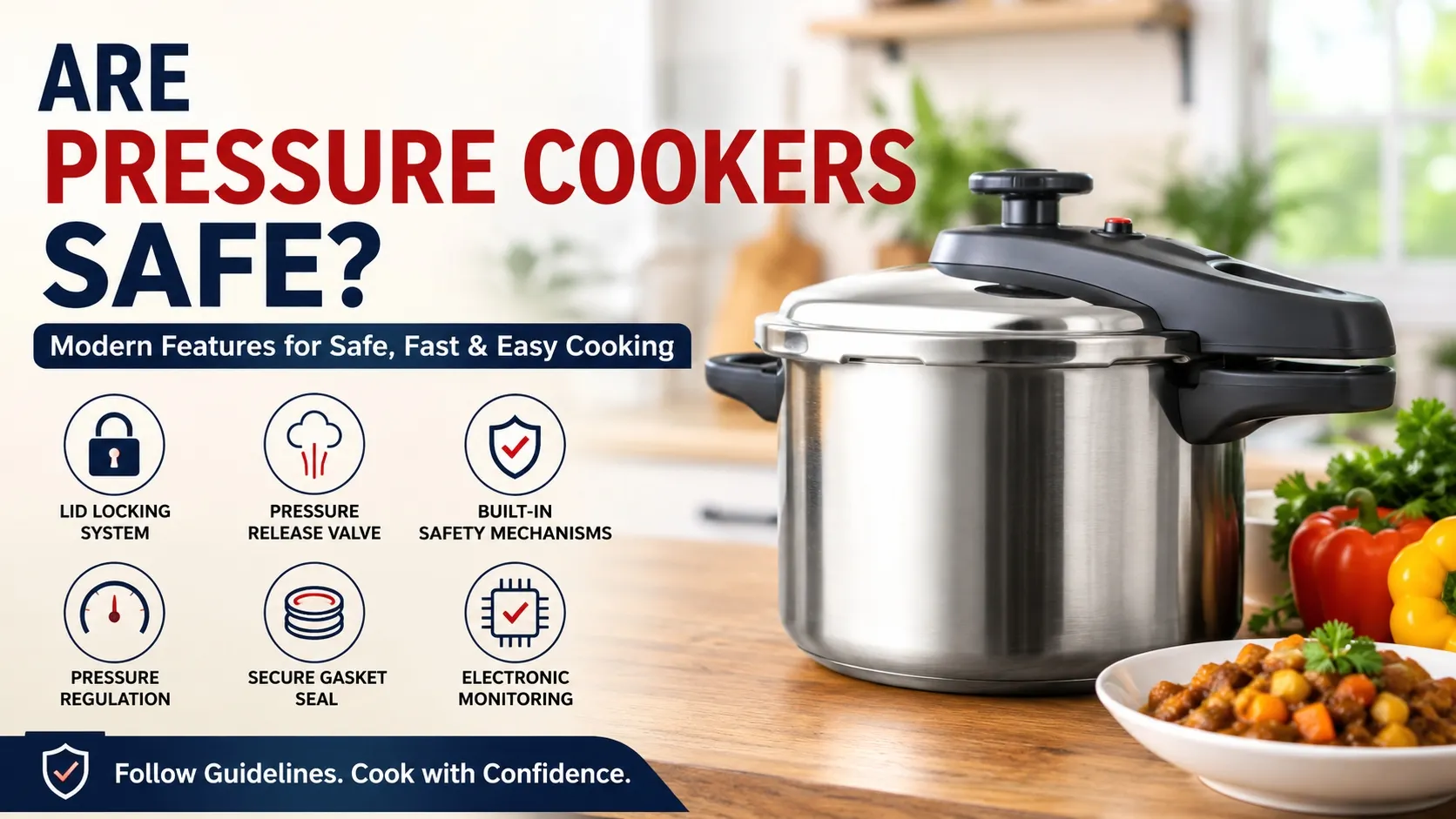
Yes, short answer. Today's pressure cookers feature several safety features and are much safer than those used many years ago. To use these appliances safely and efficiently, it's important to know how they operate and the safety equipment provided.
We'll discuss the pressure cooker, how it works, what safety technologies are found in more modern cookers, typical concerns, and some tips on pressure cooker safety.
How Does a Pressure Cooker Work?
A cooking pot with a lid that can be used to cook by applying pressure is called a pressure cooker. When steam forms in the pot, the pressure builds up inside. This increases the water boiling point above the standard 212°F (100°C) to enable food to be cooked at higher temperatures.
This is because boiling water is needed to cook in pressure cookers which makes the process of cooking much faster and quick than regular cooking. Tender cuts of meat, beans without long soaking and soups with rich flavors are achieved in a very short amount of time.
The pressure stays there within the enclosed space until it can be vented safely by pre-engineered means.
Why Older Pressure Cookers Earned a Bad Reputation
Older models (those from decades ago) pose many safety concerns that exist with pressure cookers. Use of a simple pressure valve was often the method used for the early pressure cookers there were no redundant safety systems.
If it becomes blocked or if the lid is not closed, the pressure could rise too high. In very unusual circumstances, it might release the lid suddenly or allow hot steam to escape out of the cooker.
These causes played a significant role in the development of the negative opinion regarding the safety of the pressure cooker. But today there are big changes in the way pressure cookers are designed to be safe.
Modern Pressure Cookers Are Built with Multiple Safety Features
If you are using a modern pressure cooker, it's bound to include many layers of safety - to prevent accidents and incorrect usage.
1. Lid Locking Systems
Many contemporary pressure cookers have an automatic locking system which keeps the lid closed whilst pressure is present in the pot.
Cooker remains tight until reduced to a safe pressure. This will avoid accidental hot steam and boiling liquids.
2. Pressure Release Valves
There are automatic pressure release valves to keep the internal pressure under control. As pressure exceeds a predetermined level, excess steam is released safely from the system to not over-pressurize it.
The valves help ensure the safe and stable operation.
3. Backup Safety Vents
A lot of manufacturers either incorporate a secondary or back-up pressure vent. The primary vent's blockage triggers the back-up system to release the pressure.
This redundancy leaves the risk of pressure building greatly reduced.
4. Gasket Safety Systems
The gasket prevents cooking fuel from escaping when the food is being cooked. Some modern designs have special channels for releasing steam if the pressure is too high.
5. Electronic Monitoring
Electric pressure cookers have sensors and microprocessors that monitor cooking cycles, pressure and temperature to track the cook time and cooking pressure constant throughout the process.
In the event of abnormal conditions the appliance may automatically shut down or operate to adjust pressure for safety.
Are Electric Pressure Cookers Safer Than Stovetop Models?
When used properly an electric pressure cooker or a stovetop pressure cooker can be very safe. But electric pressure cookers offer convenience and safety features as well.
Advantages of Electric Pressure Cookers
- Automatic pressure control
- Digital monitoring systems
- Built-in timers
- Automatic keep-warm functions
- Overheat protection
- Error detection systems
Electronic systems cook many things automatically, so that is why newbies are recommended using an electric pressure cooker.
Advantages of Stovetop Pressure Cookers
- Faster pressure buildup
- Higher cooking pressure capabilities
- Greater cooking control
- Durable construction
- No reliance on electricity
Experienced cooks often prefer stovetop models for their speed and versatility.
Common Pressure Cooker Safety Concerns
Steam Burns
Most often an injury with a pressure cooker is a steam burn, not an explosion.
Depressurization causes steam to fly and is very hot, can cause serious burns if not handled properly.
Do not put hands, face or arms directly above pressure release valve during release.
Overfilling the Cooker
An over-filled user error is common.
Filling of the cooker up two-third will generally be recommended by most manufacturers. Rice, beans, grains and pasta require about ½ the amount of space in the cooker that they expand to during cooking.
Vents can be clogged and pressure not maintained if exceeded.
Blocked Valves
Sometimes, food particles, foam or debris can block the pressure-release mechanisms.
Vent cleaning and inspection is another way to guarantee clear vents and their continued operation.
Improper Lid Sealing
The incorrect lid closure may not allow the correct build-up of pressure or allow steam to escape abruptly.
Check that sealing ring and locking mechanisms are correctly set for a cooking cycle before each use.
Essential Pressure Cooker Safety Tips
Following a few basic guidelines can make pressure cooking even safer.
Read the Manufacturer’s Instructions
Every pressure cooker model has unique operating procedures. Carefully review the user manual before first use.
Check Components Regularly
Inspect the following before cooking:
- Sealing gasket
- Pressure release valve
- Float valve
- Locking mechanism
- Inner cooking pot
Replace worn or damaged parts as recommended by the manufacturer.
Use Enough Liquid
Pressure cookers require liquid to generate steam. Insufficient liquid can result in overheating and cooking errors.
Most recipes specify minimum liquid requirements for proper operation.
Release Pressure Carefully
There are generally three pressure-release methods:
Natural Release
Pressure decreases gradually without intervention. This method works well for meats, soups, and beans.
Quick Release
The pressure valve is manually opened to release steam rapidly. Use caution and avoid direct steam exposure.
Timed Release
A combination approach that allows partial natural release before manually venting remaining pressure.
Avoid Thickening Agents During Pressure Cooking
Ingredients such as flour, cornstarch, and cream can interfere with pressure regulation if added before cooking.
These ingredients are usually added after pressure cooking is complete.
Can a Pressure Cooker Explode?
Current pressure cooker explosions are virtually unheard of.
The purpose of current models is to work with multiple independent safety systems that are specially configured to prevent excess pressure build-up.
In situations where a problem arises, it is not always the fault of the equipment, it is more likely that the problem stems from improper use, lack of proper maintenance or disregard of the manufacturer's instructions.
If operate properly, pressure cookers can be one of the safest cooking security devices today.
Benefits of Using a Pressure Cooker
In addition to safety improvements, pressure cookers offer several practical advantages.
Faster Cooking
Meals that normally require hours can often be prepared in minutes.
Energy Efficiency
Shorter cooking times reduce overall energy consumption.
Better Flavor Development
The sealed environment helps retain moisture and concentrates flavors.
Nutrient Retention
Reduced cooking times may help preserve vitamins and minerals that can be lost during prolonged cooking.
Convenience
Many electric models offer one-touch programs for common dishes, making meal preparation easier than ever.
Final Thoughts
In short, yes, pressure cookers are safe to use. Absolutely. Today's pressure cookers have advanced safety features which greatly minimize the risks from cooking at high pressures. Today's pressure cookers are much safer than previously because they provide automatic lid locks, regulate pressure levels, have backup vents and even have electronic monitoring systems built in.
As with all kitchen equipment, safety depends on operating and maintaining the equipment properly. With proper usage and cleaning and following the manufacturer guidelines you can sleep confidently and know that you can cook fast, efficiently and conveniently on the pressure cooker.
No matter which type of pressure cooker you use, electric or stovetop, modern pressure cooking is a safe, dependable and great way to create wonderful meals for your entire family.


