





Best Commercial Pressure Cooker Guide
Speed, consistency and efficiency are critical in the commercial kitchen. If you run a restaurant, catering company, kitchen in a hotel, a cafeteria, or a meal prep service, you will benefit immensely from the use of the best commercial pressure cooker purchase, as it ensures an improvement to the productivity, and that food remains tasty.
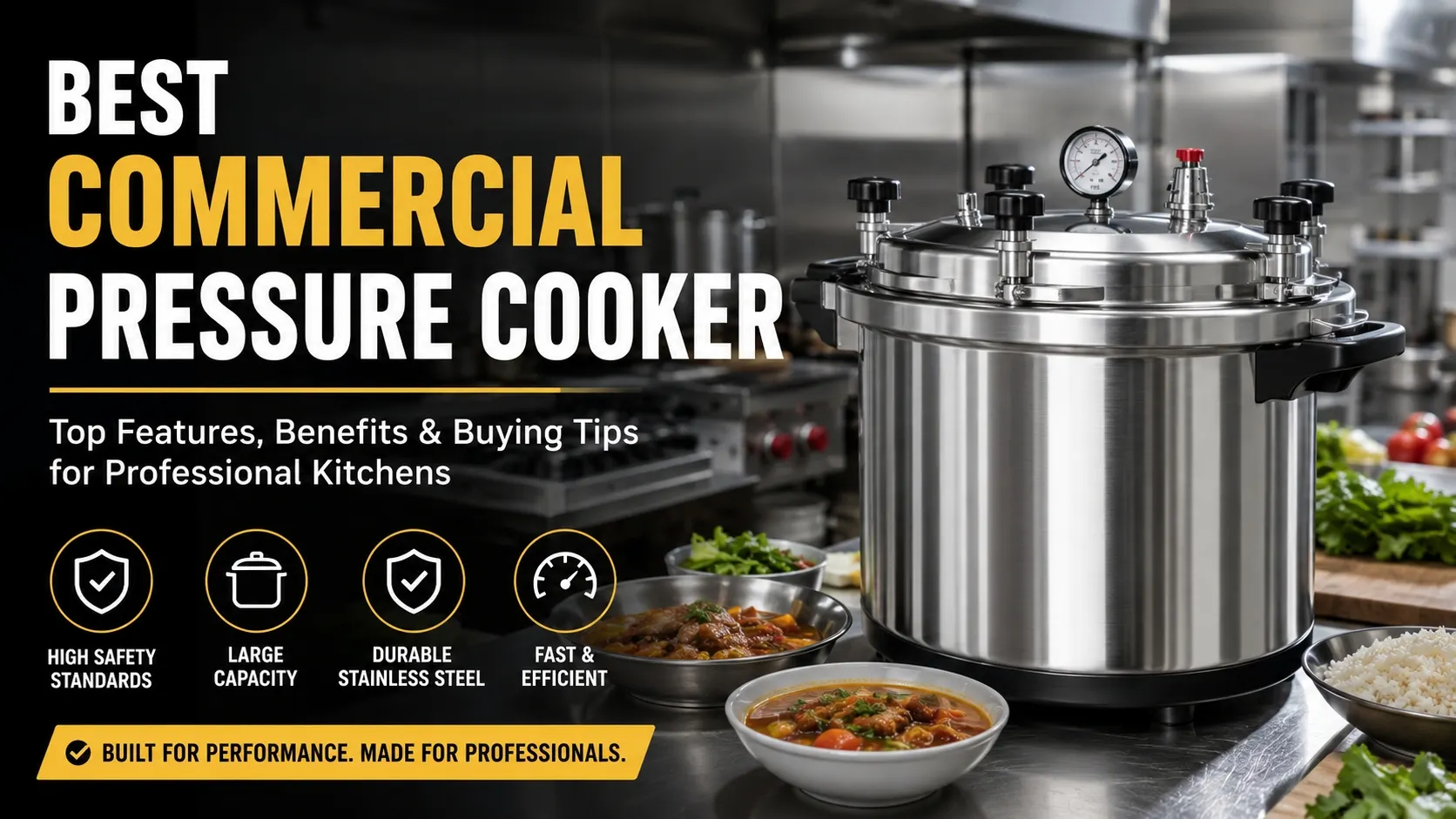
Commercial pressure cookers are intended for producing big quantities of cooked food, so as to cut down upon preparation time for its creation and to achieve consistent outcomes. Commercial units are designed for heavy duty use and can be operated continuously in harsh conditions as opposed to consumer tanks. In professional kitchens, tryouts and beans, rice, stocks, meats, and sauces are commonly cooked with pressure in just a few hours.
This guide provides information on features, benefits, materials, safety, and buying tips to get you ready to invest in a commercial pressure cooker.
Why Commercial Kitchens Use Pressure Cookers
Pressure cookers operate by sealing the steam into a cooking pot. The higher the air pressure, the higher the temperature at which the water will boil; with the higher temperatures, food will cook much faster than it does at normal air pressure.
This technology has various benefits for commercial food service operations:
Faster Cooking Times
By using a pressure cooker, cooking times can be shortened for beans, tough cuts of meat, grains, and other stocks. Cooking faster results in quicker service and efficiency in the kitchen.
Energy Savings
Commercial kitchens are more economical in energy usage than stove top / oven cooking because cook times are shorter.
Consistent Food Quality
Keeping the pressure and temperature consistent will help to produce a consistent result with large quantities of food.
Increased Production Capacity
In large commercial kitchens, high volume cooking is served by large pressure cookers which can prepare more food in a lesser amount of time.
Key Features to Look for in a Commercial Pressure Cooker
That's not a straightforward decision: it's not just about picking the best pressure cooker, but picking the best fit. Long term performance and reliability depends on a number of key factors.
1. Capacity
The capacity is one of the most important factors.
There are several different sizes of commercial pressure cookers which range in size from approximately 12 quarts to over 50 quarts. The smaller models, generally 12- to 20-quarts, are acceptable for smaller kitchens, whereas those for restaurants, hotels and catering services tend to be 30- to 50-quarts or higher.
In assessing capacity think about:
- Daily meal volume
- Peak service periods
- Batch cooking requirements
- Available kitchen space
Selecting the appropriate size helps maximize efficiency without overcrowding the kitchen.
2. Construction Material
Material quality directly affects durability, safety, and performance.
Stainless Steel
Stainless steel is widely regarded as the preferred material for commercial pressure cookers because it offers:
- Excellent corrosion resistance
- Long service life
- Easy cleaning
- Non-reactive cooking surface
- Professional appearance
S. steel models are a popular choice for heavy-duty use because they are easy to clean and maintain.
Aluminum
Pressure Cookers made of aluminum tend to be light and heat up fast. They can be a more affordable choice for some operations, but may not be as durable as higher-quality stainless steel models.
3. Safety Systems
The most important factor to consider when choosing a pressure cooking vessel is safety.
Today, these pressure cookers used in the kitchen have several security features, including:
- Pressure release valves
- Safety locking lids
- Overpressure protection
- Temperature monitoring systems
- Backup pressure vents
When possible models that conform to recognized commercial safety standards and certifications are advised.
Safety systems to safeguard kitchen personnel and lower risks.
4. Ease of Cleaning
The commercial kitchen is kept in a high level of cleanliness. When shopping for a pressure cooker include the following features:
- Smooth interior surfaces
- Removable components
- Dishwasher-safe accessories
- Minimal crevices where food residue can accumulate
Easy cleaning reduces labor costs and supports food safety compliance.
5. Pressure Control
Precise pressure control helps to ensure uniformity of cooking.
Many high-quality commercial kitchen models feature adjustable pressure ensuring that cuisine can be produced for various recipes. This allows for a variety of menu items prepared, which is particularly useful.
Commercial Pressure Cooker Types
Stovetop Commercial Pressure Cookers
Stovetop models remain popular in many professional kitchens.
Advantages include:
- Higher operating pressure
- Faster cooking performance
- Durable mechanical construction
- Lower purchase cost
- Long service life
Many professional chefs appreciate stovetop models because they can reach higher pressure levels compared with some electric alternatives.
Electric Commercial Pressure Cookers
Electric models offer convenience and automation.
Benefits include:
- Digital controls
- Programmable cooking functions
- Automatic pressure regulation
- Built-in timers
- Enhanced user-friendly operation
Electric pressure cookers are often preferred by operations seeking simplified workflows and consistent results with minimal supervision.
Benefits of Investing in a Commercial Pressure Cooker
Improved Kitchen Efficiency
Pressure cooking dramatically reduces preparation times for many common ingredients. Staff can complete more tasks within the same service window, improving overall productivity.
Better Food Consistency
Maintaining controlled pressure and temperature allows kitchens to produce repeatable results, which is essential for customer satisfaction.
Reduced Labor Costs
Faster cooking cycles mean less active monitoring and shorter preparation times, helping businesses optimize labor resources.
Enhanced Menu Flexibility
Commercial pressure cookers can handle a wide variety of dishes, including:
- Soups
- Stocks
- Chili
- Rice
- Beans
- Braised meats
- Stews
- Curries
- Vegetables
This versatility makes them valuable tools in nearly any food service operation.
Common Mistakes When Buying a Commercial Pressure Cooker
Many buyers focus exclusively on price and overlook critical factors that affect long-term performance.
Avoid these common mistakes:
Choosing Insufficient Capacity
A unit that is too small may create production bottlenecks during busy periods.
Ignoring Certifications
Commercial kitchens should prioritize equipment that meets recognized safety and sanitation standards.
Overlooking Maintenance Requirements
Some models of EPF need replacement gasket frequently and need to be maintained frequently too. It's important to know what the business requires in terms of maintaining both the hardware and software before you commit to buying it.
Prioritizing Price Over Durability
Less expensive models may be cheaper upfront, but can be replaced more quickly than the more expensive ones. Good construction work is likely to achieve a better return on investment in the long term.
Maintenance Tips for Long-Term Performance
Proper maintenance helps maximize equipment lifespan.
Best practices include:
- Inspect seals regularly
- Clean pressure valves after use
- Replace worn gaskets promptly
- Follow manufacturer maintenance schedules
- Check safety mechanisms routinely
- Store equipment in a clean, dry environment
Routine inspections can help identify potential issues before they become costly repairs.
Final Thoughts
When purchasing a commercial pressure cooker, capacity, build quality, safety features, pressure control and maintainability should be taken into account. The best model should suit the output necessary in your kitchen and also supply consistent performance on an everyday basis.
For most commercial kitchens, if one can afford it to begin with, then a decent stainless steel pressure cooker with good safety devices, and a size that fits will be the better long term investment. With the proper equipment, food service businesses can be more efficient, as well as cook food faster, have more uniformity and quality of the food, and be more productive as a whole.
From restaurants and food production facilities to catering businesses and institutional kitchens, a quality commercial pressure cooker can be a crucial addition to the arsenal of any kitchen.
Share:


