





How do I clean an electric pressure cooker?
Electric pressure cookers have gained popularity as a vital appliance in the kitchen of busy families because of their convenience, speed and versatility. Nevertheless, regularly cleaning your pressure cooker is essential to maintain the device in good condition and your food safe and tasty. Ever wondered how to clean an electric pressure cooker? Well, this in-depth tutorial will show you all you need to know.
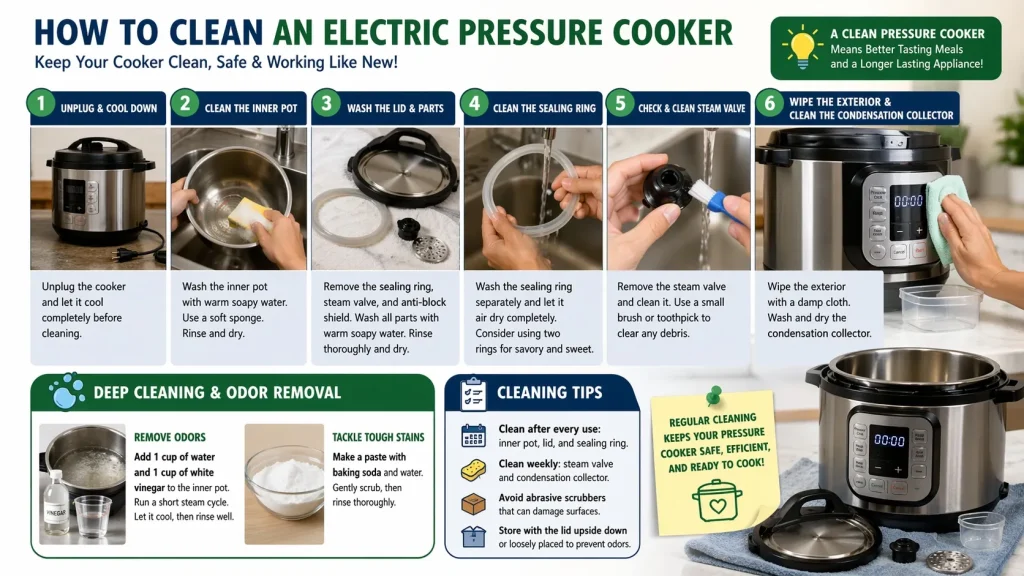
Cleaning Your Electric Pressure Cooker is Important.
It is not only about the appearance when it comes to cleaning your electric pressure cooker, but it is also directly related to performance, safety and food quality. The accumulating residues may influence the control of pressure, produce unwanted smells and even fail with time.
Regular maintenance helps:
- Prolong your appliances life.
- Avoid intermingling flavours.
- Keep the sealing and pressure in check.
- Ensure food safety
Preparation: Before You Start: Safety First.
These are some of the precautions to be observed before cleaning your electric pressure cooker:
- Disconnect the appliance and leave to cool.
- Take off any parts that can be removed.
- Never immerse the base (the part with electrical components) in water
These measures will guarantee safe handling and avoid damages.
How to wash an electric pressure cooker step-by-step.
1.Wipe out the Inner Pot.
The cooking takes place in the inner pot, thus, it needs the most concern.
- Take out the pot and rinse in warm soapy water.
- Wipe non-stick surfaces with a soft sponge.
- In case of tough stains, wet it first and then scrub it in 10-15 minutes.
Inner pots can be washed in the dishwasher, but look at the instructions of your manufacturer.
- Rinse the Lid Under Running Water.
The lid has significant parts that regulate pressure and sealing.
- Remove the sealing ring (silicone gasket)
- Take off the anti-block shield when necessary.
- Wipe down with warm soapy water.
Make sure to:
- Wash with lots of water to get rid of the soap.
- Have it dry and put it back together.
- Wipe the Sealing Ring.
By sealing the ring, the odors and flavors are absorbed with time.
- clean it in weak soap.
- Allow to dry.
Hack: It is advisable to use two sealing rings, one on savory and the other on sweet dishes, to avoid the transfer of flavors.
- Clean and test Steam Valve.
The steam release valve can get clogged with food particles.
- Cautiously take the valve out (see your manual)
- Wash under running water.
- Clean up with a small brush or tooth pick.
A clean valve will guarantee the release of pressure and safe working.
- Clean the Outside.
The heating base should not be in any way submerged in water, and its exterior.
- Wipe the outside surface with a wet cloth.
- On hard to get stains, apply a weak cleaning solution.
- Blot on a clean towel.
Note that moisture should not be allowed to get into the electrical parts.
- Wash the Condensation Collector.
Most electric pressure cookers contain a small jar that holds any surplus moisture.
- Clean it out and empty it often.
- Wash with warm soapy water
- Dry before placing it back
This aspect may be neglected resulting in bad smells and moulds.
Stain and odor removal: Deep Cleaning tips.
Regardless of frequent cleaning, your pressure cooker could acquire an odor or discolouration. The following is how to deal with it:
Remove Odors Naturally
- Combine 1 cup of water and 1 cup of white vinegar with the inner pot.
- Operate a short steam cycle.
- Allow to cool, and run under water.
Tackle Tough Stains
- Make a paste of baking soda and water
- Gently scrub affected areas
- Rinse well
These are natural processes that are effective and safe on the majority of materials.
What Is the Cleaning Frequency of your Pressure Cooker?
Cleaning frequency will depend on the frequency of use:
- Following each use: Inner pot, lid, sealing ring.
- Weekly: Condensation collector and steam valve.
- Monthly: Fumigation to eliminate odors.
It is important to be consistent to keep hygiene and performance.
Some of the most common errors to be avoided.
In washing your pressure cooker, electric type, you are likely to make these mistakes:
- Cleaning surfaces with rough scrubbers.
- Leaving out the cleaning of the sealing ring.
- Re-assembling components when still wet.
- Disregarding the steam valve.
These errors will prevent your appliance to be in poor condition.
Storage Hints: Once Cleaned.
Cleaning is not as important as proper storage.
- Keep the cooker upside down or loosely in place.
- This helps to avoid the accumulation of moisture and odors.
- Store it in a cool dry place.
Proper storage can preserve freshness and prolong the service of your cooker.
Final Thoughts
Washing an electric pressure cooker can be viewed as a task, but it can be performed in a few minutes when one has the proper routine. These measures will help you keep your appliance safe, efficient, and capable of preparing delicious meals each time.
Keep in mind, clean pressure cooker is not only a question of hygiene, it is also a question of maintaining the quality of your cooking and saving your money. Your electric pressure cooker will be a trusted kitchen helper with a long lifespan, given proper care and attention.


