





what can you cook in a pressure cooker
Pressure cookers are one of the most effective cooking utensils in today's kitchens. Whether you are following a recipe from the stovetop or the electric multi-cooker, this machine can cook hard foods into tender foods in no time at all. However, convenience is not the only advantage of a pressure cooker; it performs a number of cooking processes better than other cooking methods.
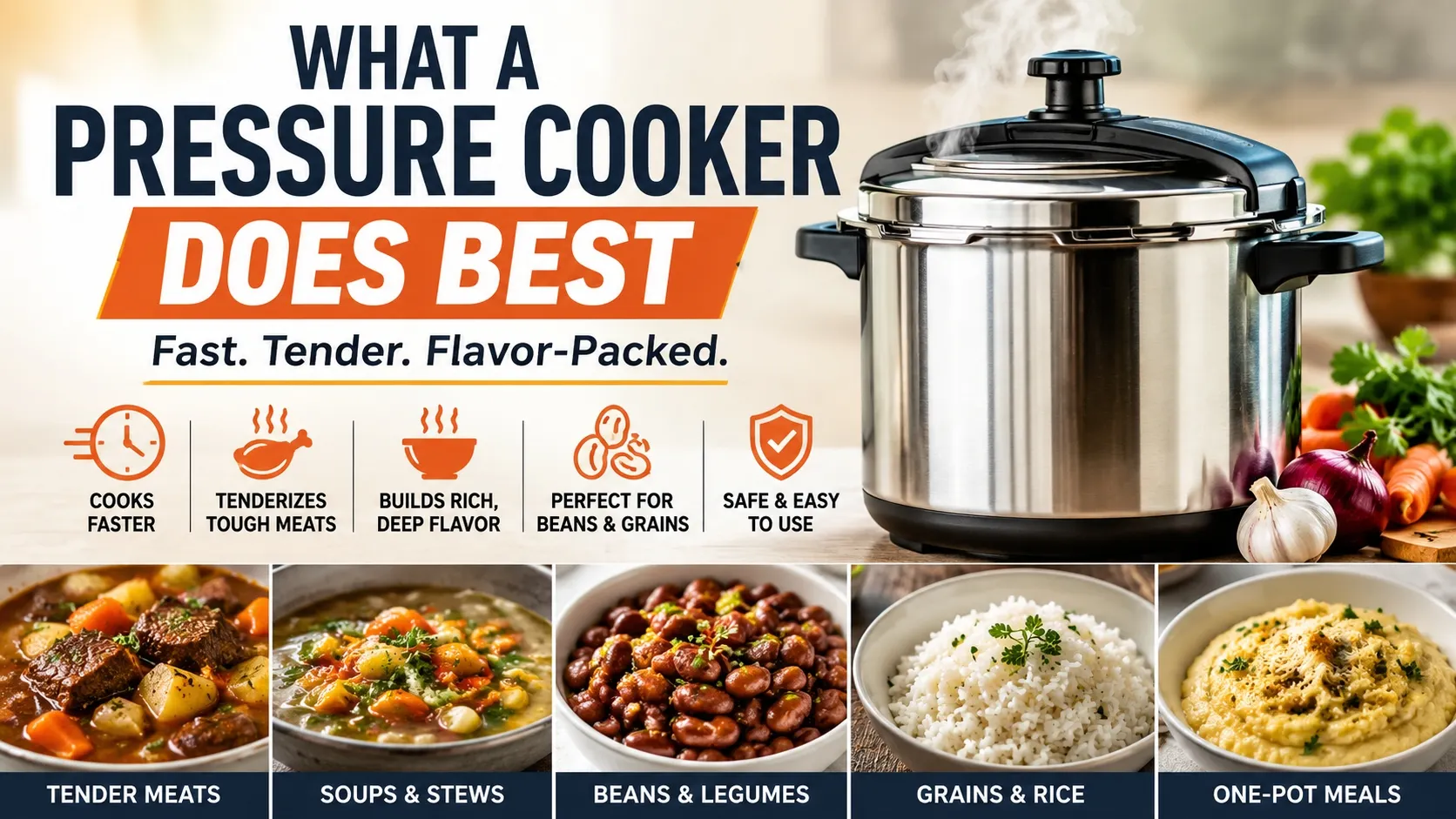
In this article, we paint a picture of what a pressure cooker can do best, how it works, and why it should be a part of your kitchen.
How a Pressure Cooker Works
A pressure cooker is essentially a closed cooking pot with a lid that is built to contain the steam. Heating of a liquid in the pot causes it to vaporize. Since the lid is air-tight, the steam will not escape. This raises the internal pressure that will further increase the boiling point of water.
In normal circumstances, the boiling temperature of water is 100°C (212°F). With a pressure cooker, temperatures can be around 121°C (250°F). This makes it possible for food to cook much more quickly than foods cooked by traditional methods of boiling, steaming, or braising at normal temperatures.
Meanwhile, the trapped steam ensures that food remains moist, which would otherwise be lost due to sunken in ovens or open stovetop cooking.
In simple terms:
Higher pressure = higher temperature = faster cooking without drying food.
1. Turning Tough Cuts of Meat Into Tender, Juicy Meals
A major advantage of a pressure cooker is that it will soften tough connective tissue in meat.
Foods that are high in collagen such as beef chuck, pork shoulder, brisket and lamb shanks. Collagen, however, is converted to gelatin when cooked slowly, or under pressure, which makes meat soft and melt-in-the-mouth.
Pressure cooking can be used to make what would otherwise take a few hours, less than an hour.
This is perfect for recipes such as:
- Pulled pork
- Beef stew
- Short ribs
- Chili
- Braised lamb
Instead of drying out, the meat stays moist because it cooks in a sealed, humid environment.
2. Creating Deep, Rich Soups, Stews, and Stocks
The pressure cooker is a great extracter of flavour. The high-temperature and pressure cook the ingredients, causing the flavors of the bones, meat, vegetables and spices to release quickly into the liquid.
Normally 6-12 hours worth of stocks can be done in a matter of hours.
Pressure cookers are particularly suitable for:
- Bone broth
- Chicken stock
- Beef stew
- Lentil soup
- Minestrone
The result is a concentrated, deeply flavored base that can elevate any recipe.
3. Cooking Beans, Lentils, and Legumes Efficiently
Dried beans are a very time consuming food to cook with traditional methods. These may need to be soaked overnight and then simmered for hours.
This is all but avoided with a pressure cooker.
In many cases beans will cook evenly and quickly under high pressure and high temperature (without soaking). This makes it a favorite plant-based cooking ingredient.
Common examples include:
- Chickpeas for hummus
- Black beans for burritos
- Lentils for curries and soups
- Kidney beans for chili
Not only does this save time, but it also improves consistency across batches.
4. Speeding Up Everyday Staple Foods
Pressure cookers aren't limited to difficult dishes; they're great for simple meals, too.
There are certain foods that are wonderful for us:
- Rice
- Quinoa
- Potatoes
- Pasta-based casseroles
- One-pot meals
The cooking environment is completely airtight and food cooks evenly and quickly with more efficient heat transfer.
This is especially useful for meal prep and fast-paced families with little time on their hands.
5. Intensifying Flavors in One-Pot Meals
Another lesser known advantage of the pressure cooker is the ability to concentrate flavors.
There is no escaping of steam which leaves liquids and aromas within the pot. This helps to achieve a “sealed flavor environment” in which ingredients are cooked in their own juices.
The result is:
- Richer sauces
- More intense seasoning
- Better integration of spices and aromatics
This is why pressure cookers are often used for curries, braises, and hearty stews where flavor depth matters.
6. Preserving Nutrients and Reducing Cooking Time
Since cooking time is significantly reduced using pressure cooking, it can help retain certain heat labile nutrient such as vitamin C and B vitamins. Less heat and water exposure results in less loss of nutrients as compared to longer boiling techniques.
In addition, the use of less water helps to keep nutrients that could leach out in cooking.
There's no perfect way to cook something, but pressure cooking is a good combination of quickness and nutrition.
7. Energy Efficiency and Kitchen Convenience
Another key benefit of pressure cookers is that they are energy efficient.
Pressure cookers require less electricity or gas because the food cooks up faster and is contained.
Today's electric models also include added convenience features, including:
- Timer settings
- Automatic pressure control
- Keep-warm functions
- Safety release valves
This makes them especially appealing for beginners and busy cooks.
What a Pressure Cooker Is Not Best For
While pressure cookers are incredibly versatile, they are not perfect for everything.
They are less ideal for:
- Crispy textures (like fried chicken or roasted skin)
- Delicate vegetables that overcook easily
- Foods that require constant monitoring or reduction sauces
- Baking (except specialized recipes)
This is because the closed environment retains moisture which doesn't allow the food to brown or crisp.
Many cooks use the pressure cooker in combination with a quick sear or an oven finish when they are preparing dishes.
Final Thoughts: Why Pressure Cookers Stand Out
A pressure cooker is not only a time saver, it's a cooking system that enhances flavor, improves texture and saves energy.
It excels most at:
- Tenderizing tough meats
- Building deep-flavored soups and stocks
- Cooking beans and grains quickly
- Creating rich one-pot meals
It raises the pressure and temperature in a controlled environment, giving the cooker possibilities of cooking that cannot be achieved in the same time under pressure and temperature by traditional methods.
A pressure cooker isn't something you can make every preparation with, so knowing what it does best can help you make your kitchen more efficient and delicious.
Share:


