





do pressure cookers explode
The pressure cooker is a very popular kitchen appliance that can cut cooking time, retain nutrients, and simplify cooking. Today's pressure cookers have several safety devices, which makes them much safer than the old pressure cookers. But, even pressure cooker explosions and steam release accidents happen annually, causing severe burns, damage to the property and even permanent injuries.
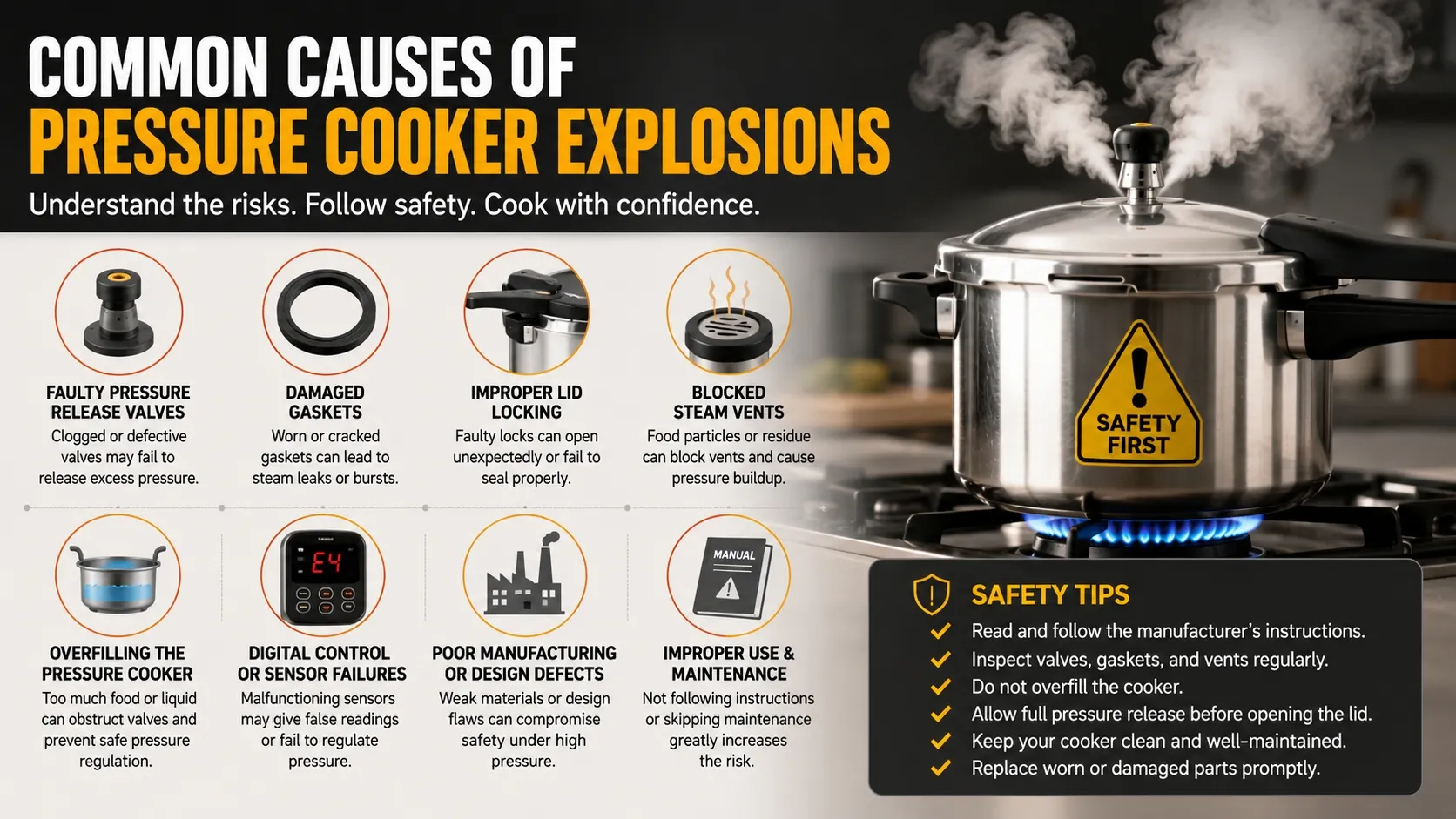
Knowing the most typical reasons for pressure cooker explosions can help users identify and avoid hazards and ensure a safer cooking experience. No matter whether you are using an old fashioned stovetop pressure cooker or a new electric cooker, there are some things to know about and some maintenance that needs to be done in order for the cooker to work safely. Widespread research and safety reports indicate that pressure related accidents are often caused by defective parts, blocked vents, improper seals, and human error.
How Pressure Cookers Work
In a pressure cooker, the steam is kept inside a tightly closed container. The higher the temperature, the higher the pressure of steam, which causes water to boil at a higher temperature, and food will cook quicker than by other methods. Today, pressure cookers come in many different varieties and include safety features that control the pressure inside the pot, including pressure-release valves, locking lids, pressure sensors and back-up venting mechanisms.
Failure of these systems or obstructions within any of them can result in greater than safe pressure build-up, thereby raising the potential for sudden steam release or mechanical failure.
1. Faulty Pressure Release Valves
One of the safety features of a pressure cooker is a pressure release valve. It is used mainly to control internal pressure, letting out excess steam in the event that it is required.
A food particle, grease or mineral deposit can cause the valve to become clogged, thereby preventing the pressure from being released as it should. The valve may also be defective at the time of manufacture, which can also cause it to not work properly. As the pressure increases further, the cooker could be pushed into dangerous ranges that could affect the cooker's structure.
This risk can be greatly minimised by regular cleaning and inspection of the pressure valve.
2. Damaged or Defective Gaskets
Usually silicone or rubber, the gasket provides an airtight seal that is necessary for pressure cooking. The damaged gasket has the potential to leak or for the pressure to build up unevenly or the seal to blow out completely.
Gaskets can become cracked, stretched or deteriorate over time due to exposure to heat, oils and repeated use. A faulty gasket could rupture at any time while you are cooking and cause hot food and steam to escape very quickly. Many pressure cooker recalls and injury claims have been linked to problems with gaskets.
It is recommended to check the gasket periodically and replace it when necessary to appearance.
3. Improper Lid Locking Mechanisms
Today's pressure cookers have features to keep the lid locked shut until the pressure has been released. But, if the lid locks are faulty or the locking system isn't properly designed, this can cause hazardous conditions.
When a cooker is not depressurized before the lid is removed, the superheated steam and food may shoot out of the pot with great force. Similarly, if the lid comes open in an unpredictable way during cooking, it could cause the pressure to release.
Make sure that the lid is always on the right place and locked before the cooking cycle.
4. Blocked Steam Vents
Steam vents are essential to the safe operating pressure. Foods like rice, beans, oatmeal, pasta and thick sauces can form a layer of foam or residue that will clog the ventilating system.
If vents get clogged, steam is not able to escape the system efficiently. This will put undue stress on the other safety mechanisms. Clogged vents are often a reported problem in the community and are part of the normal safety checks conducted by experts.
Rinse vent thoroughly after use to avoid hazardous buildup.
5. Overfilling the Pressure Cooker
Among the most frequent errors by users is overloading the pressure cooker. Most manufacturers will tell you to fill the cooker up to 2/3 full, and foods that expand in the cooker should typically be filled to 1/2 capacity.
If the cooker is overfilled, food may block valves and vents from functioning, which can result in improper pressure. Too much contents also reduces the space for steam expansion, increasing the likelihood of accidents due to pressure.
It is one of the easiest ways to enhance safety to follow the manufacturer's fill instructions.
6. Digital Control or Sensor Failures
Electronic sensors, temperature monitors and digital control systems are all important components of electric pressure cookers. Failure of these components can result in pressure readings that are inaccurate or lack of accurate cooking status information.
Users might assume that the appliance has depressurized and try to open the lid too soon. Failure of electronics can also disrupt the ability to regulate the pressure and heating cycles.
These risks can be minimised by selecting quality brands and by ensuring the appliances are maintained in line with manufacturer's software instructions.
7. Poor Manufacturing Quality and Design Defects
Some accidents are due to user error, and some are due to product defect. The risk of failure can be exacerbated by poor quality materials, weak structural components, poor safety systems or manufacturing defects.
A pressure cooker will be able to safely withstand high pressure for its entire service life. Any design that interferes with this function can result in unsafe situations if the appliance is operated properly.
Consumers are advised to keep an eye on recalls and stop using products that have been found to be defective.
8. Improper Use and Maintenance
The number one culprit of pressure cooker accidents is improper operation. Examples include:
- Opening the lid before pressure is fully released
- Ignoring warning signs such as unusual steam leakage
- Failing to clean valves and vents
- Using damaged components
- Operating the cooker without sufficient liquid
- Skipping routine inspections
Manufacturer guidelines are crucial for safety and to get the best operating life from the appliance, safety experts say.
Common Injuries Caused by Pressure Cooker Explosions
When a pressure cooker fails, the resulting injuries can be severe. Common injuries include:
- First-, second-, and third-degree burns
- Steam scalds
- Eye injuries
- Lacerations from flying debris
- Thermal injuries
- Permanent scarring
- Emotional trauma
Because pressure cookers operate with extremely hot liquids and steam, even a minor malfunction can cause significant harm.
How to Prevent Pressure Cooker Explosions
The best way to prevent pressure cooker accidents is through proper maintenance and safe operating practices:
- Inspect seals, valves, and locking mechanisms before each use.
- Replace worn gaskets immediately.
- Avoid overfilling the cooker.
- Clean steam vents regularly.
- Follow recommended cooking times and liquid requirements.
- Allow the cooker to depressurize completely before opening.
- Purchase appliances from reputable manufacturers.
- Stop using any cooker that shows signs of damage or malfunction.
Final Thoughts
When used properly, pressure cookers are safe and highly efficient cooking appliances. Yet, accidents can happen when critical safety elements fail or when vents become blocked, or when users forget to follow recommended maintenance procedures. Knowing the most frequent pressure cooker explosion causes such as faulty valves, damaged gaskets, defective lid locks, blocked vents and overfilling can help minimize the risk and have a safer cooking experience.
With the help of regular maintenance and following correct operation procedures, homeowners can reap the rewards of the pressure cooker without the risk of serious injuries or expensive accidents.


