





are pressure cookers dangerous
The use of pressure cooker has been one of the most common kitchen appliances which are used in modern houses. They aid families to prepare food in less time, save energy and retain nutrients in food. The electric pressure cookers and multi-cookers are becoming more popular, with millions of homes using them on a daily basis.
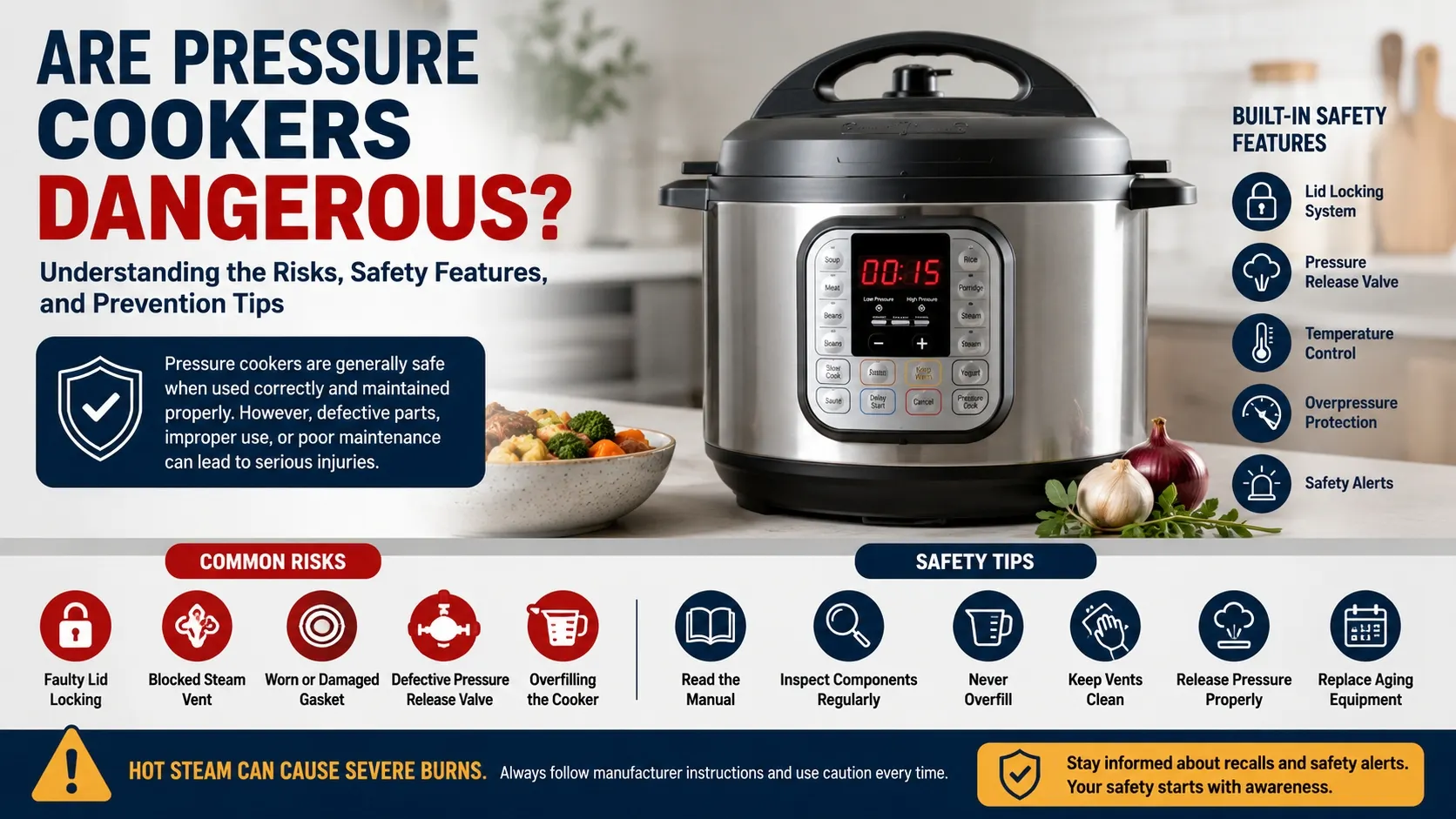
But, many consumers continue to have this question: Is a pressure cooker a hazard?
The answer is that pressure cookers are more or less safe when properly used and cared for. But accidents such as burns, steam burns, and, in very rare instances, explosions can occur if components are faulty, manufacturing defects occur, or the product is not used correctly or is not properly maintained. Safety cannot be assumed as evidenced by recent product recalls and reported injuries.
We'll discuss the mechanism of the pressure cooker, potential hazards, injuries, and tips for safety so you can be confident using your pressure cooker.
How Does a Pressure Cooker Work?
The operation of a pressure cooker involves sealing off the steam in a cooking chamber. With increasing temperature, steam pressure increases and food can be cooked at a temperature that exceeds the normal boiling point of water.
The following are some of the advantages of this process:
- Faster cooking times
- Improved energy efficiency
- Better moisture retention
- Enhanced flavor development
- Reduced nutrient loss
Today's electric pressure cookers have several safety features that automatically control pressure. The latter can be pressure release valves, locking lids, temperature sensors and overpressure protection systems.
These safety provisions make it much less hazardous, but the potential for failure does exist if parts are not working as intended or if they are not well maintained.
Are Pressure Cookers Really Dangerous?
Pressure cookers do not by themselves pose a danger. Pressure cookers are used daily all over the world to prepare millions of meals safely.
The major risk is the sudden release of pressure or failure of the safety devices. Under these conditions, very hot steam, liquids or food can jet out at high speed, resulting in serious burns and other injuries.
The majority of contemporary pressure cooker accidents are associated with:
- Defective lid locking systems
- Faulty pressure release valves
- Blocked steam vents
- Damaged sealing gaskets
- Electrical malfunctions
- User errors such as overfilling
Understanding these risks is the first step toward safe operation.
Common Causes of Pressure Cooker Accidents
1. Faulty Lid Locking Mechanisms
One of the most important safety features of a pressure cooker is the lid.
A good pressure cooker will not open if the pressure is high. But faulty locking mechanisms can open too soon, creating the possibility of sudden release of pressurized materials. There have been several recalls and injuries reported where the lids were openable when pressure remains.
2. Blocked Steam Vents
Internal pressure is controlled by steam vents, which blow out excess steam.
These vents can become clogged with food crumbs, grease or other debris. If there is no intended way for the pressure to escape then excessive pressure build-up can result and this may lead to malfunction.
3. Worn or Damaged Gaskets
The gasket creates a seal between the lid and cooking pot to keep the air out.
As a result, gaskets can crack, stretch or wear out over time. A faulty gasket can lead to pressure fluctuations, steam loss or sealing failure. Most pressure cooker experts recommend replacing the worn seals on the pressure cooker on a regular basis.
4. Defective Pressure Release Valves
Pressure release valves are used to release pressure in an acceptable manner.
Proper functioning of these valves is essential in preventing dangerous pressures from building up in the cooker. Leaky pressure regulators have been found to play a role in many pressure cooker accidents.
5. Overfilling the Cooker
There's a reason why each pressure cooker has a maximum fill line.
Overfilling can cause venting to become blocked, can cause difficulties in regulating the pressure and can result in hot food or liquids being thrown out during venting. Inaccurate fill markings have been one specific area of some product recalls that have led to an increase in burn risk.
Common Injuries Caused by Pressure Cooker Failures
Injuries may be minor or serious when pressure cooker accidents happen.
Burn Injuries
Pressure cooker accidents are most likely to cause burns. Superheated steam or boiling liquids can cause:
- First-degree burns
- Second-degree burns
- Third-degree burns
Severe burns may require hospitalization, skin grafts, and long-term rehabilitation.
Eye Injuries
Steam and food particles may burst the eyes, leading to corneal burns and vision problems. These injuries can be more severe if the face is exposed.
Lacerations and Physical Trauma
Cuts, bruises, fractures, and blunt force injuries can occur due to flying lids, broken parts, or falls caused by a sudden explosion.
Emotional and Psychological Effects
Any serious accidents in the kitchen can cause emotional effects. Severe pressure cooker incidents have been known to cause anxiety, fear of cooking or post-traumatic stress symptoms in victims.
Modern Pressure Cooker Safety Features
The pressure of today's cookers are far safer than previous pressure cookers because of the numerous safety features built into the cookers.
Some common safety features include:
- Automatic lid locking systems
- Pressure monitoring sensors
- Overpressure release valves
- Temperature control systems
- Secondary emergency venting mechanisms
- Digital safety alerts
Many users and cooking communities have reported that today's pressure cookers have several safety features in place, making the chance of catastrophic failure extremely slim.
Pressure Cooker Safety Tips
To maximize safety, follow these best practices:
Read the Manufacturer's Instructions
Every pressure cooker model operates differently. Carefully review the user manual before first use.
Inspect Components Regularly
Check:
- Gaskets
- Valves
- Lid locks
- Vent pipes
- Electrical connections
Replace damaged parts immediately.
Never Overfill
Follow the manufacturer's recommended fill limits, especially when cooking foods that expand during cooking.
Keep Vents Clean
Clean pressure release valves and steam vents after every use to prevent blockages.
Release Pressure Properly
Always follow the recommended pressure-release procedure. Never force a lid open.
Replace Aging Equipment
Once the pressure cooker has warped, cracked or mechanically failed, stop using it and replace it. Many safety experts and experienced users strongly recommend that you don't use broken pressure cookers.
Recent Pressure Cooker Recalls Highlight Safety Concerns
Pressure cookers are generally safe but recent product safety recalls show the need to watch product safety announcements.
If the pressure cooker has been defective for years, hundreds of thousands (and in some cases millions) have been recalled because the lids can open under pressure or hot food could be ejected unexpectedly. The reported injuries have ranged from serious second and third degree burns.
The consumer should periodically review the recall lists and manufacturer's websites to determine if their appliance is affected.
Final Thoughts
Then, can you say pressure cooker dangerous?
Pressure Cookers are generally safe and highly effective kitchen appliances when used, designed, maintained and cooked properly according to the manufacturer's instructions. They, like any high-pressure, high-heat-powered appliance, however, involve certain risks in the event of a component failure or the failure to follow safety practices.
Taking time to learn about the functioning of a pressure cooker, regular checking, cooking instructions and knowledge about product recalls will significantly minimize the chance of accidents occurring and maximize convenience you gain from using this appliance.
The best safety precaution for avoiding injury from a pressure cooker and for years of trouble-free cooking is to be aware of safety.


