





Types of Pressure Cookers Explained
Pressure cookers have evolved into one of the best kitchen appliances in an average family kitchen. They cut down on cooking time, energy use, and make keeping the food natural flavors and nutrition. Beans, rice, soups and stews or tender meat can be a task that got so much easier with the help of a pressure cooker.
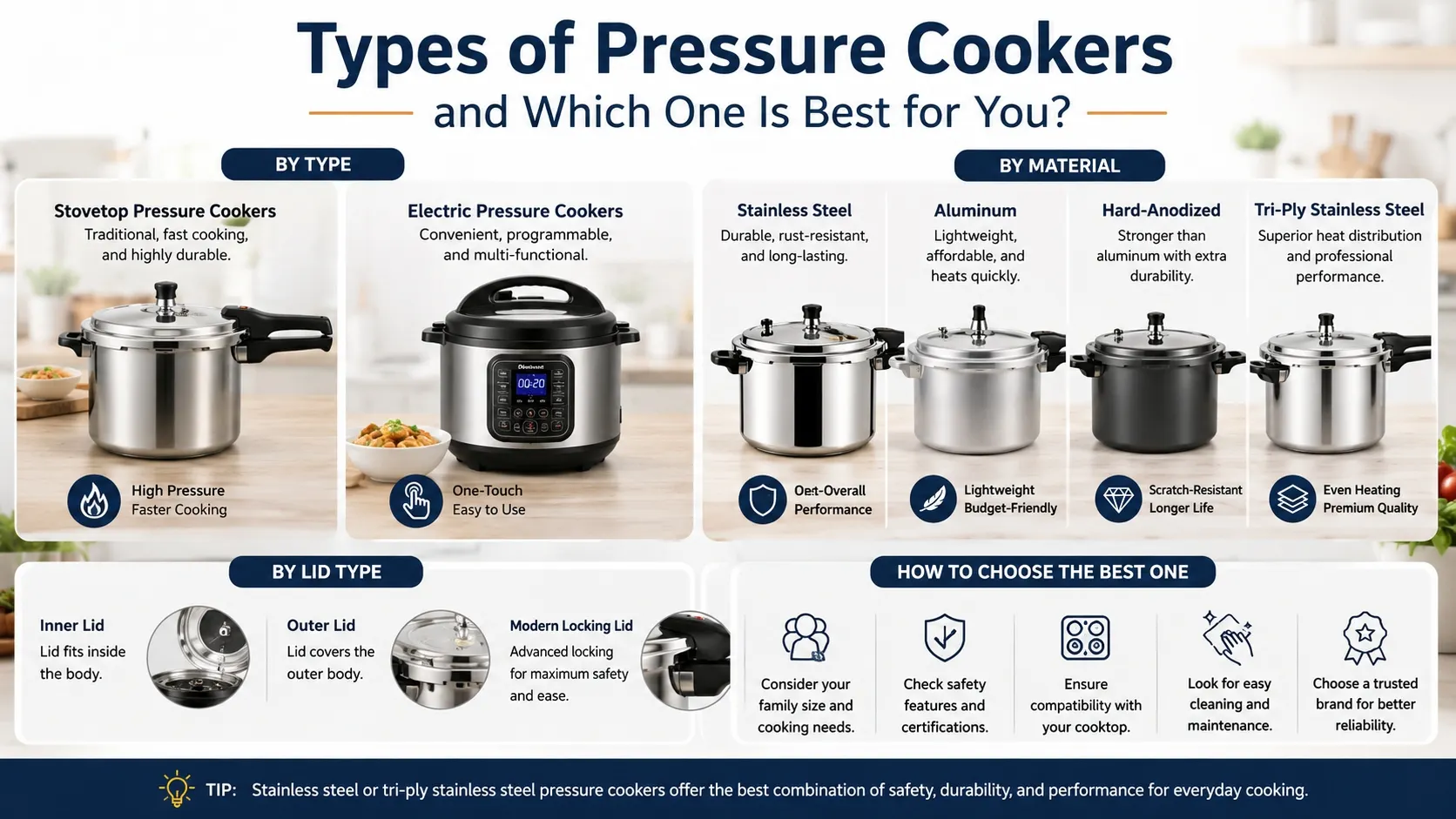
But in today's world, there are a number of options to choose from and picking the correct pressure cooker for you can be daunting. There are stainless steel and aluminum models, electric and stovetop types to choose from, each with their own set of benefits.
Here, let's learn about the various kinds of pressure cookers, compare their functions, and help you select the right pressure cooker for your cooking requirements. Modern cookers have advanced safety systems and an efficient way to control pressure to cook foods in less time than traditional cookers.
How Does a Pressure Cooker Work?
A pressure cooker is a pot that is hermetically sealed in which steam is released after boiling the liquid inside. When the steam accumulates inside the pot, the pressure will increase, causing the water in the pot to boil at a higher temperature.
The cooking temperature is higher than the usual cooking temperature, so food will cook rapidly. With pressure cooking, cooking times may be reduced by up to 50% and moisture, flavor and nutrients are retained.
Main Types of Pressure Cookers
Generally, pressure cookers can be classified based on how they are operated, what their material is and their lid design.
1. Stovetop Pressure Cookers
The traditional pressure cooker type in which the internal pressure is created on the stove top by gas, electric or induction.
Advantages
- Reach higher pressure levels
- Cook food faster
- Excellent temperature control
- Durable construction
- Energy efficient
Disadvantages
- Require manual monitoring
- Less automated than electric models
- Learning curve for beginners
Many professional cooks prefer stovetop pressure cookers, as they come up to steam higher and are quicker to cook.
2. Electric Pressure Cookers
Pressure cookers with electronic control timers are known as electric pressure cookers. Many of the models are also capable of cooking as a slow cooker, rice cooker, steamer, and yogurt maker.
Advantages
- One-touch cooking programs
- Automatic pressure regulation
- Built-in safety systems
- Multi-functional design
- Convenient for busy households
Disadvantages
- Longer preheating times
- Lower maximum pressure than stovetop models
- Higher purchase cost
New comers are advised to use electric pressure cookers, which are easy to operate and very convenient.
Pressure Cooker Materials Compared
Durability, cooking performance, maintenance and value are all determined by the material used in a pressure cooker.
Stainless Steel Pressure Cookers
High quality stainless steel pressure cookers are still among the top choices for cookers.
Benefits
- Highly durable
- Rust-resistant
- Non-reactive with acidic foods
- Long lifespan
- Easy maintenance
Drawbacks
- Heavier than aluminum
- Typically more expensive
For most households, stainless steel offers the best balance of durability, safety, and performance.
Aluminum Pressure Cookers
Aluminum pressure cookers have been used for decades due to their affordability and lightweight construction.
Benefits
- Excellent heat conductivity
- Lightweight
- Budget-friendly
Drawbacks
- Less durable
- May react with acidic ingredients
- More prone to scratches and warping
Although aluminum models remain popular, many consumers are now upgrading to stainless steel alternatives for improved longevity.
Hard-Anodized Pressure Cookers
Hard-anodized aluminum undergoes a special treatment process that creates a stronger and more durable surface.
Benefits
- Scratch-resistant
- Stronger than standard aluminum
- Improved durability
- Better cooking performance
Drawbacks
- Usually more expensive than aluminum
- Requires careful cleaning
These models offer a middle ground between affordability and premium performance.
Tri-Ply Stainless Steel Pressure Cookers
Tri-ply construction combines multiple metal layers, typically stainless steel and aluminum.
Benefits
- Exceptional heat distribution
- Reduced hot spots
- Faster heating
- Superior cooking consistency
- Long-term durability
Drawbacks
- Higher upfront cost
Many cooking enthusiasts consider tri-ply stainless steel pressure cookers among the best options available because they combine the strengths of both stainless steel and aluminum.
Understanding Pressure Cooker Lid Designs
Lid design affects safety, usability, and cooking convenience.
Inner Lid Pressure Cookers
The lid locks from inside the cooker body.
Pros
- Compact design
- Excellent safety
- Ideal for everyday cooking
Cons
- Usually available in smaller capacities
Outer Lid Pressure Cookers
The lid closes over the outer rim of the cooker.
Pros
- Larger capacities available
- Easy handling
- Suitable for family cooking
Cons
- Slightly bulkier design
Clip-On and Modern Locking Lids
Modern pressure cookers often use advanced locking systems.
Benefits
- Easier opening and closing
- Enhanced safety mechanisms
- Better pressure sealing
Today's pressure cookers incorporate multiple safety features, making them significantly safer than older generations.
How to Choose the Best Pressure Cooker
When shopping for a pressure cooker, consider the following factors:
Capacity
Choose a size based on household needs:
- 2–3 quarts: 1–2 people
- 4–5 quarts: Small families
- 6–8 quarts: Average households
- 10+ quarts: Large families or batch cooking
Pressure cooker size should match your typical meal preparation requirements.
Safety Features
Look for:
- Locking lid systems
- Pressure release valves
- Pressure indicators
- Over-pressure protection
- Backup safety mechanisms
Modern models include multiple safety systems that greatly reduce risks associated with pressure cooking.
Cooktop Compatibility
Verify compatibility with:
- Gas stoves
- Electric cooktops
- Ceramic cooktops
- Induction cooktops
Not all pressure cookers work on induction surfaces, so check specifications before purchasing.
Ease of Cleaning
Features that improve maintenance include:
- Dishwasher-safe components
- Stainless steel interiors
- Removable sealing rings
- Smooth interior surfaces
Which Type of Pressure Cooker Is Best?
It's a matter of your personal taste and preference in cooking.
Best for Beginners
Electric pressure cookers are convenient, have versatile cooking functions and are automated. They are good for those who prefer simplicity and consistency.
Best for Fast Cooking
One should expect to prepare food in the stovetop pressure cooker faster and with greater pressure than in an electric model pressure cooker.
Best for Durability
Pressure cookers in stainless steel and tri-ply stainless steel have an outstanding durability and wearability.
Best Value
For the best of price, durability and performance, hard anodized or stainless pressure cookers are usually the best choice.
Final Thoughts
Despite the shorter toadles over the years, the pressure cooker is one of the most time-saving devices for cooking tasty and healthy meals. When it comes to choosing between the old wood-fired stove and electric cookers with a variety of attachments and functions, there are three key considerations – type of material, size and safety.
Most people, for their home kitchen, will find a stainless steel or tri-ply stainless steel pressure cooker to be the most durable and efficient cooker, with a long lifespan. For those who just can't change it up, an electric pressure cooker could work for you. Knowing about the various types, you can make a confident selection of the pressure cooker whose cooking technique you like and will suit your needs.


