





How to Clean and Maintain Your Electric Pressure Cooker to Extend Its Service Life
Learn practical cleaning and maintenance tips for electric pressure cookers. Proper care prevents odors, keeps performance stable and prolongs appliance lifespan.

Introduction
An electric pressure cooker can serve your kitchen for many years, but its service life heavily depends on daily cleaning and regular maintenance. Food residues, grease, and leftover food particles can build up on seals, valves, and inner pots over time. Poor upkeep may cause strange odors, weak pressure‑building performance, or even potential safety hazards.
Many users only wash the inner pot after use while ignoring other key components. In this article, we will walk you through step‑by‑step cleaning routines, common mistakes to avoid, and simple maintenance advice for your electric pressure cooker. These guidelines work for both household end‑users and wholesale partners for after‑sales reference.
Important Pre‑Cleaning Reminder
Always confirm all internal pressure has been fully released before you start any cleaning work.
- Unplug the power cord and let the whole unit cool down completely.
- Make sure no remaining steam comes out from exhaust valve. Never attempt to take apart hot pressure cooker parts.
- The main base with heating element is not submersible. Do not pour water into the main body or soak it in water.
Step‑by‑Step Cleaning for Each Component
1.Inner Pot
The inner pot contacts food directly, clean it after every cooking session.
- Take out the inner pot, wash with warm soapy water and soft sponge.
- For burnt‑on food stains: Soak in warm water for 15‑30 minutes first, then wipe off residues. Do not use hard steel wool, which will scratch the non‑stick coating.
- Rinse and dry thoroughly before placing back into the cooker.
2.Silicone Sealing Ring (Gasket)
This is one of the most overlooked parts. Food and grease get trapped inside the silicone crevices, causing bad smells.
- Remove the sealing ring from the inner lid.
- Hand‑wash with warm soapy water, clear all food debris stuck in grooves.
- If strong odor remains: Soak in warm water mixed with a small amount of baking soda for 30 minutes. Rinse and air‑dry in a cool, ventilated place.
- Check regularly: Silicone will age after long‑term use. If you find cracks, deformation or permanent hardening, replace the gasket. A damaged seal will lead to pressure leakage.
3.Exhaust Valve & Float Valve
Blocked valves are a common cause of pressure failure.
- Wipe valve surface with damp soft cloth. Remove tiny food crumbs stuck around valve openings.
- Do not poke valve holes with sharp metal tools. This may damage valve structure and affect safety performance.
- Keep valves unobstructed all the time.
4.Inner Lid & Condensation Collection Cup
- Wipe the inner side of lid with damp cloth. Clear sauce splatters.
- Take down the condensation cup located on the side of cooker body, empty residual water, rinse and install back. Accumulated condensate will produce mildew smell if left unattended.
5.Main Heating Base
- Use dry or slightly damp cloth to wipe heating plate surface.
- Clear rice grains, grease and spilled food on heating plate. Foreign objects between heating plate and inner pot will lead to poor heat conduction.
- Never rinse or immerse the main unit in water.
Weekly Deep‑Clean Routine
Once every one to two weeks, perform deep cleaning:
1.Complete regular cleaning for all removable accessories.
2.Fill inner pot with water plus one spoon of white vinegar, run steam / boil program for 10‑15 minutes to dissolve grease and reduce lingering odor.
3.Release steam, empty water, rinse inner pot and air‑dry all parts.
Common Maintenance Mistakes You Should Avoid
1.❌ Soak the main cooker body in water: Water goes into electrical components and creates safety risk.
2.❌ Scrub non‑stick inner pot with metal scouring pads: Scratches destroy non‑stick coating.
3.❌ Leave sealing ring damp and assembled: Moisture trapped under seal causes mold and bad smell. Take it out to air‑dry after heavy cooking.
4.❌ Ignore valve blockage: Food debris blocking exhaust valve may affect pressure release function.
5.❌ Store with lid fully closed: Keep lid slightly open during long‑time storage for air circulation, prevent musty smell inside.
Regular Inspection Checklist
Do simple checks before you start cooking:
✅ Sealing ring fits tightly without crack or distortion
✅ Float valve and exhaust valve move freely, no blockage
✅ Heating plate is clean, no foreign particles
✅ Power cord and plug show no cracks or damage
For Wholesale & Business Buyers
If you purchase electric pressure cookers for resale, you can share these cleaning‑maintenance tips with your end‑customers. Good user habits effectively reduce after‑sales return rate caused by improper operation.
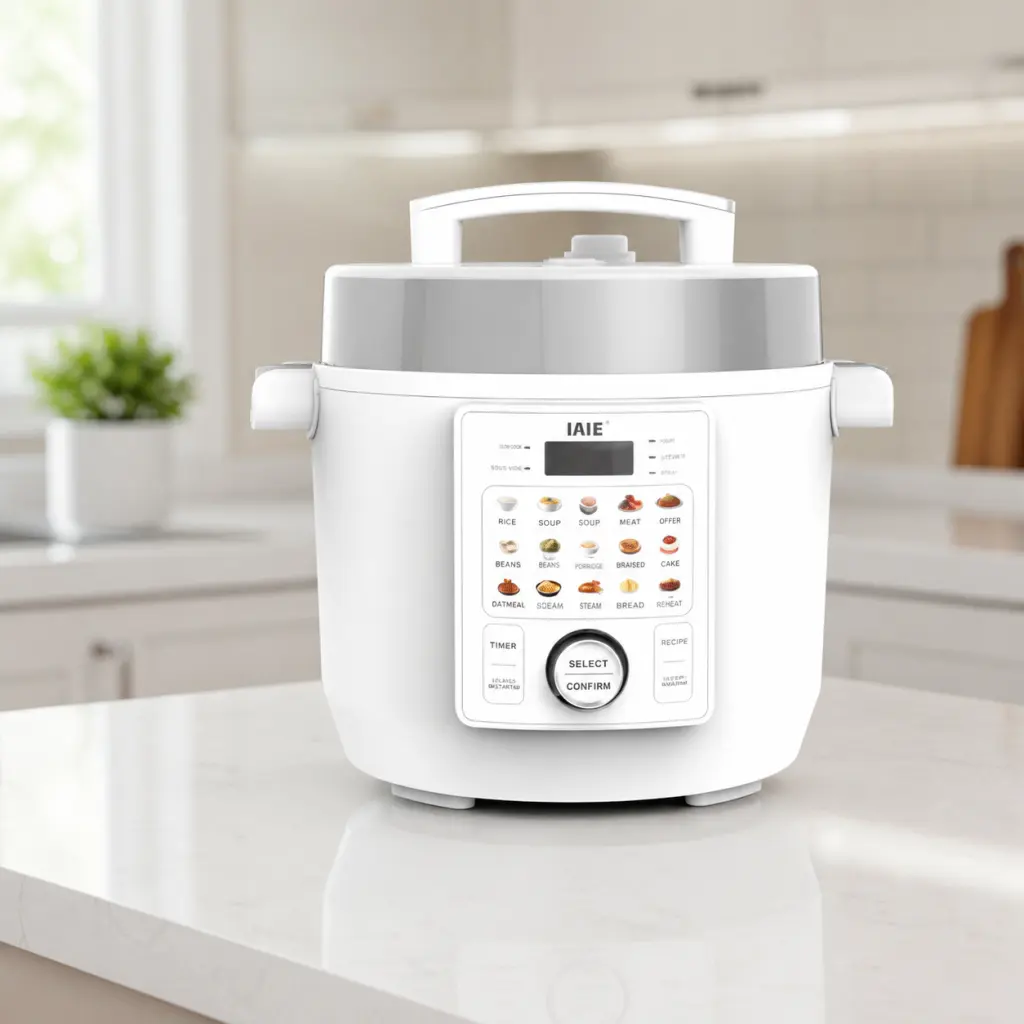
IAIE provides spare‑part support including replacement sealing rings for our OEM & ODM partners.
Conclusion
Simple daily cleaning and routine maintenance can greatly keep your electric pressure cooker working at its best. Keeping seals, valves and inner pot clean avoids odor, pressure leakage and premature wear. Treat your pressure cooker well, and it will deliver safe, delicious meals year after year.
If you are looking for high‑quality electric pressure cookers for home use or bulk wholesale, explore our product range and feel free to contact the IAIE team.


