





Aluminum Pressure Cooker: A Practical Guide to Performance, Coatings, and Sourcing
Aluminium Pressure Cooker is easily chosen because of its quick heat up, lightweight pot, and affordable price. But this isn't the same for the whole appliance when it comes to its “aluminium” factor. In many types of electric models, it is used specifically to the removable inner pot, and the housing, lid, heater, sensors, and pressure-control parts are constructed with other materials.
To the buyer, it's not just a question of whether aluminum is used or not. This is the process of forming, finishing, coating, testing and matching the aluminum inner pot to cooker's heating system.
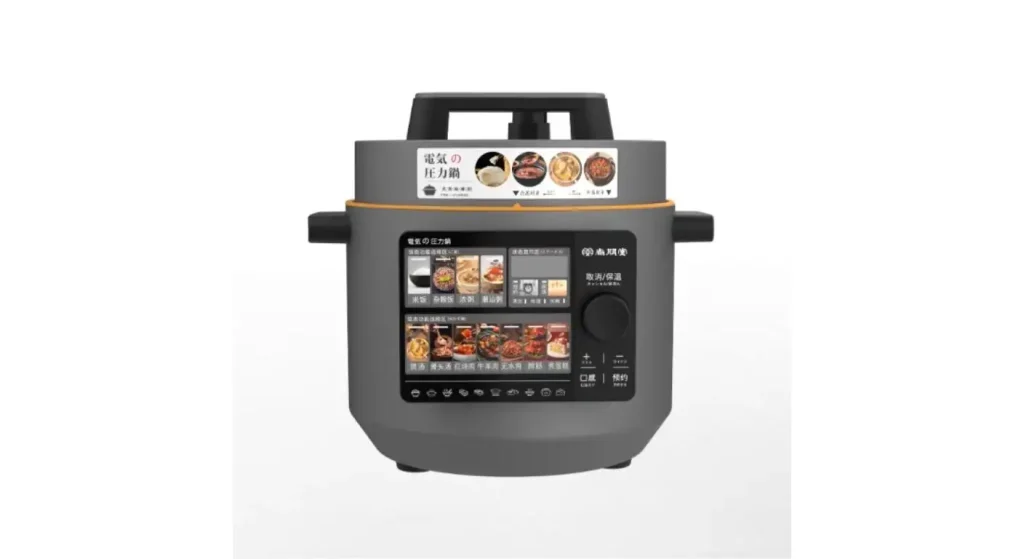
Aluminium is a good material for a pressure cooker because it is lightweight and resists weight loss due to wear.
Heat flows rapidly through the bottom and sides of the inner pot made of aluminum. This allows the cooker to get to the preheating stage quickly and decreases any hot and cold spots when the pot is in close contact with the heating plate.
Because of its lightweight nature it also makes a removable pot easier to lift and clean. Aluminium can helps to deliver competitive retail prices – without sacrificing essential cooking capabilities – to the value-conscious household market.
But, material conductivity does not necessarily translate into quicker meals. The factors of heater power, food volume, lid sealing, sensor accuracy and control programming also affect pressure build-up. The whole appliance should be checked and the inner-pot material itself should not be considered as an individual characteristic.
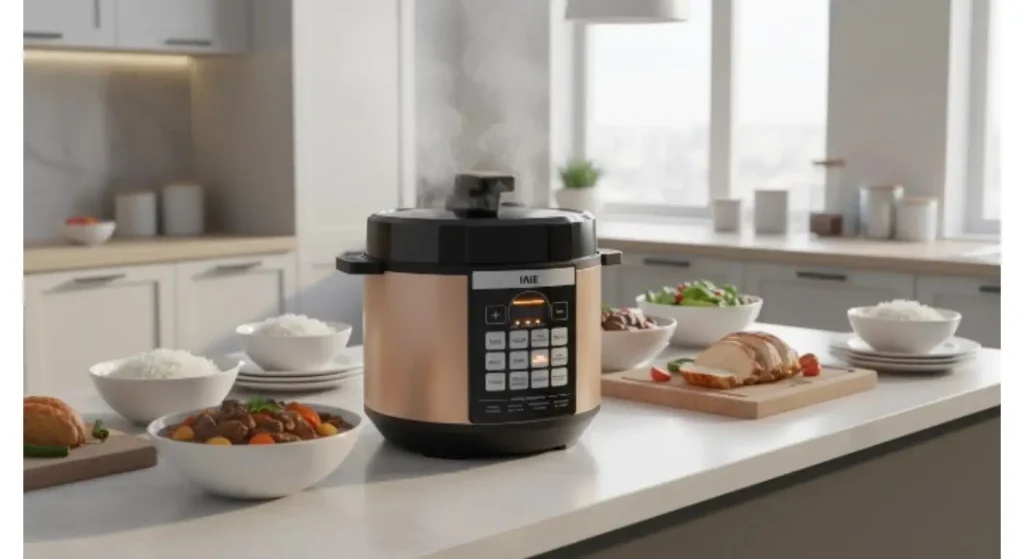
Bare, coated and hard-anodised Aluminium.
All aluminum cooking surfaces aren't created equal.
Bare aluminum is a great conductor of heat, and must be chosen for the correct alloy and have instructions provided for care. It can alter in appearance after coming in contact with some food products or with inappropriateness detergents.
Coated aluminum provides a food-release coating that can help to make rice, porridge and sauces easier to serve and clean. The working life is dependent on the adhesion of the coating, thickness, rate of curing and utensils used by the consumer.
Hard anodized aluminum is a surface treatment that increases hardness and wear resistance as it is a controlled process. Can be used to achieve a higher product position; however, buyers must verify actual treatment, don't buy based on marketing terms only.
According to L4P's pressure cooker FAQs, the inner pots can be made of aluminum, enamel coated, or 304 stainless steel and can vary in the market, depending on the price and requirements.
Aluminium Inner Pot or Stainless Steel Inner Pot?
Aluminium is considered to be a better choice in the cases when a fast heat response, low handling weight, easy food release and cost control are the requirements. Typically, stainless steel is chosen when the customer demands a higher level of scratch resistance and prolonged use without a non-stick coating.
Both of these materials do not necessarily fit all markets. Coated aluminum inner pot can be a good choice for people who love to eat rice, and stainless steel can be a great option for those who like to use metal utensils or cook highly flavored foods.
To find out more about material comparison buyers can check out L4P's guide to stainless steel and aluminum pressure cookers.
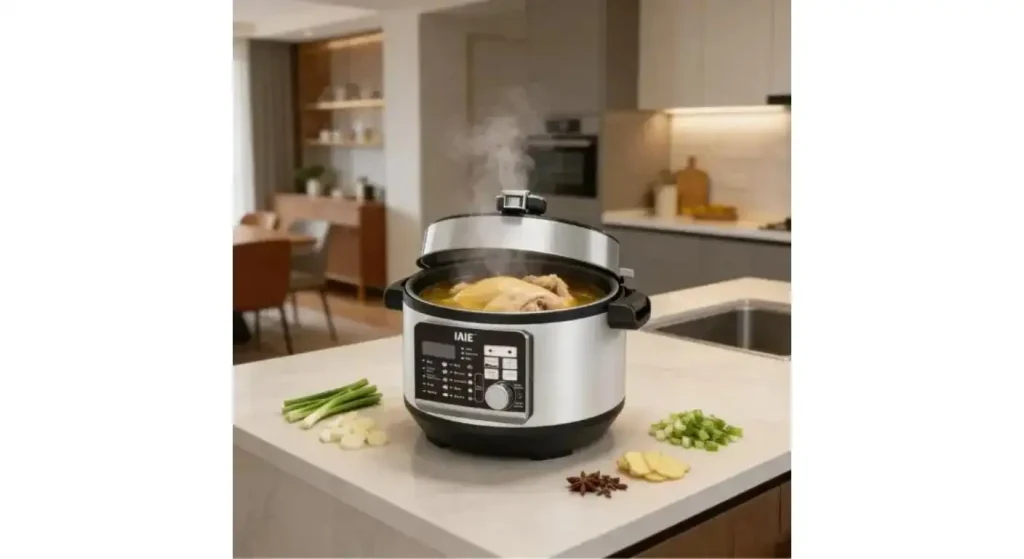
Here are some things that Buyers should specify before ordering.
Product Specification should include the following information: Aluminium grade or supplier material standard, Inner-pot weight, Wall thickness, base thickness, surface treatment, coating system, useable capacity, approved cleaning method.
The pot should also fit properly onto the heating plate. If the base flatness is poor, it may result in uneven contact, slow pressure build-up or temperature fluctuation. Roundness of the rim is also a factor, as the rim can become deformed, which will affect its fit within the appliance.
Packaging in the retail chain and instructions should explicitly indicate if the pot has been coated, which utensils are appropriate and if the pot can be cleaned in the dishwasher. Don't use terms like “scratch-proof” or “permanent non-stick.”
Importers who are creating distinct capacities can compare L4P's electric pressure cooker product line prior to choosing a proper inner-pot configuration.
There are a few steps to follow when assessing a supplier sample.
Start off by examining with the naked eye under a bright light. Inspect the cooking surface, rim, base and outside for pinholes, bare spots, scratches, discoloration, sharp corners or any shape changes.
Then cook numerous times with typical products of the target market (rice, soup, beans, porridge, etc.). Note the consistency of the preheating and the release of the food, the effort needed to clean, the smell, and any change in the appearance of the coating.
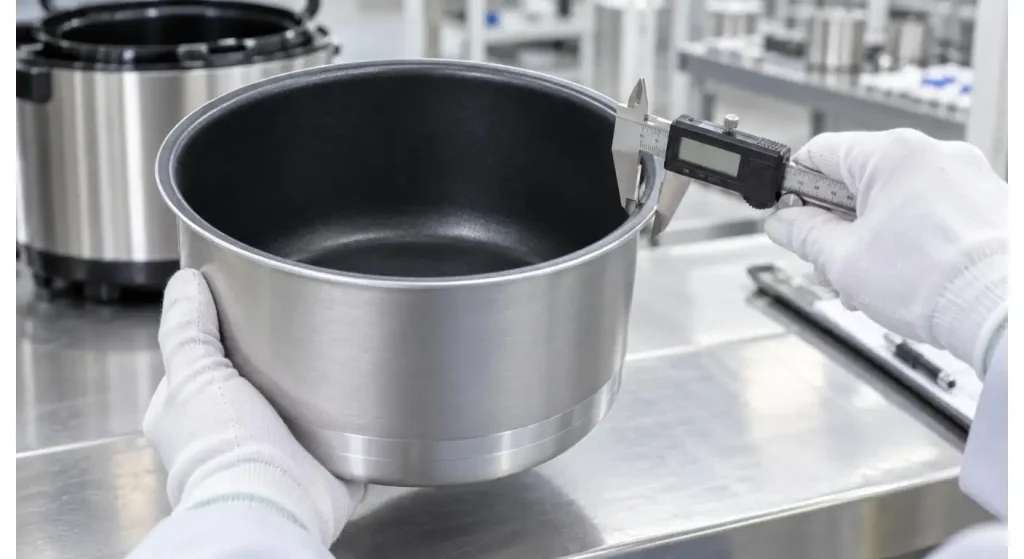
The sample should also be evaluated as a part of the entire pressure cooker. Ensure lids lock tightly, pressure release mechanism is controlled, overheat protection is built in, anti-dry-burn mechanism and keep-warm is stable. Documentation for food contact and market certification should be confirmed prior to mass production.
| Sample Check | Suggested Method | Acceptable Result |
| Base flatness | Place on a level inspection plate | No visible rocking |
| Rim roundness | Measure at multiple directions | Within approved tolerance |
| Coating finish | Inspect under bright angled light | No pinholes, bubbles, or exposed metal |
| Heater contact | Compare repeated preheating cycles | Stable time with no abnormal hot spots |
| Cleaning trial | Cook rice or porridge, then hand-wash | Residue releases without abrasive tools |
| Cycle durability | Repeat heating, cooling, and washing | No peeling, warping, or unusual odor |
Constructing the appropriate Aluminum Pressure Cooker Series
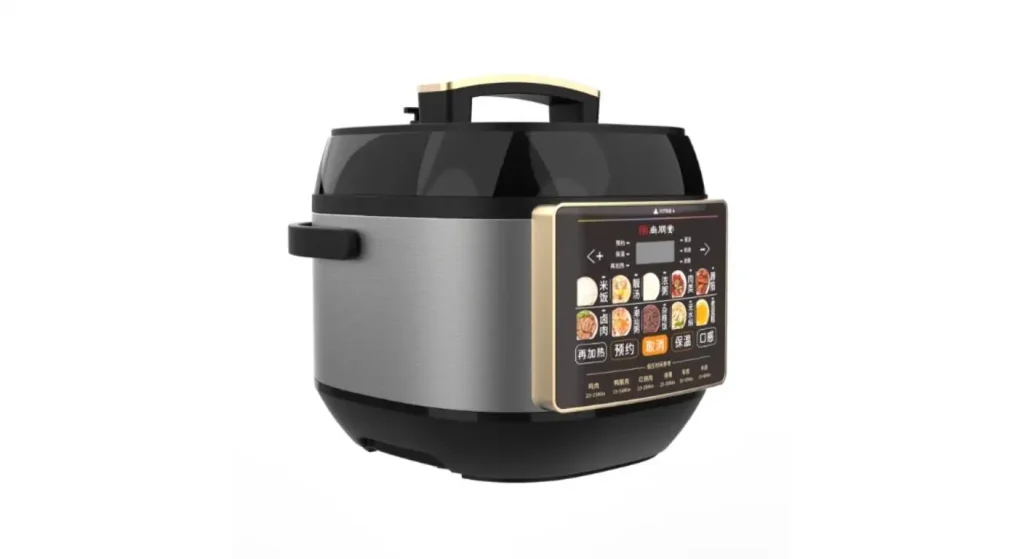
Practical (coated aluminum) inner pot with mechanical controls can be used in entry-level products. Higher end models may feature a more robust pot and digital presets, and high end models can feature an upgraded surface finish or a second stainless steel pot.
With respect to the target retail channel, there should be consistency in the choice of color, interface language, menu programs, accessories, packaging and logo application. These product level changes can be addressed with L4P's OEM and ODM services for private label projects.
The best product line isn't necessarily the one that has the most features. It is the one where the material selection, cost place, food habit and after service expectation are in a match.
Conclusion
An aluminum pressure cooker can provide quick heat, easy to use and good commercial value. It can be determined by several factors such as the pot thickness, surface treatment, coating consistency, heater contact, safety control and verified food-contact compliance.
These points should be specified by the buyer and verified by the organized sampling tests. “aluminium inner pot” is no longer just a material specification, but rather a product attribute that is measurable.
FAQ
Q1. Can you use an aluminum pressure cooker to cook?
Food contact cookware made from aluminum can be used for normal cooking if they are properly made. The buyer should check the alloy, surface treatment, coating, test reports and how to use the product.
Q2. Which is the fastest cookware, aluminum or stainless steel?
Aluminium heats up faster, possibly reducing the first heating phase. The total time of cooking depends nevertheless on the power of the heater, pressure control, volume of food and the chosen programme.
Q3. Is it OK to cook acidic foods in the aluminum inner pot?
Use manufacturer's procedures particularly on bare or damaged aluminium surfaces. An intact coating that the food does not come in contact with the metal will provide a means of separation.
Q4. How to clean a pot made of coated aluminum?
Cool down then use warm water, mild soap and soft sponge. Steel wool, abrasive cleaners and metal utensils which will scratch the coating should be avoided.
Q5. Are there any options to customize inner pots made of aluminium for private ordering?
Yes. Capacity, thickness, coating, color, accessories and packaging can be customized, depending on the supplier's capacity and the quantity.


