





Pressure Cooker for Fast Cooking: What Really Determines Cooking Speed?
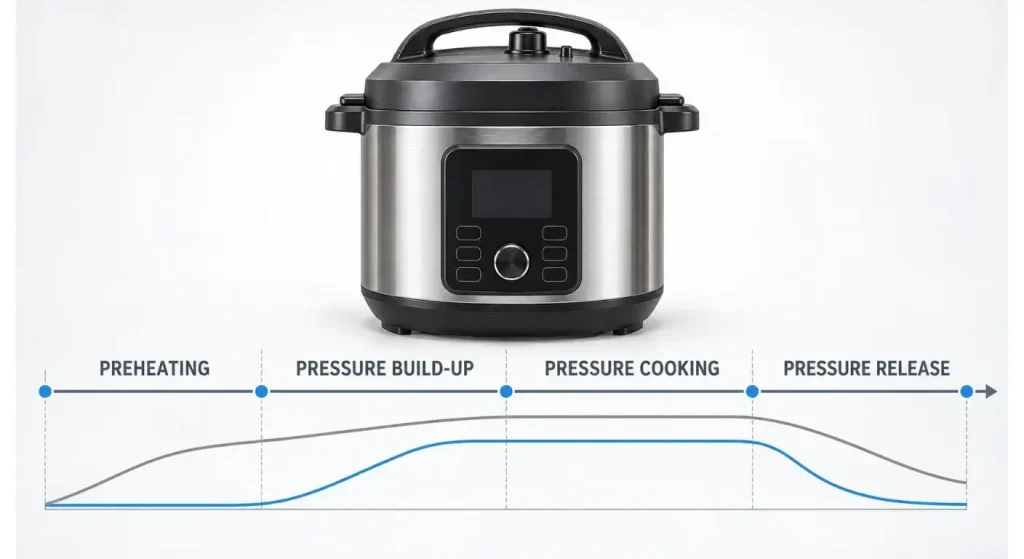
Although the pressure cooker can reduce the cooking time for beans, meat, grains and stews, the timer shown on the control panel is only part of the story. Real cooking time includes the heating time, pressure building up time, holding time and pressure releasing time, as well as the final preparation time.
A fast cooker pressure cooker therefore needs to have the right amount of power, efficient heat transfer, airtight sealing, precise sensors and good cooking programs. Users and buyers can differentiate between true performance and simply “fast cooking” thanks to this knowledge.
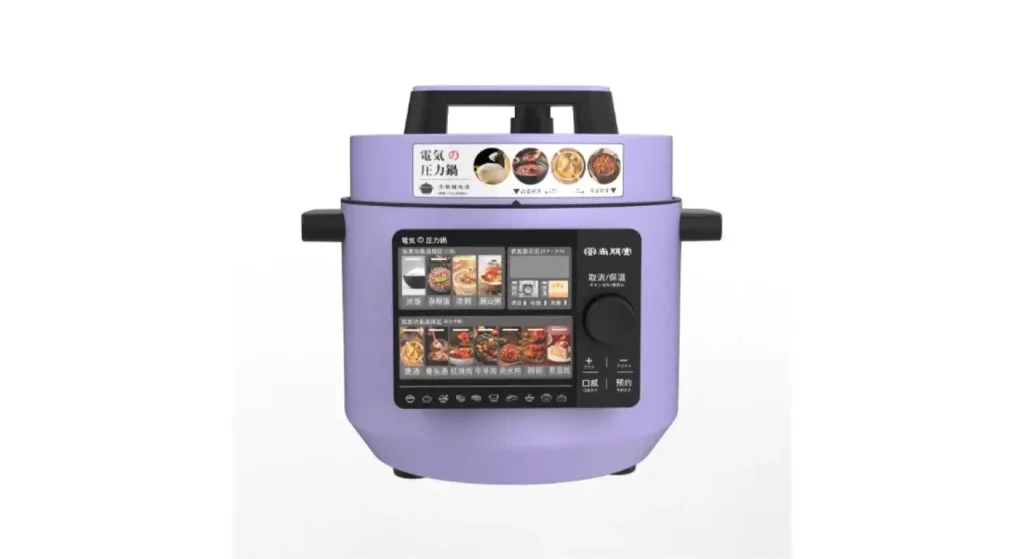
The advantage of pressure cooking can be faster sometimes because
A sealed pressure cooker holds steam which raises the pressure and consequently the temperature in the cooking area. Normally long time boiling or simmering foods can therefore be softened in a shorter time.
This benefit is particularly evident for beans, hard meat, chickpeas, whole grains, soups and stews. Preheating and pressure release should be taken into account so that foods that have been cooked quickly in an open pan could be smaller.
Automatic heat control: Electric pressure cookers include automatic heat control. Users choose a program; the appliance takes care of heating and pressure without having to adjust the stove constantly.
There are more than one step in the cooking process.
Countdown starts before the complete cooking cycle begins. The first step is for the heater to heat up the inner pot, ingredients and liquid. The steam then builds up until the desired pressure is attained.
The programmed pressure-cooking time will only start after this. At the end of the time period, the cooker must be pressure released either by a controlled or natural method before the lid is opened.
A model that can achieve pressure quickly might end sooner than a model that can achieve a shorter preset but is taking a long preheating time. Comparisons of products should thus include total cycle time and not just timer time.
The heating power must be equal to the capacity.
Wattages can be used to increase initial heating; however, power must be used in conjunction with cooker capacity and batch size. A 1000W heater will work well in a cooker that is the size of a family, and if you put the pot in it and fill it up almost to the top, it will take more energy and longer to heat.
The inner pot's contact with the heating plate is the other factor that affects heating efficiency. A pot with a warped bottom or food residue that stays under the pot can decrease heat transfer.
In electric pressure cookers, L4P offers models of various capacities, so power, capacity and volume for which they were designed to cook can all be considered.
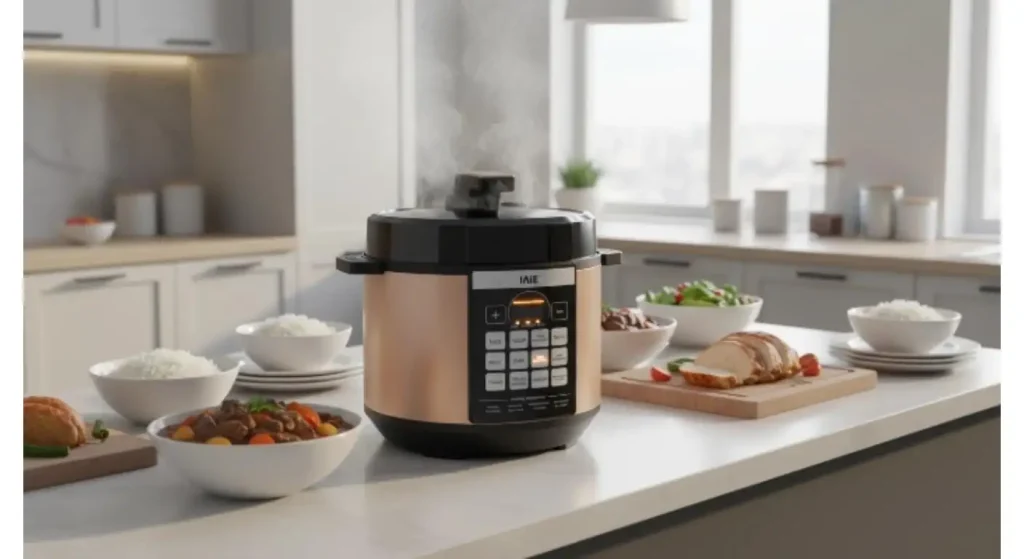
The rate of pressure increase depends on the sealing.
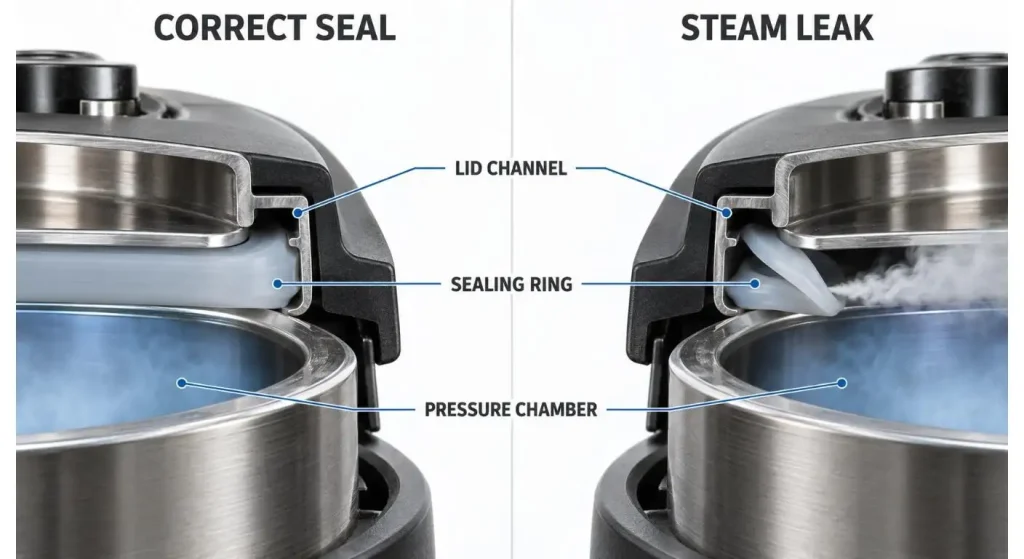
If steam is allowed to escape from the lid, a powerful heater can be used to create pressure in an efficient manner. Sealing ring should be clean, properly installed, and for the appropriate model.
The pressure valve must also be in the correct location and not be obstructed with food particles. Interfering with normal operation by a misaligned valve or blocked exhaust path should not be considered as a method of holding more pressure.
Don't blame the heater if pressurization is consistently slower than normal, as the problem may be due to the sealing ring, the position of the lid, the valve or the amount of liquid in the pot or the position of the inner pot.
The temperature of the ingredients and load size are important factors.
Cold liquid and frozen ingredients contribute to an increase in the energy needed prior to getting the pressure cooker going. Also, the larger cooker will take longer to heat than the smaller batch.
For dense ingredients like meat, it is important to cut them into even-sized pieces so that they can cook evenly. Smaller pieces might soften more quickly, but smaller pieces can get too soft before the bigger pieces are prepared.
Users will continue to be required to observe the maximum filling line. Rice, beans, grains and porridge expand or foam when cooked, and generally need more empty space in the pot during cooking.
It is with control that programs can be made smart and can improve speed.
A good preset is more than just having a fixed number of minutes. It regulates the heating intensity, pressure and temperature feedback, and keep-warm operation of a specific food category.
Rice, meat, beans, soup and porridge programs need to be varied, taking into account differing needs for absorption and texture. Adjustable time and texture controls offer more options and don't require manual heat control.
A smarter pressure cooker that has pre-sets is particularly useful for meals that you make often as settings can be set with little trial and error.
Final Schedule may change due to pressure.
Quick release will satisfy the demand sooner, but it is not appropriate for all recipes. Foamy liquids or foods containing large amounts of starch can be pushed towards the exhaust valve.
Natural release is slower but is better for large amounts of meat, beans and liquidy foods. As pressure is reduced inside, the food is still able to rest and maintain an even texture.
For certain foods, this is a balance between speed and food quality, to allow for a quick natural-release period before controlled venting. Be sure to follow manufacturer's release instructions and direct hands and face away from the escaping steam.
Fast-Cooking Performance should be tested by the Buyer as follows:
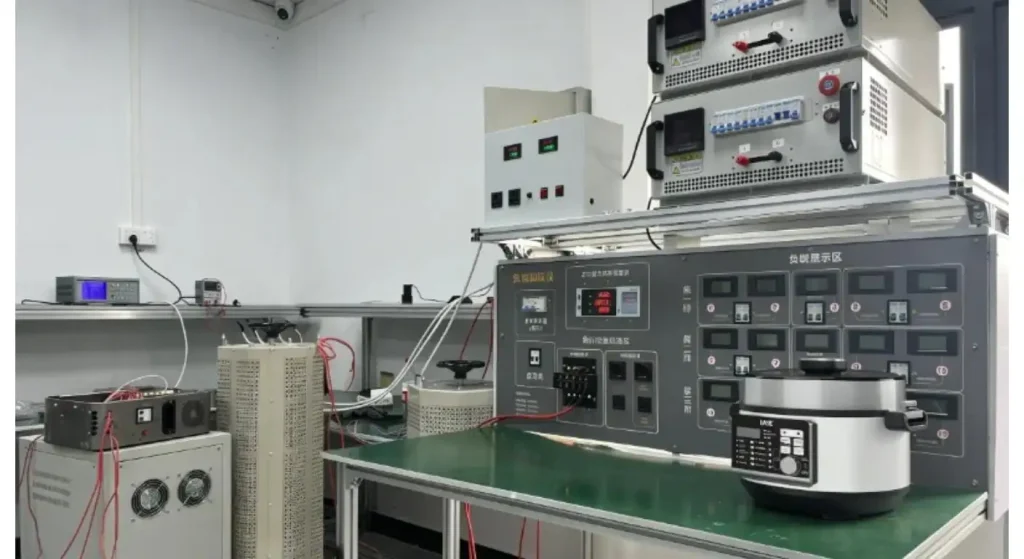
Importers should use the same amounts of ingredients, the same temperatures of liquid, the same recipe and the same room conditions with which to compare samples. Write down the time to pressure, cook time, release time, food texture and energy used.
Retesting should be done and not depend on one successful cycle. If there is a significant difference between cycles, it could be due to inconsistent heater contact, sealing, sensor response or program control.
It's important for the buyer to also verify lid-lock protection, pressure regulation, overpressure release, anti-dry-burn response and overheat protection. L4P has a pressure cooker FAQs section dedicated to product information, capacities, power levels and inner pot materials and their safety information.
| Test Item | Measurement Point | What the Result Reveals |
| Initial heating | Start to visible steam formation | Heater and heat-transfer efficiency |
| Pressure build-up | Start to countdown activation | Seal, load, valve, and power performance |
| Pressure holding | Variation during programmed cycle | Sensor and control stability |
| Pressure release | Program end to safe lid opening | Release-system efficiency |
| Food consistency | Compare top, center, and bottom portions | Heat distribution and program accuracy |
| Repeatability | Compare at least three identical cycles | Production-level performance stability |
Selecting the appropriate fast-cooking configuration.
For smaller households, smaller models that heat smaller amounts of food efficiently are available. The batch cooking time is not unnecessarily long with larger families if there is adequate capacity and power.
Other practical features are the easily read presets, the programmable pressure time, the visible cooking status indicator, delay start, the automatic keep warm function and the easy-to-handle steam release. A flat, tough bottom pot also ensures good pot contact with the heater over multiple usage.
L4P's 6-8L Electric Pressure Cookers cater to the family and batch cooking with various control and capacity settings.
Conclusion
Complete system equals fast pressure cooking: it's not just about the wattage or countdown timer. Total cooking time is determined by Heater Output, Heater Capacity, Sealing, Inner-pot Contact, Ingredient Load, Sensor Control, and Pressure Release.
Users should select the cooker according to the most frequent meals and batch sizes which they prepare. Commercial buyers must have repeatable full cycle testing to confirm speed before mass production approval of a model.
FAQ
Q1. Is more watts bigger better?
No, there are other factors that affect the total time such as capacity, food load, heat transfer, sealing and control logic.
Q2. Why doesn't the Timer start immediately?
The countdown will start after the cooker has reached the set pressure. The programmed time is not yet on when heating the ingredients and building pressure.
Q3. Is it possible to reduce the preheating by using hot water?
Can be used to reduce the pre-heating time for appropriate recipes. Use the instructions on the recipe and appliance – some programmes require the food to be slowly heated.
Q4. Why does it take longer than usual for the pressure cooker to come to pressure?
Examine sealing ring, valve position, amount of liquid, temperature of ingredients inside pot, amount of ingredients in pot, and position of inner pot. Delayed pressure build-up is often due to steam leakage.
Q5. Is it always the fastest choice to use quick release?
It lets out pressure earlier but not for all foods. Natural or staged release may be needed for foamy, starchy or liquid heavy recipes.
Share:


