





Selecting the Right Electric Pressure Cooker for Your Product Line
Although an electric pressure cooker appears like a typical kitchen appliance, there is more to it than looks that make it so suitable for commercial use. Whether or not a model will perform well in a given market can depend on a variety of factors including capacity, type of control, cooking programmes, safety structure and local eating habits.
A mechanical cooker with a small size might be suitable for a distribution channel that needs a low price, and a multifunction cooker with a digital display may be a better choice for a well-established home-appliance brand. Therefore, the buyer must identify the target customer and sales channel, before he or she could make the quotation comparison.
The idea is not to choose the cooker that has the most features. It is to develop a product specification which is usable, safe, position the product on the market and has a reasonable manufacturing costs.
Begin with Intended Market Position
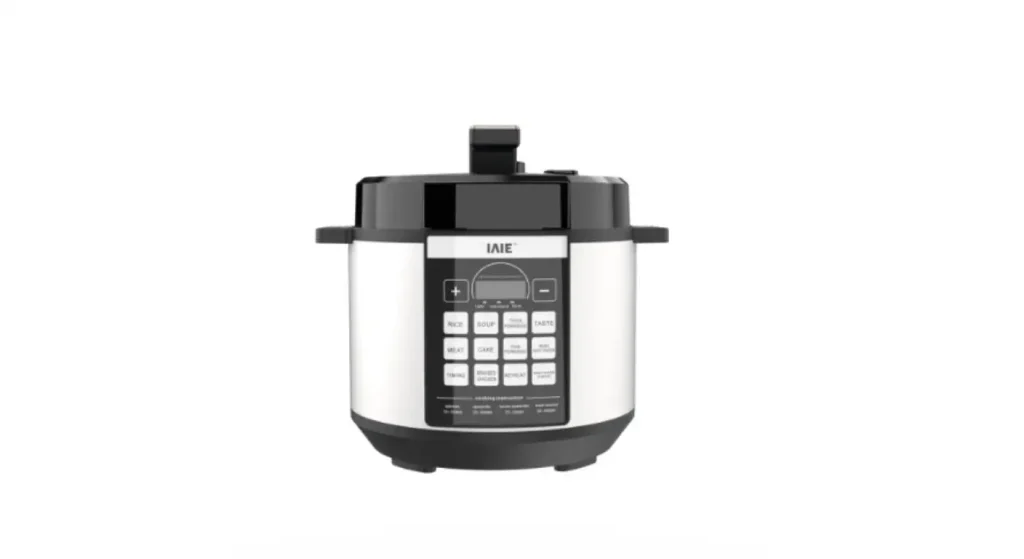
Identify the product type before deciding the model as it will either be a cheap entry-level product, a mid-range family cooker or a high-end smart cooking product.
Low end markets will go with a simple operation, long-life parts and a reasonable retail price. Digital programs, delay-start operations and easy-to-read displays are features mainstream buyers might expect. The premium brands can specialize in touch controls, unique housing designs and cooking programs geared toward local cuisine.
The sales channels are important, too. For a supermarket product, good shelf-presentation and clear functions are essential, while for an e-commerce product, different functions might need to be shown in a greater manner. If you're an importer and want to come up with an exclusive product line, you can check the presence of electric pressure cooker OEM or ODM services before doing the specification.
Compare the capacity and family and cooking habits.
Capacity should be based on the number of people you're cooking for, the type of dishes and how much you're cooking rather than there being a greater ‘value' to a larger cooker.
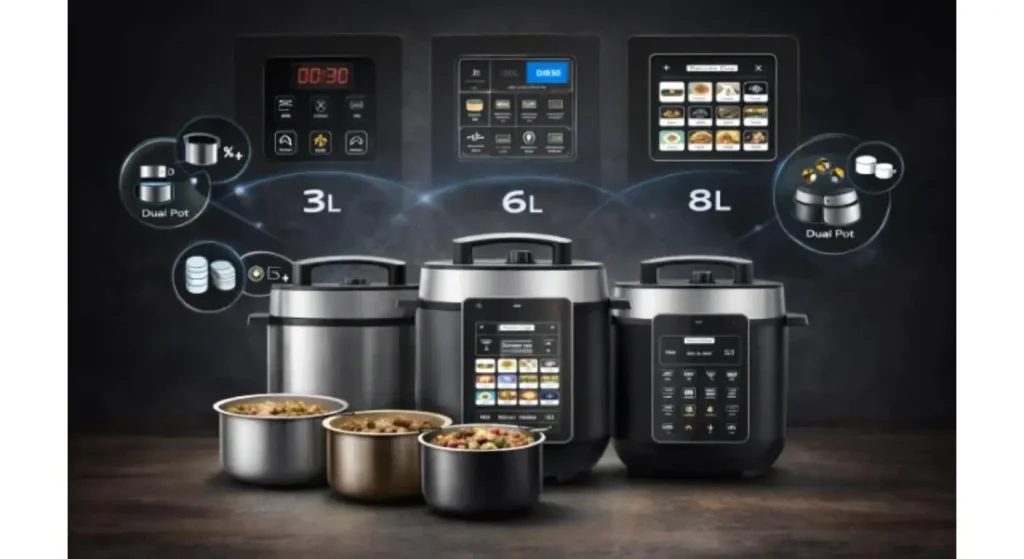
If you have a small kitchen, a small family and limited amount of food in your meals, a 2.5-3L electric pressure cooker is probably the best option. Electric pressure cookers come in 4-5L, 6-8L, and even larger sizes, with the medium sizes being a better choice for daily family cooking needs, and larger models being better for batch cooking.
The buyers should also take into consideration the usable filling capacity. Pressure cookers have to be big enough to allow steam to develop; the pot volume does not equal the maximum amount of food that can be cooked in the pot.
| Capacity Range | Suggested Market Position | Typical Buyer Concern | Sample Validation Focus |
| 2.5–3L | Compact or entry-level | Limited cooking volume | Countertop footprint |
| 4–5L | Mainstream family model | Balance of price and versatility | Program consistency |
| 6–8L | Large-family or batch cooking | Heating and pressure uniformity | Full-load performance |
| 10–12L | High-volume applications | Product weight and cycle time | Structure and durability |
Select Mechanical or Digital Controls, with Care
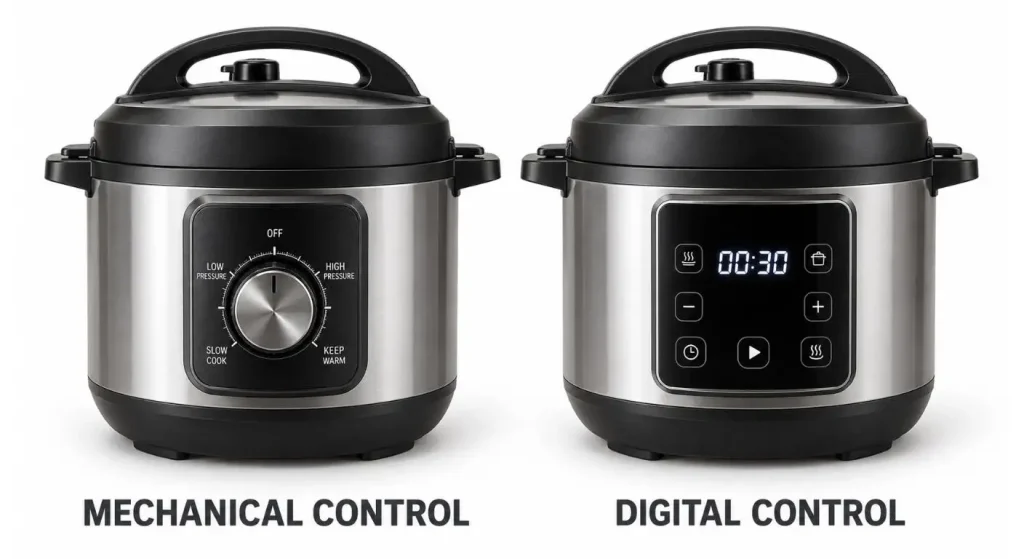
Mechanical controls are easy, and can be more easily located in price sensitive markets. They are also expected to have a lesser interface complexity which can help in simplifying user training and after sales support.
Brands can provide digital models, set-time programs, timers and set times as well as clearly distinguishing the products. But there needs to be more functions that are important to the customer. If there are a lot of cooking programs that you don't know, it can look like it isn't worth anything but looks complicated.
Language and icons in the control panel, brightness of the display and arrangement of buttons should be considered during the sample approval process. Buyers need to ascertain if the panel artwork and user manual can be localized when used in a multilingual market.
Assess Cooking Functions – By the Use
The word “multifunction” is a noninformative way of choosing products. The actual programs that are needed should be determined with the dishes that consumers prepare.
Popular ones include rice, soup, porridge, beans, meat and stew, but logic for cooking time and pressure may require tuning up according to regional ingredients. The results of a rice programme may vary between different types of rice.
Comparing heating time, pressure-holding stability, final texture and keep-warm performance during sample testing. It's helpful to test out actual recipes, instead of just verifying that each button works.
Discuss the Pressure and Temperature Safety System
The safety assessment should not apply to only one pressure release component but to the entire appliance. The lid-locking structure, sealing ring, pressure regulation and temperature monitoring and overheat protection and steam-release design need to work in conjunction with one another.
Potential consumers should check if the lid will open when there is pressure and if steam blows away from the consumer. Also, it is expected that the appliance reacts to the venting obstruction, high temperature or abnormal pressure condition in a predictable manner.
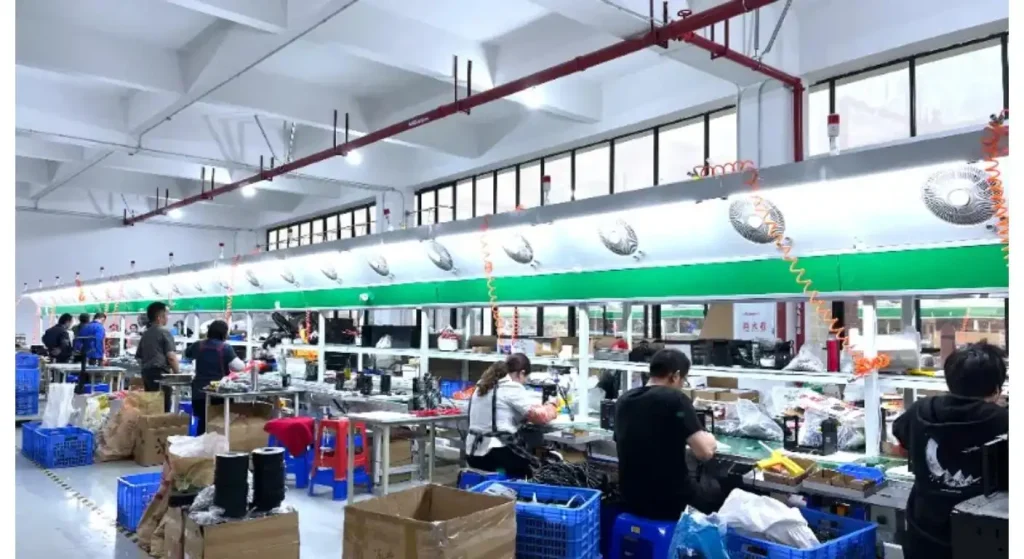
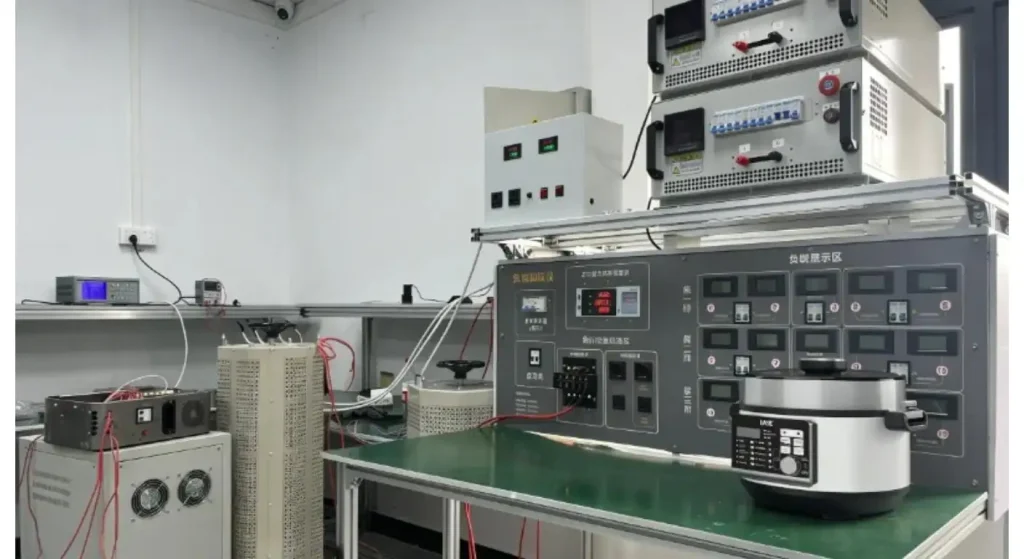
Inquire what tests are conducted during the manufacturing process, and if all units are functionally and pressure/sealing tested. The manufacturing overview of L4P includes the inspection process they take with their electric pressure cookers, such as panels, heating systems, sensors, pressure and sealing performance.
Check Inner Pot and Heating Structure
The product quality from the inside is affected by inner-pot materials and coating which affects heat transfer and cleaning. Some of the common designs include coated aluminum, stainless steel and ceramic coated.
It is important to ensure that after repeated heating, a sample pot has uniform coating, free of surface defects, and fits and is stable in dimension. The handlings, marks and contact with the heating plate should also be checked.
The temperature throughout the bottom of the pot should be even. Customers can compare the same recipes from multiple samples to see the difference in the heating speed, browning or end textural results.
Prior to Sampling, define OEM Requirements
Capacity, housing color, control-panel artwork, cooking programs, logo application and packaging and user manuals could all be customized. These items will need to be documented prior to the supplier's first sample.
Don't approve the appliance and packaging separately without making sure that the model numbers, electrical ratings, and product claims are the same. The final information should be the same for the cooker, rating label, gift box and manual and carton.
Sample Approval Record should also contain information of what is fixed and what may change prior to mass production.
Make comparisons of samples under identical conditions.
When comparing different models use the same voltage, quantity of ingredients, recipe, water ratio and method of observation. Note the times of heating, to reach pressure, pressure-holding, steam release and keep-warm temperature, and the condition of the food when heated.
Don't depend on one successful cooking cycle, repeat important tests. If feasible, sample more than one sample to determine variation in units.
A factor to compare should be usability. Look at the lid, control panel, inner pot and the pressure-release device to see if it's easy for someone using it for the first time.
Ensure Compliance and Commercial Conditions
The requirements for certification vary with country, market and voltage. The buyer should specify the required standards prior to choosing the electrical structure, or creating packaging artwork.
Check rated voltage, type of plug, frequency, power, test reports, labeling requirements and supporting documents. When making any certification claims, verify with the specific model for purchase.
Please check before ordering: MOQ, sample time, production date, packaging configuration, spare parts and warranty. After the Model is evaluated, the Buyer may communicate with L4P Tech to verify the customized and production needs.
Conclusion
The first step in selecting an electric pressure cooker is to determine the market that it is intended for, rather than looking at the number of functions. The capacity, controls, cooking logic and safety structure and inner-pot design should all contribute to the targeted customer and price position.
Prepare a written specification and test samples in standard conditions and verify against the specification before approving for mass production. This process helps to minimize any unnecessary attributes and ensure that the product performs as expected and is appropriate for the market.
FAQ
Q1. An importer should select the capacity of the electric pressure cooker.
Select the capacity based on family size and cooking practices. For compact markets, 2.5–3L models may be preferred and for family and batch cooking, 4–8L capacities are usually the best choice.
Q2. Do Digital Electric Pressure Cookers work better than mechanical pressure cookers?
Not available in all markets. Digital models will have more programs and allow for more customization, mechanical models will be easier to operate and may have a lower product cost.
Q3. What are the safety features to check with electric pressure cooker?
Inspect lid locking, sealing mechanism, pressure control and temp. monitor, overheat protection and direction of steam release. All these elements need to be tested as an integrated system.
Q4. Are there opportunities to localise cooking shows?
Yes, it can be done based on the control system and OEM capability. The necessary cooking times, pressures and temperatures logic must be validated during product development.
Q5. What testing should be done prior to an order in bulk?
Try the cooking power, pressure resistance, steam venting, control functionality, pot inside quality and ease of cleaning. Packaging and labelling and compliance to electricity should also be approved.


