





How to Choose and Use a 10 Quart Pressure Cooker
Large family meals, entertaining and batch preparations can be easily prepared in a 10 quart pressure cooker. Can cut down on the number of times you need to divide the soup, rice, beans or meat among cooking cycles.
But, larger pots do not necessarily equal easier. Requires more counter space, longer filling and cleaning time, and maybe isn't efficient for small snacks every day.
The choice is based on the usable capacity, the menu, the number of persons in the household, and the frequency of cooking and not the number mentioned on the product container.
Tell about 10 Quarts Versus 10 Liters
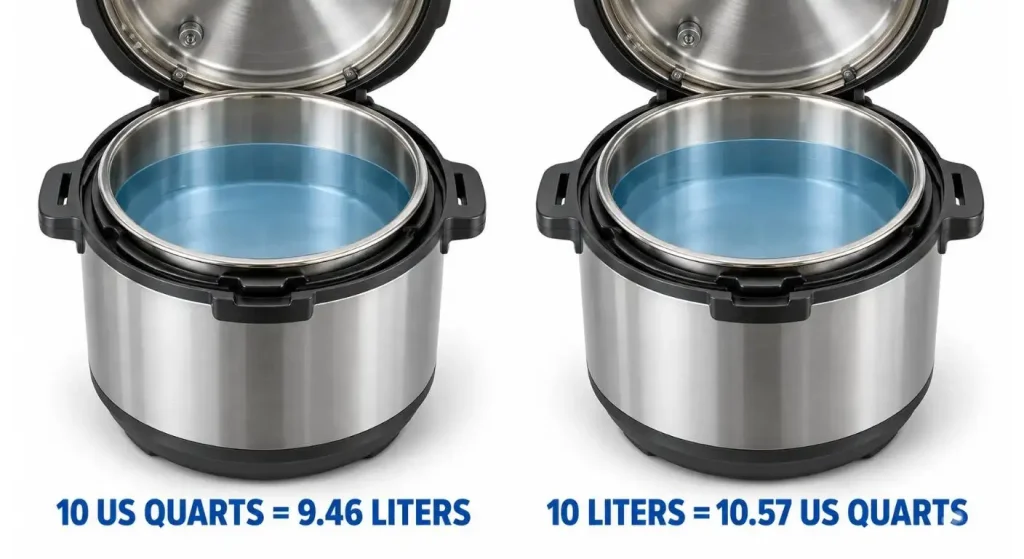
The conversion for 10 liquid quarts in USA is 9.46 liters. A 10L pressure cooker is slightly larger than a 10 at 10.57 US quarts, but both sizes may be lumped together when searching for products.
When making product pages/ packaging, importers should specify the precise quantity in litres and quarts. This means that customers will not think that 10 quarts is the same as 10 liters.
When customers are deciding between the bigger models, they can check out the L4P Tech 10–12L electric pressure cooker series and verify the rated capacity of the model they are considering buying.
The Usable Capacity is less than the Rated Capacity.
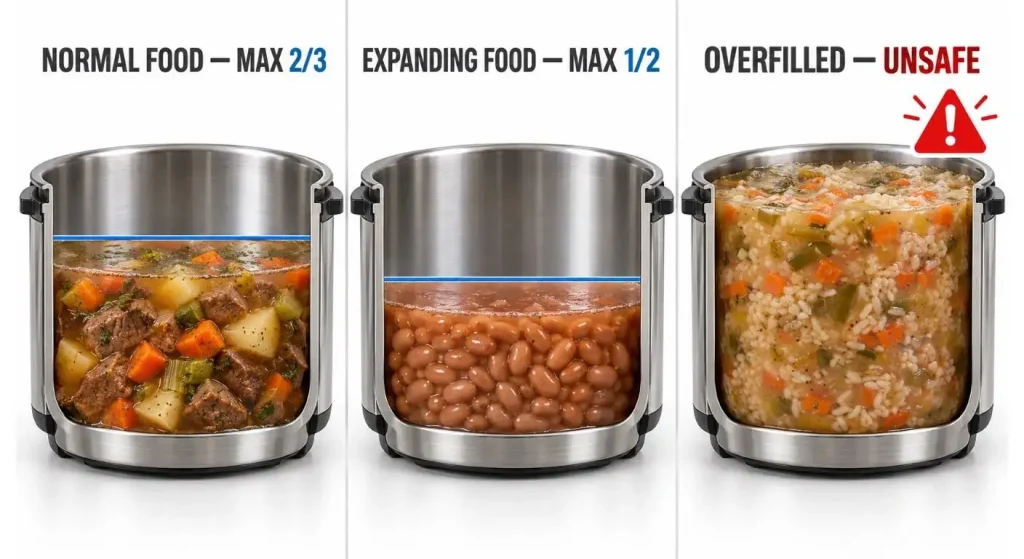
The "stated capacity" refers to the total volume of the inside pot. It is not an indication that the pot may be filled to the top while it is being pressure cooked.
Allowances should be made for space to allow liquid to turn to steam and pressure to build up in a safe manner. Some foods such as beans, grains, etc. that swell or foam may need to be filled to a lower level than the soup or solid meat.
Always refer to the maximum fill marks and instructions for the specific model. Calculate the amount of meals that will be produced based on the allowed filling level, not the full 10 quarts of the rating.
Determine if Your Home Is in Need!
For large families, frequent entertaining and those who like to batch cook, a 10 quart pressure cooker will be useful. It's also a great place to expand on a large cut of meat or a large pot of soup.
If you're cooking fresh meals for one or two individuals each day, the size might be too big. A smaller pot will take up less space to store and will be easier to wash.
If you aren't looking to step up to the largest countertop category for family size needs, L4P Tech offers 6–8L electric pressure cookers.
| Cooking Situation | 10 Quart Suitability | Main Benefit | Point to Confirm |
| Large household meals | High | One-cycle family portions | Usable fill level |
| Weekly meal preparation | High | Multiple portions per batch | Food storage plan |
| Frequent entertaining | High | Less repeated cooking | Counter space |
| Small café or catering prep | Conditional | Supports selected bulk dishes | Duty cycle and compliance |
| One or two daily servings | Low | Extra capacity rarely used | Smaller model may be easier |
| Large cuts of meat | Conditional | More internal space | Clearance and liquid needs |
Select the correct size for the menu.
When you're catering to foods that are naturally more substantial, large pots will come in handy. A larger inner pot will work for soup, stew, curry, beans and porridge, and stock and rice.
The cooker can also be used for cooking large quantities of meat, but it needs to fit underneath the lid and the pressure control areas. There should be sufficient space for liquid to circulate around a whole chicken or roast.
Extra room is not necessarily good for small or fragile items. Very thin ingredients might heat up differently, please check if smaller ingredients can be cooked in the appropriate model.
Cooking in bulk and preparing meals:
One cooking cycle of a 10 quart pressure cooker can yield several meals. Beans, grains, shredded meat or soup can be portioned out in large quantities after cooking.
Before making a batch, plan the storage. Cool food safely, use appropriate containers and refrigerate or freeze foods as soon as possible following food-safety instructions.
The method is best applied when the base food is usable repeatedly, batch cooking is most useful. Alternatively to the same dish served over and over, neutral beans, chicken or grains can be paired with various vegetables and sauces.
Test for consistency of heating and cooking
It will take longer to get to pressure and heat up large quantities. The total cycle time is not just the programmed cooking time, but all of the preheating, pressure cooking, pressure release and resting times.
Ingredients should be cut the same size and evenly placed on the bottom of the pot. Check to see if the food is the same consistency at the desired filling height at the top and bottom of the food in the container.
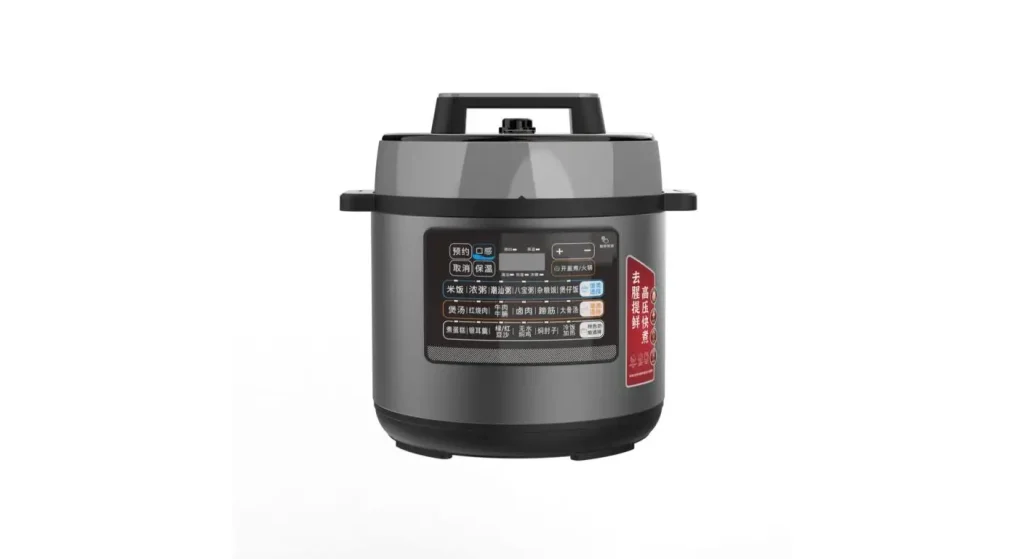
The commercial rice pressure cooker comes in large size for rice, soup, stew and batch-cooking.
Choose Useful Controls and Programs
For large pressure cookers it's important that the controls are easy to read and operate when the pot is fully loaded. Common programmes may include rice, soup program, porridge, meat program, stew and steaming.
Only when the cooking logic of the preset functions is the same as the cooking recipe they intend to cook can the preset functions be of help. It may be more useful to have a time-starting and stopping option than a laundry list of similar menu buttons.
Test to see if the display can be seen from a normal working position. Pressure-release controls should also provide for the operator to maintain a distance between the hands and face and the escaping steam.
Design Counter and Storage Space
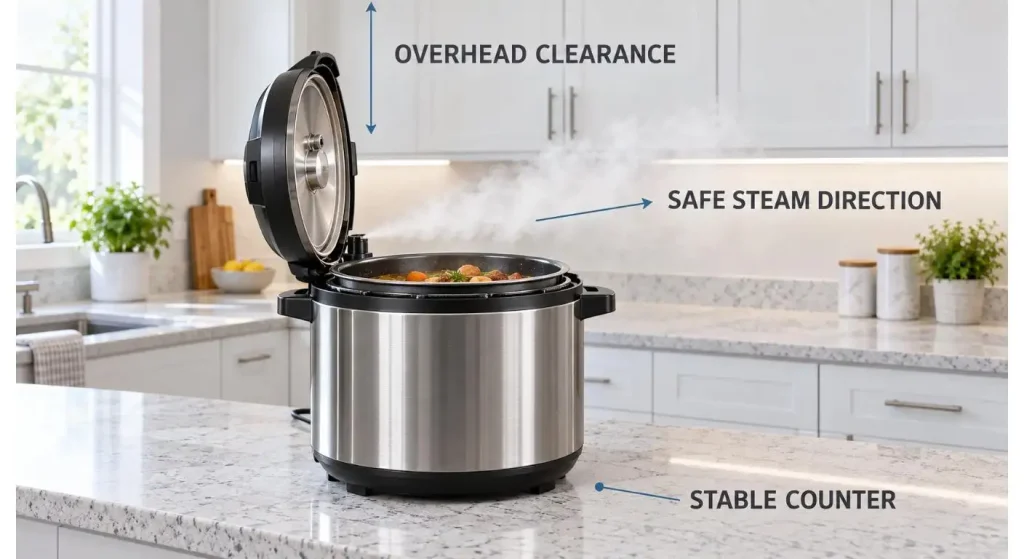
Measure the entire width, length and height of the product before purchasing. Don't just measure the cooker body, include handles, lid movement and the position of the power-cord.
The appliance must be supported on a firm, heat-resistant surface and have a safe distance around the steam outlet. It should not emit any steam directly under cabinets or towards walls and electrical equipment.
Take into account how much the cooker weighs when it's loaded with the pot as well. It may be unsafe to transport a loaded cooker of 10 quarts, so it is best to add ingredients at or near the operating position.
Check Inner Pot and Lid for damage
The inside pot should be large enough to sit flat on the heating plate and be easy to lift and clean. Check the pot material, coating, handles and replacement possibilities.
Check sealing ring, lid lock, float valve and pressure release. More is not automatically less—the same care and precautions for proper filling, maintenance and component inspection are required for larger capacity.
Clean up after cooking the lid channels and removable pressure pieces as per the manual. Can be affected by food residue, which interferes with sealing and release of pressure.
Try making some Real Recipes in the Cooker!
Never test a 10 quart cooker with just a little bit of water or a small amount of cooking. Conduct test for the recipes and filling levels in normal use.
Note the following: time to reach the pressure, total cooking time, and pressure-release and food texture. Make same recipe to test consistency.
The pressure cooker cooking times and stages in L4P Tech's pressure cooker recipes are merely examples of how cooking times and stages differ depending on the dish, whether it be rice, chicken, or braised.
Conclusion
A 10 quart pressure cooker will be most helpful if large amounts are already being used in the regular cooking routine. It can be used to serve families, prepare meals and small food-service applications, without the need for multiple cooking cycles.
Check the actual liter size, maximum fill, countertop dimensions and batch output before selection. If typical servings are on the smaller side, a 6–8L model might be the ideal solution for capacity and convenience.
FAQ
Q1. Does 10 quarts equal 10L in a pressure cooker?
There are about 9.46L in 10 US quarts and 10L is approximately 10.57 US quarts. To verify the manufacturer's quoted unit.
Q2. Will the 10 quart pressure cooker fill?
No, There needs to be space for steam and pressure to build up. A lower filling level might be required for expanding or foaming foods.
Q3. Do 10 quarts of cooker seem too much for two people?
This may be unless they batch-cook or freeze food. A smaller size is more convenient for more frequent small servings.
Q4. What kind of recipes are suitable for a 10 quart pressure cooker?
It can be used for cooking large quantities of rice, soup, beans, stew, curry and meat. The programs and filling are model dependent.
Q5. Which pressure cooker will take longer to cook: larger or smaller?
Though the programmed pressure time might be the same, a full large cooker usually requires longer to come to a temperature and to build pressure. There may also be an increase in pressure-release time.


