





A Complete Guide to Cleaning an Electric Pressure Cooker
The electric pressure cooker is more than just the pot, and cleaning it is more than taking out the pot. The sealing ring, lid channel, float valve and steam-release parts can accumulate food residue, grease and moisture.
These zones are involved in cleanliness and can also impact on sealing or pressure release. Cleaning them incorrectly, however, can cause damage to any of the small parts, or cause water to enter the electrical base.
The most reliable way is to power off the cooker, allow it to cool down and wash off every removable part following the manufacturer's guidelines.
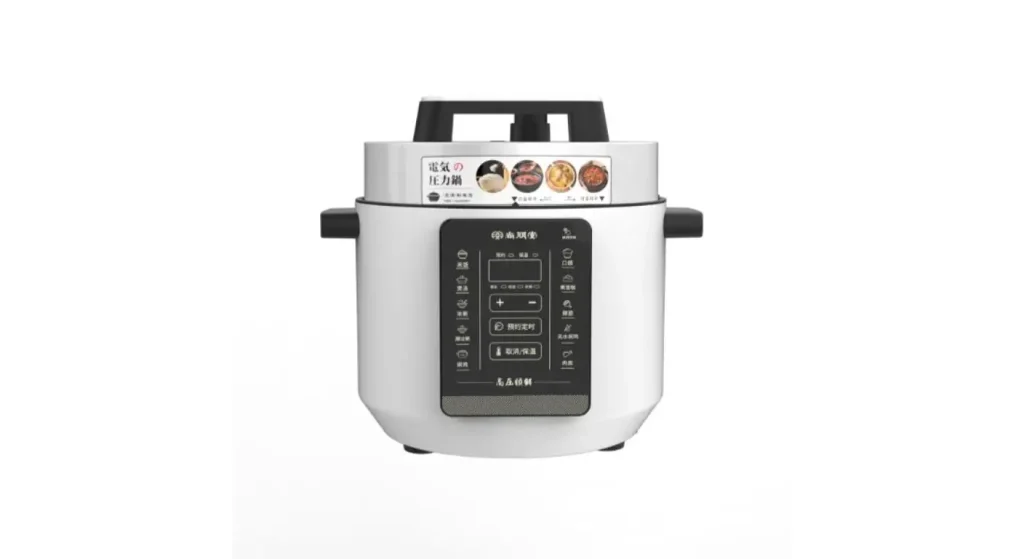
Cool and Depressurize Cooker
Do not start cleaning while cooker is hot and under pressure. Turn it off, unplug the power cord and then wait for the pressure indicator to drop to zero.
Never pry the lid open. It may be locked, and there could still be internal pressure, or something has been blocking the action. Do the pressure release procedures as per model.
When removing the inner pot wait until the housing and lid are cool enough to touch. L4P Tech's pressure cooker FAQs offer more information on the operation of cookers, cooker materials and safety features.
Take out the Removable Parts.
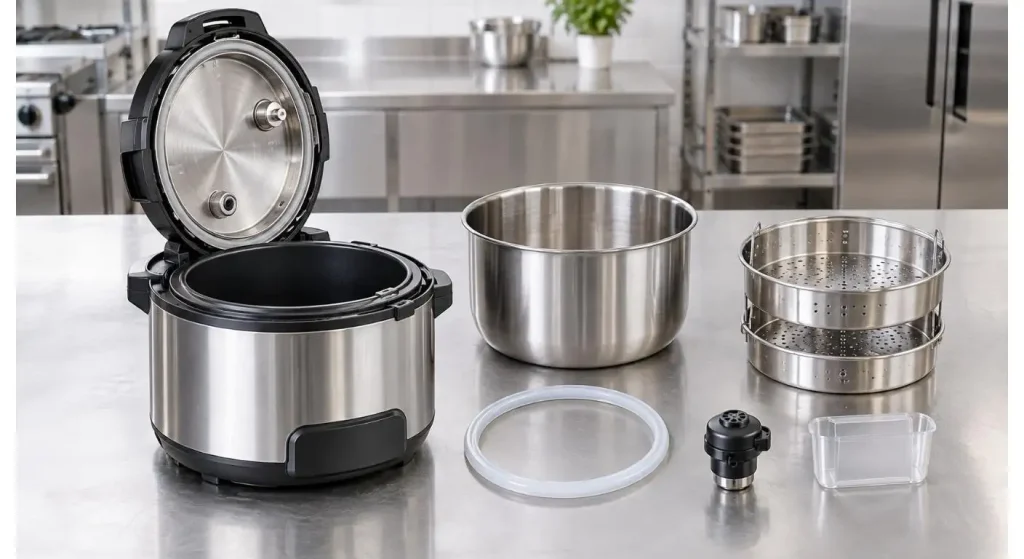
When it is possible in the model, remove the inner pot, the sealing ring and the condensation collector and the detachable steam-release parts. Put small parts into a container to prevent losing them.
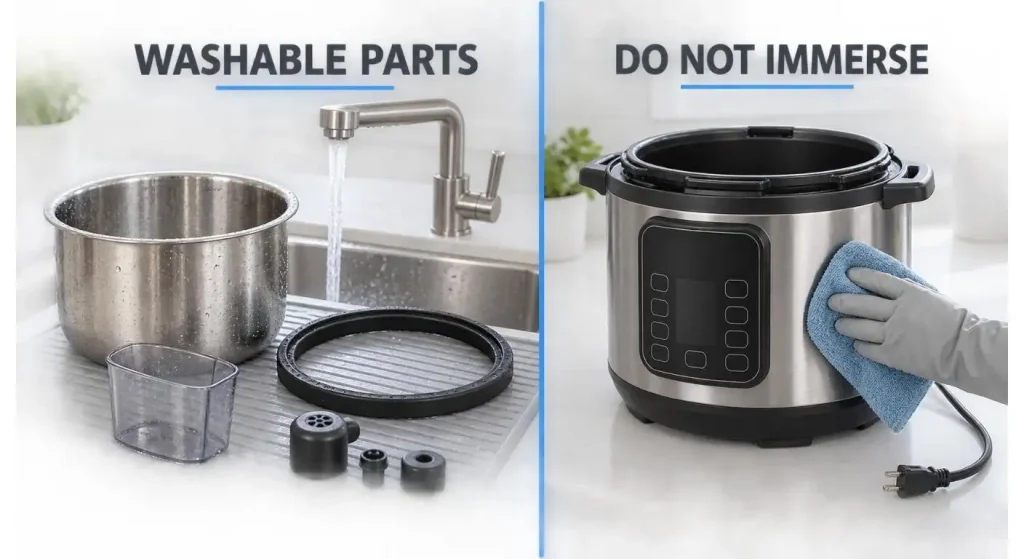
Take note of the installation procedure of each component before extracting them. A quick snap of a picture may be helpful for proper reassembly, particularly in the area of valve and sealing.
Not all lids are created the same. Do not remove parts that are not easily released, refer to the user manual.
| Cooker Part | Cleaning Method | Avoid | Final Check |
| Inner pot | Warm water, mild detergent, soft sponge | Steel wool and sharp tools | Outside completely dry |
| Sealing ring | Gentle hand washing and rinsing | Pulling or overstretching | No cracks or deformation |
| Lid channel | Damp cloth or soft brush | Forcing debris into openings | Channel free of residue |
| Float and steam valves | Soft brush and clean water | Metal pins and forced removal | Parts move freely |
| Heating plate | Slightly damp cloth | Pouring water into the base | Flat, clean and dry |
| Exterior control panel | Soft damp cloth | Spraying cleaner directly | No moisture near controls |
Wash the Inner Pot
Using warm water, mild dishwashing soap and a soft sponge, clean the insides of the pot. Look for any starch, sauce, or oil which may cling to the bottom corners and rim.
Never use steel wool, or hard abrasive powders or sharp tools, especially on a nonstick or ceramic coated pot. If it is scratched the surface will lose its usefulness and maintenance will be more challenging.
If dried residue, soak pot in warm soapy water prior to wiping again. Never put the entire electrical appliance in the sink.
Wipe clean Lid and Lid Channel
Clean both sides of lid with soft damp rag. If the lid can be washed, take off the parts that are allowed and wash the lid according to the instructions in the manual.
Check the sealing ring area of the channel. The ring may not seat evenly due to small food particles in this area.
When cleaning around narrow areas, use a soft brush or cloth. Don't force material deeper into pressure/steam pathways.
Clean and check the Sealing Ring.
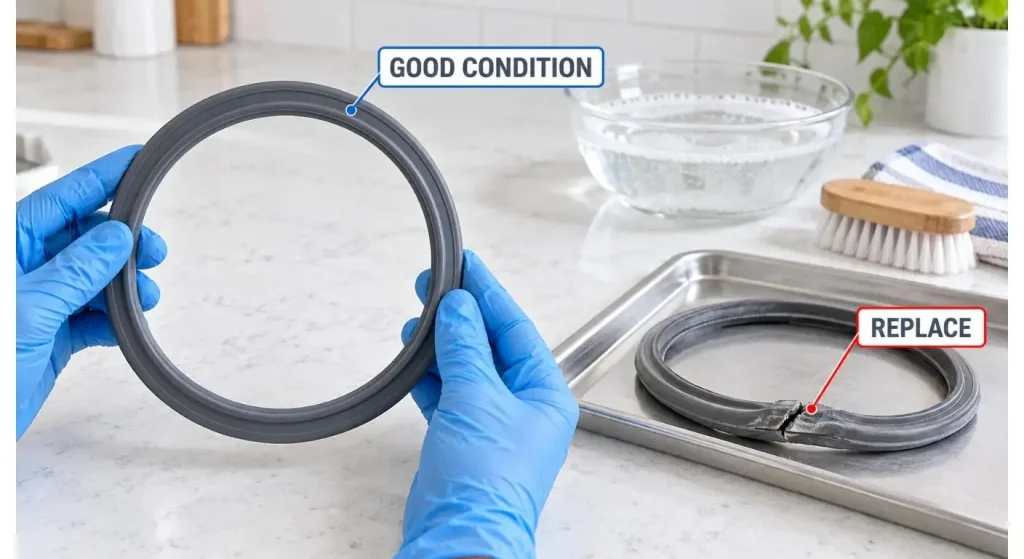
Carefully take off the sealing ring without undue stretching. Use warm water and mild detergent to wash it and thoroughly rinse it.
Check for cracks, hardening, deformation, sticky residue on the ring while rotating the fingers around the ring. If the ring gets damaged, you should replace it and not clean and use it again.
Silicone can hold on to strong food smells. Clean ring and air dry thoroughly to minimize odours. If the manufacturer offers a compatible spare ring for the burner, it can be used for strongly flavored dishes as well.
Purge Float Valve & Steam Release
The float valve and steam release path should not be obstructed and should move freely. Look for grains, starch or dried sauce on either side of the lid.
Only remove washable valve parts as specified in the manual. Do not use metal wire, pins or anything else that might enlarge or damage the opening; use a small soft brush and clean water.
Once cleaned, check to see if the float valve is moving freely and all parts of the valve are in the proper location.
Clean the Heating Plate
Cooker base is not to be submerged and has the heating and control components. Gently clean the housing, control panel and heating plate with a slightly moistened cloth.
Carefully remove grain or dried foods from the heating plate if they have spilled on the plate after the appliance has cooled completely and has been unplugged. Pot should be flat on clean heating surface.
If there is moisture, dry the base immediately. Do not connect power when the appliance or power cord is wet.
Be sure to pick up Burnt Residue carefully.
Light burnt residue: only fill up the removable inner pot with warm water and a little mild dishwashing liquid. Let it sit for a while and then gently rub away the dirt.
Avoid using knives or metal utensils on coated surfaces. If needed, soak again, rather than use more force.
Cleaning methods should be implemented using either vinegar or baking soda only if they are appropriate for the material of the inner-pot and manufacturer's instructions.
Dry and Reassemble All Parts
Let the lid, ring, valves and inner pot dry thoroughly prior to reassembling. Moisture can be trapped resulting in odors and can impact long term storage.
Place sealing ring evenly into its housing. Reassemble float valve, steam release and condensation collector.
When putting the inner pot back in the cooker, ensure that the outside of the pot is dry. L4P Tech's electric pressure cooker collection offers various structures for users to view, as the removable sections and lid designs will differ between models.
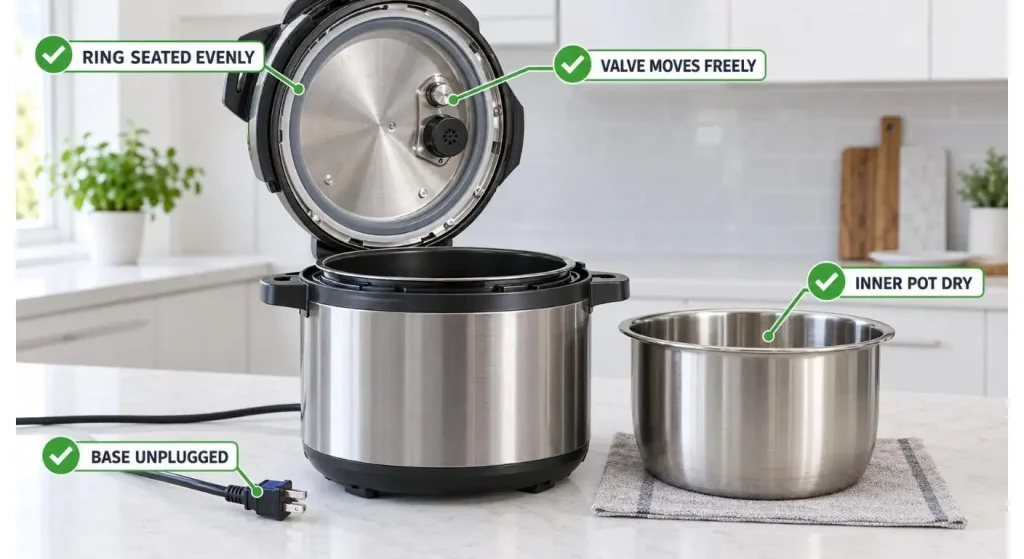
When it's time for your next meal, check the Cooker.
Double-check lid, sealing ring and steam outlet again before cooking. The ring should sit flat, the valve should move properly and there should be no loose cleaning materials in it.
If the cooker does not seal, if steam is escaping from an unusual place or if the cooker shows an error, cease using it and re-check the assembly. Never change pressure control components.
Please do not use instructions from any cooker other than the one in which you are cooking; for model specific guidance please refer to the manual or contact L4P Tech.
Stay organized with a Simple Cleaning Schedule.
Clean inside pot and food surfaces after each use. Check sealing ring and lid channel frequently, particularly after cooking starchy, oily or highly flavored food.
Residue or changes in pressure behaviour should make it necessary to check steam-release or float-valve areas. Wipe outside and heating plate if necessary.
Cleaning the lights regularly is much simpler, and safer, than when grease and food deposits are harder to clean.
Conclusion
Pressurized cookers should be safely cleaned by cooling and unplugging the cooker, and then removing the washable components from the electrical base. Remove dirt from the inner pot, lid and sealing ring and valves without using abrasive tools or there will be some risk of applying force on the sealing ring or valves.
Dry all parts, then reassemble them properly and inspect the sealing and pressure release points prior to using them again. Always read the directions provided with the specific model.
FAQ
Q1. Are electric pressure cookers OK to submerge in water?
No. Electrical base should only be cleaned with a slightly damp cloth. It can get damaged if submerged, affecting the heating and control system.
Q2. Is pressure cooker lid dishwasher safe?
This varies between models. Refer to the user manual as some electronic, valve and handle structures are not dishwasher-safe.
Q3. How to get rid of the stench of the sealing ring?
Thoroughly wash and rinse the ring, let it air dry completely. If the odour persists, or the silicone is damaged, replace it.
Q4. Is it OK to use a metal pin to clean the steam valve?
Don't use metal objects that will cut or expand the opening. Clean using manufacturer's recommended cleaning technique and soft tools.
Q5. How often to clean pressure cooker?
Wash food contact surfaces after each use. Inspect sealing ring, lid channel and valve areas for residue frequently for wear or blockage.


